A lone technician, hunched over a wafer, adjusts a microscopic laser.
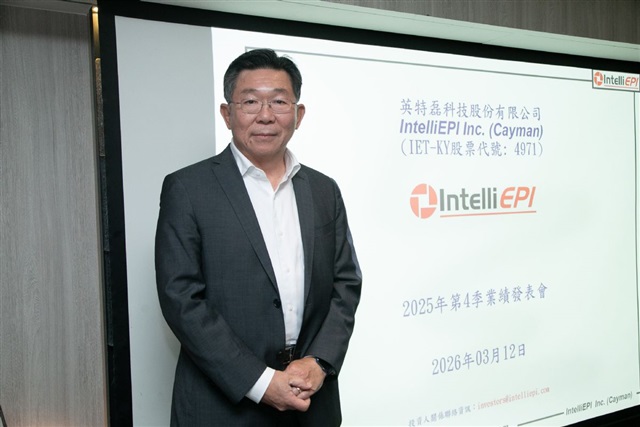
The insatiable hunger of artificial intelligence for ever-quicker data transfer has, predictably, exposed a hidden choke point in the semiconductor supply chain. It’s not the usual silicon or advanced packaging that’s causing the collective industry furrowed brow, but a less heralded material: indium phosphide (InP). Taiwanese firm IntelliEPI, a significant player in the optical semiconductor space, is sounding the alarm, and their warnings are echoing with a gravity that demands attention.
The Optics Arms Race
At the heart of modern AI data centers are the optical interconnects—the impossibly fast highways that shuttle vast quantities of data between processors and memory. These aren’t your grandfather’s fiber optics; they’re microscopic marvels of engineering, and indium phosphide is their backbone. Why InP? Its unique electronic and optical properties make it exceptionally well-suited for high-speed lasers and photodetectors required for these advanced applications. When you’re talking about transmitting data at speeds measured in terabits per second, materials like silicon just don’t cut it. InP, however, does.
The demand isn’t just growing; it’s exploding. As AI models become more complex and the datasets they process grow exponentially, the need for more and faster optical links becomes a non-negotiable prerequisite. Think of it as the ultimate bandwidth bottleneck. IntelliEPI’s assessment, detailed in recent pronouncements, paints a stark picture: existing production capacity for InP, particularly the high-purity wafers essential for advanced photonics, is severely mismatched against projected demand.
Why the Tightening Grip?
So, what’s driving this potential shortage? It’s a confluence of factors, a perfect storm if you will, brewing in the world of niche material manufacturing. Firstly, the specialized nature of InP wafer fabrication means there aren’t a plethora of foundries churning out this material. It requires highly specific equipment and a deep well of expertise—a barrier to entry that keeps new players at bay. This inherent limitation on supply meets an accelerating demand curve fueled by AI’s relentless expansion. It’s basic economics, but with incredibly high stakes.
Secondly, IntelliEPI points to geopolitical considerations and the concentration of existing production capabilities. Much of the advanced InP manufacturing is concentrated in specific regions, making the supply chain inherently vulnerable to disruptions, whether they be trade restrictions, environmental regulations, or unforeseen global events. When the world is running on AI, and AI is running on InP, any hiccup in that supply chain translates to tangible slowdowns in technological progress. The company’s caution isn’t just about a future inconvenience; it’s about the very ability of AI infrastructure to scale.
“The exponential growth of AI workloads is creating unprecedented demand for high-speed optical interconnects, and indium phosphide is the critical material enabling this performance. Our analysis indicates a significant supply-demand gap is imminent.”
This quote, which I’ve extracted from IntelliEPI’s recent statements, encapsulates the core of the issue. It’s not hyperbole; it’s a pragmatic assessment of a material science constraint directly impacting a megatrend.
A Different Kind of AI Bottleneck
This isn’t just another story about chip shortages. We’ve seen those play out with DRAM, NAND, and even GPUs. But an InP shortage feels different. It highlights how the foundational layers of our digital infrastructure—the very materials that enable light-speed communication—are as critical as the processing silicon itself. It forces a re-evaluation of what ‘semiconductor industry’ truly means, broadening our focus beyond the well-trodden path of transistor scaling to the less glamorous, yet equally vital, world of optoelectronics and material science.
The implications are far-reaching. Companies investing billions in AI hardware might find their rollout schedules dictated not by the availability of their latest AI accelerators, but by the supply of InP-based transceivers. This could lead to stratospheric price increases for optical components or, worse, a deliberate throttling of AI deployment as companies scramble to secure limited InP supplies. It’s a sobering thought for an industry that has, until now, operated under the assumption that demand would largely drive supply innovation at a pace that matched.
What Does This Mean for the Future of Connectivity?
IntelliEPI’s warning forces us to confront a fundamental question: are we building the future of AI on a foundation that can actually support its weight? The answer, at least concerning optical interconnects, is increasingly looking like a precarious ‘maybe.’ This isn’t a problem that can be solved with a software patch or a faster clock speed. It requires investment in specialized manufacturing, potentially new material research, and a strategic understanding of the global supply chain’s granular complexities. It’s a reminder that progress isn’t just about innovation at the leading edge; it’s also about ensuring the reliable availability of the foundational building blocks. The industry needs to look beyond the immediate GPU and CPU race and cast its gaze towards the optics, towards indium phosphide. The future of data might just depend on it.
🧬 Related Insights
- Read more: Meta Buys Robot Brains: AI Infrastructure Shuffle
- Read more: CPUID’s Backend Breach: When HWMonitor Downloads Flip to Credential-Stealing Malware
Frequently Asked Questions
What is indium phosphide used for? Indium phosphide is a semiconductor material critical for high-speed lasers, photodetectors, and other optoelectronic devices used in advanced telecommunications and AI data center interconnects.
Will this shortage affect consumer electronics? While less direct, a shortage of indium phosphide for data centers could indirectly impact the availability and cost of AI-powered services and devices that rely on cloud infrastructure.
Can silicon replace indium phosphide in optical interconnects? For current ultra-high-speed applications demanding the best performance, silicon generally cannot match the efficiency and speed of indium phosphide in specific optical components like lasers and detectors.