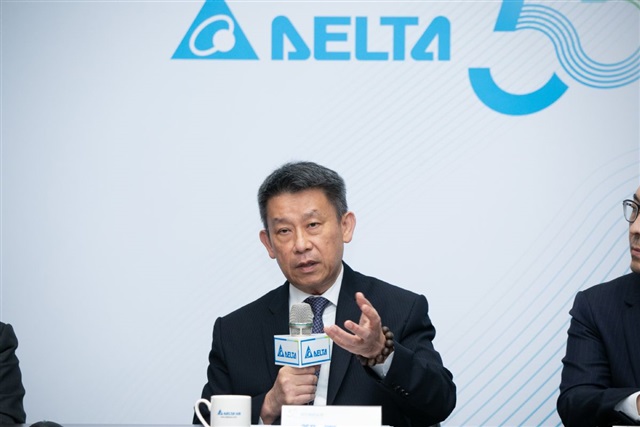
Here’s the headline you won’t see plastered on every shiny corporate press release: Taiwan’s tech giants are staring down the barrel of lost business because they can’t get their hands on enough clean power. Delta Electronics Chairman Ping Cheng laid it bare this week: miss your RE100 targets, and your global customers will simply walk away. This isn’t some abstract environmental goal anymore; it’s a hard-nosed business imperative, and Taiwan is apparently failing the test.
Think about it. Companies like Apple, Google, and Microsoft have been pushing their suppliers for years to get on board with renewable energy. They trot out their own impressive green commitments. But what happens when their trusted manufacturers – the ones building the chips, the components, the devices that power our digital lives – can’t keep up? They’ll find someone who can. Simple as that.
The RE100 Reckoning
RE100, for the uninitiated (and frankly, if you’re in this industry and don’t know, you’re behind), is a global initiative where companies commit to 100% renewable electricity. It sounds nice. It looks good on paper. But it requires actual infrastructure, actual power purchase agreements, and, crucially, actual power. Taiwan, a global hub for semiconductor manufacturing and electronics production, is apparently struggling to deliver the goods.
Cheng’s warning is blunt. He’s not talking about minor inconveniences. He’s talking about a risk to Taiwan’s position as a linchpin in global supply chains. When you’re dealing with orders worth billions, a company’s inability to meet a customer’s fundamental ESG (Environmental, Social, and Governance) requirements isn’t a negotiation point; it’s a deal-breaker.
“Companies failing to meet RE100 targets risk losing orders as global customers intensify demands for renewable energy compliance.”
This isn’t just about Delta, though they’re a major player. This is a canary in the coal mine for the entire Taiwanese tech ecosystem. The semiconductor industry, in particular, is notoriously power-hungry. Building advanced chips requires vast amounts of electricity, and doing that with coal or natural gas is becoming increasingly untenable under the watchful eyes of Western brands.
Why Can’t Taiwan Just Flip a Switch to Green Power?
The obvious question is: why the shortage? Taiwan has faced challenges integrating renewables. Its geography plays a role – not ideal for massive solar farms or sprawling wind installations compared to some other nations. Then there’s the political dimension, the balancing act between energy security, cost, and environmental goals. But whatever the reasons, the outcome is clear: a gap between what customers demand and what suppliers can provide.
This puts Taiwanese manufacturers in a bind. They need to invest heavily in securing green energy sources, which can be costly and complex. They might have to sign long-term power purchase agreements for wind or solar, often at a premium. Or, they face the very real prospect of seeing those coveted contracts diverted elsewhere. Think Vietnam, India, or even back to mainland China if they can somehow present a cleaner energy profile, however dubious. That’s the geopolitical chess match playing out in real-time.
Is This Just Corporate Greenwashing Theatre?
Initially, many of these green initiatives felt like PR exercises. Companies wanted to look good. But the pressure has genuinely intensified. Customers are no longer satisfied with vague promises. They want verifiable proof, transparent supply chains, and a demonstrable commitment to sustainability. It’s a shift from a nice-to-have to a must-have, and companies that ignore it will find themselves increasingly isolated.
What’s particularly galling is that Taiwan has built its reputation on technological prowess and reliability. To falter now on something as fundamental as energy sourcing, something they should have been anticipating for years, is frankly embarrassing. It suggests a lack of foresight, or perhaps a misplaced confidence that the world would continue to accept their manufacturing might regardless of their environmental footprint.
This isn’t an insurmountable problem, of course. But it requires urgent, decisive action. It means potentially faster approvals for renewable projects, greater government incentives, and more innovative power solutions. It means Taiwanese companies have to get serious, ditch the excuses, and start powering their factories with the sun and wind, not just ambition.
The alternative? Watching from the sidelines as competitors — those who did plan ahead, those who invested wisely in green energy — scoop up the business Taiwan desperately needs. This is more than just a supply chain issue; it’s a test of Taiwan’s long-term competitiveness on the global stage. And right now, it looks like they might be failing.