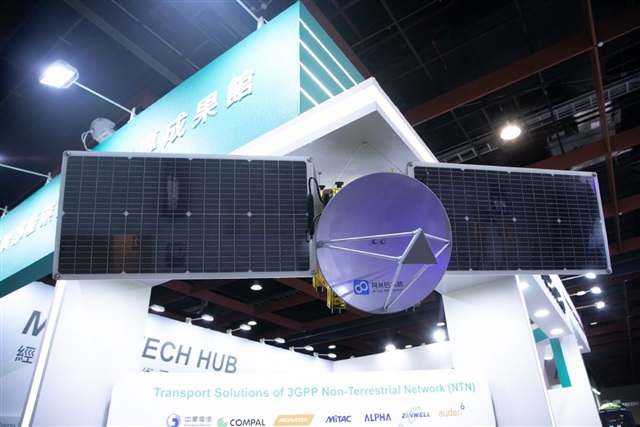
Forget shiny new chips for your next phone for a moment. The real story in hardware right now might be happening a few hundred kilometers above your head. The relentless march of low Earth orbit (LEO) satellite constellations — think Starlink, OneWeb, and a growing crowd of competitors — isn’t just about internet for remote areas anymore. It’s fundamentally re-engineering global supply chains, and critically, it’s pulling Taiwan’s vital component manufacturers deeper into the cosmos.
For years, we’ve obsessed over foundries, fabs, and the cutting edge of AI silicon. But the quiet hum of these LEO launches is forcing a recalculation. These aren’t the monolithic, years-long projects of old space. These are mass-produced, relatively disposable—albeit incredibly sophisticated—pieces of technology, launched in the hundreds. And that sheer volume means a vastly different demand for everything from connectors and battery modules to specialized cables.
The Opportunity Knocks, Loudly
This is where Taiwan’s industrial muscle flexes. They’re not just churning out the same old parts. The demands of space — extreme temperatures, radiation, vacuum — push existing components to their limits, or require entirely new engineering. Taiwanese companies, with their deep experience in miniaturization, strong manufacturing, and rapid iteration, are finding themselves uniquely positioned. It’s a chance to move up the value chain, to become indispensable players in a sector that’s projected to be worth hundreds of billions within the decade.
Look at the connectors: they need to be incredibly reliable, able to withstand immense pressure changes and vibrations. Battery modules? They require extreme energy density and fault tolerance. Cables? They need to be lightweight, incredibly durable, and often shielded against electromagnetic interference. These aren’t trivial engineering challenges, and for companies that have perfected making smaller, better, more reliable parts for consumer electronics, it’s a logical, albeit demanding, next step.
Is This a Boon for Taiwan’s Economy?
The potential upside is significant. For Taiwanese manufacturers who have long been the engine room of global tech, this represents a diversification away from the often volatile consumer electronics market. It’s a way to tap into a sector with a longer product lifecycle and, potentially, higher margins. The government has taken notice, too, encouraging the development of domestic space capabilities. This isn’t just about manufacturing; it’s about fostering an ecosystem.
But here’s the thing: Space is unforgiving. The margins for error are vanishingly small. A single component failure in orbit can mean the loss of a multi-million dollar satellite, and potentially jeopardize an entire constellation. This means the pressure on Taiwanese suppliers to deliver absolute perfection, with rigorous testing and certifications, is immense. They’re going from supplying gadgets to supplying lifelines.
The rapid rise in low Earth orbit satellite launches is reshaping global supply chains, opening opportunities — and risks — for Taiwanese component makers in connectors, battery modules, and cables.
That quote, pulled directly from the nascent reports on this trend, perfectly encapsulates the duality. It’s a gilded opportunity, certainly, but one fraught with peril. It’s a test of their engineering prowess and their ability to adapt to entirely new operational environments. The companies that succeed will likely be those that can prove their mettle not just in speed and cost, but in absolute, unwavering reliability.
Why Does This Matter to Real People?
For the average person, this might seem distant. But think about the ripple effects. More reliable, ubiquitous internet access could transform education and healthcare in underserved regions. Satellite imagery is becoming indispensable for climate monitoring, disaster response, and precision agriculture. These LEO constellations are the backbone of these advancements. If Taiwan’s component makers falter, or if geopolitical tensions disrupt their ability to supply these critical parts, the rollout of these vital services could be significantly delayed or hampered.
Furthermore, the shift in demand could eventually trickle down. As space-grade components become more commoditized due to mass production, some of that advanced engineering might find its way into more terrestrial applications. We could see more durable batteries in our phones or more resilient connectors in our cars, thanks to the demands of the vacuum.
There’s also the undeniable geopolitical layer. Taiwan’s role in global technology supply chains is already a flashpoint. Expanding that role into the burgeoning space sector adds another dimension to this delicate geopolitical dance. Ensuring the stability and security of these new supply lines is paramount, not just for the companies involved, but for the global infrastructure they aim to support.
This isn’t just about chips; it’s about the fundamental architecture of how we connect, communicate, and monitor our planet. And Taiwan’s quiet, determined makers are suddenly finding themselves with a front-row seat to—and a critical role in—the next frontier.