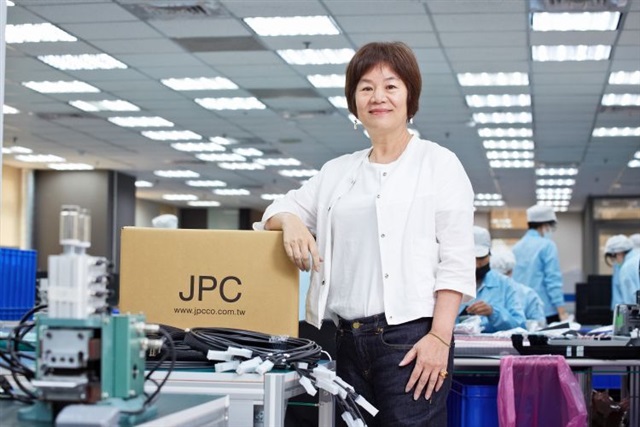
Did you ever stop to think about the unsung heroes powering your AI dreams? We obsess over GPUs, the sheer wattage consumed by data centers, and the complex dance of silicon. But what about the cables? The arteries that deliver that life-giving electricity?
This is where JPC Connectivity, a Taiwanese supplier, has just made a rather significant splash. They’ve quietly — and that’s the operative word here, quietly — secured the second-highest ranking in Nvidia’s certification for its Vera Rubin power cables. For context, these aren’t your average desktop power cords; these are designed for the colossal demands of Nvidia’s data center accelerators, the very engines driving the AI revolution.
This isn’t just about a supplier hitting a milestone. It’s a signal. A very loud, albeit muffled, signal about the escalating importance of power delivery infrastructure in the AI hardware ecosystem. As AI models balloon in size and complexity, their power hunger grows insatiably. Component suppliers are now scrambling not just for processing power, but for the very conduits that feed it.
Why This Cable Certification Matters More Than You Think
It’s easy to dismiss a power cable. It’s a commodity, right? Wrong. When you’re dealing with the immense thermal loads and constant, high-wattage throughput required by systems like Nvidia’s DGX or H100-powered servers, the quality and reliability of every single component become paramount. A faulty cable can mean more than just a reboot; it can lead to data corruption, hardware damage, and extended downtime — problems that are exponentially more costly at hyperscale.
Nvidia’s certification process for these Vera Rubin power cables is notoriously rigorous. It scrutinizes everything from material composition and thermal performance under extreme loads to signal integrity and long-term durability. Achieving a No. 2 ranking means JPC has not only met but exceeded a very high bar set by the GPU giant. This isn’t a handshake deal; it’s a proof to engineering and manufacturing prowess.
JPC Connectivity announced a major breakthrough in its power cable business, noting that it has achieved the second-highest rating in Nvidia’s power cable certification, according to market intelligence from its partners.
This “market intelligence from its partners” is the corporate equivalent of a subtle wink. It tells us JPC isn’t just bragging; they’re presenting verifiable data points. And for Nvidia, whose entire ecosystem hinges on reliable performance, having a strong supply chain for critical power components is no longer a nice-to-have; it’s an absolute necessity.
What’s the Architecture Behind This Win?
The “how” behind JPC’s ascent is likely rooted in a combination of factors that Chip Beat readers will appreciate. First, there’s the material science. The conductors themselves, insulation, shielding — these aren’t just off-the-shelf components. They’re engineered to dissipate heat effectively and maintain signal integrity under continuous high-current loads. Expect JPC to have invested heavily in advanced materials, possibly leveraging copper alloys with superior conductivity and thermal properties, or innovative insulation that can withstand higher operating temperatures.
Second, it’s the manufacturing precision. For high-power applications, connector tolerances matter. A slight imperfection can lead to increased resistance, generating heat and potentially causing failure. JPC’s success suggests a sophisticated, automated manufacturing process capable of delivering consistent, high-quality connections, perhaps employing advanced termination techniques or specialized crimping processes. This level of control is what differentiates a commodity supplier from an elite hardware partner.
Finally, and this is where the deeper architectural shift lies, it’s about foresight. While others might have been focused solely on GPU cores and memory bandwidth, JPC seems to have identified the bottleneck — or rather, the conduit — for future AI expansion. They’ve bet on power delivery, and the market is validating that bet.
This win is more than just a badge of honor. It’s a strategic positioning. With Nvidia increasingly controlling its entire hardware stack, from the silicon to the server architecture, ensuring the integrity of every supporting component is non-negotiable. JPC is now intrinsically linked to the success of Nvidia’s AI hardware, a position that carries both immense opportunity and significant pressure.
Looking ahead, expect more component suppliers to pivot. The wattage race is on, and the winners will be those who can deliver not just raw power, but reliable, certified pathways for it. JPC has just taken a significant lead in that particular arms race.
🧬 Related Insights
- Read more: Chipmakers Push Past 1nm: Roadmap to 2046 Revealed
- Read more: Aparna Bawa Jumps from Zoom to Intel: The Culture Fixer Chipmakers Desperately Need
Frequently Asked Questions
What are Nvidia Vera Rubin power cables? These are high-performance power cables specifically designed and certified by Nvidia for their data center AI accelerators, ensuring safe and reliable power delivery under extreme operational demands.
Why is power cable certification important for AI hardware? AI hardware, especially high-performance GPUs, consumes vast amounts of power. Certified cables prevent overheating, data loss, hardware damage, and ensure consistent performance, which is critical for large-scale AI deployments.