Zero-gravity crystals. Revolution.
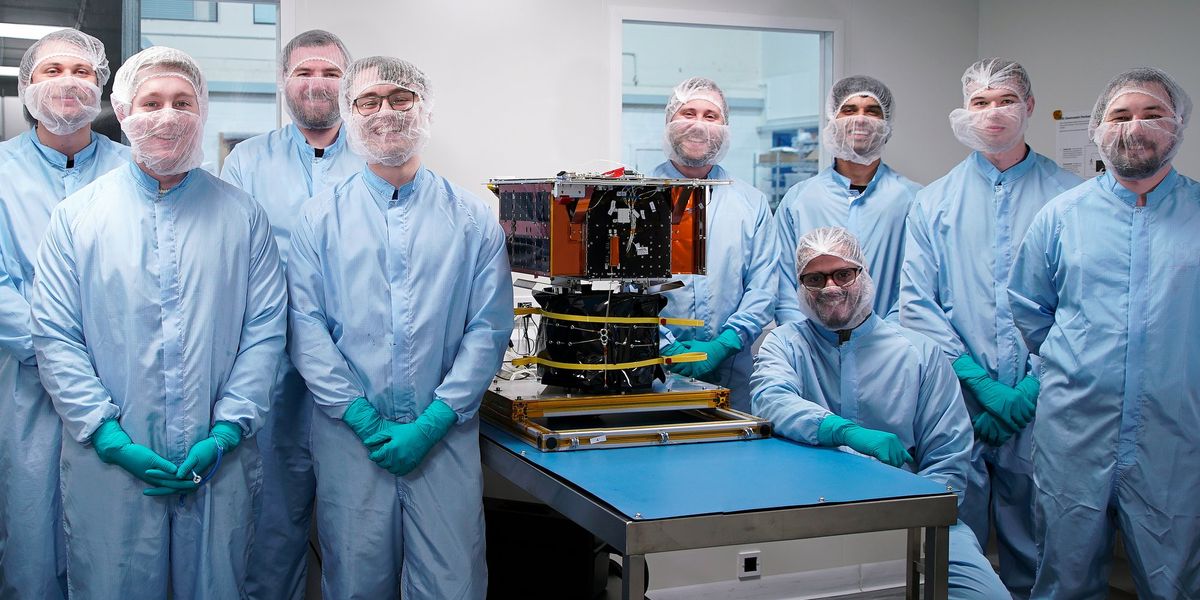
Picture this: a satellite the size of a minivan, hurtling 500 kilometers above Earth, spitting superhot plasma to birth flawless semiconductor seeds. That’s Space Forge’s ForgeStar-1, the UK startup’s wild bet on orbital growth for advanced electronics. No astronauts fiddling knobs—just pure, automated microgravity wizardry. And it fired up last December, marking the first free-flying commercial satellite cranking out materials like this.
Space Forge isn’t alone. They’re part of a pack chasing made-in-space goodies for next-gen electronics, screaming-fast optics, even drug breakthroughs. Their furnace targets seed crystals for gallium nitride, aluminum nitride, silicon carbide—stuff that powers high-voltage beasts in EVs, 5G towers, AI servers.
But here’s the kicker. Semis in space? Old news, kinda. Skylab astronauts grew indium antimonide crystals in the ’70s. ISS has tinkered too. A 2024 Nature meta-analysis crunched 160 space-grown crystals from ‘73-‘16: 86% bigger, uniform-er, better-performing than Earth-bound ones.
“There is potential for significant energy savings, perhaps as much as 50 percent within large infrastructure installations such as 5G towers,” says Joshua Western, Space Forge’s cofounder and CEO.
Whoa. That’s not hype—it’s physics.
Why Does Microgravity Brew Better Chips?
Earth’s a sloppy lab for crystals. We vaporize precursors—silicon, gallium arsenide, nitride—layer ‘em in reactors. Tightly controlled, sure, but gravity stirs convection currents, impurities sneak in (nitrogen at 10^-11 in vacuum chambers), defects scar the lattice. Boom: heat, drag, inefficiency.
Space? Ultimate cleanroom. Above 500km, nitrogen’s at 10^-22—eleven orders cleaner. No gravity, no convection. Crystals grow uniform, like snowflakes in perfect still air. Western nails it: microgravity gives ‘em a “better head start,” uniform deposition everywhere.
Result? Lattices so tight, purity so high, thermal performance skyrockets. Less cooling needed. Or crank output higher. E. Steve Putna from Texas A&M Semiconductor Institute (no Space Forge ties) chimes in:
“Space-grown crystals have demonstrated significantly higher electron mobility,” which could translate to a 20 to 40 percent increase in switching efficiency.
For AI data centers drowning in cooling costs? Game-on. Smaller chips handle monster voltages without frying. My unique take: this echoes the 1950s vacuum-tube era, when rocketeers’ cleanrooms birthed transistors—space didn’t just launch satellites; it kickstarted silicon valley. Orbital growth? It’ll birth the post-Moore fab revolution.
And energy? Putna calls it a “game changer” for data centers. Trade defect-free structure for slashed resistance, heat. Imagine AI clusters sipping power like EVs on regen braking—50% savings in towers, 30-40% efficiency bumps everywhere.
Can Orbital Fabs Outrun Launch Costs?
But — hold the champagne — space ain’t cheap. SpaceX Falcon 9: $1,500/kg to LEO. Returning via Cargo Dragon? Slots scarcer than hen’s teeth.
Space Forge sidesteps: grow seeds in orbit, ship ‘em dirt-cheap to Earth foundries for full bloom. Smart. Costs plummet as rideshares multiply—Rocket Lab, others flooding LEO. Reentry capsules? Getting routine. Western’s betting launch prices halve by decade’s end.
Critique time. Companies spin “breakthrough” like confetti, but that Nature study? Promising, yet small-scale. Scale to tons? Unproven. Still, physics doesn’t lie—microgravity’s edge is real. Bold prediction: by 2030, orbital seeds fuel 10% of power semis, gutting data center bills, greening grids.
Look, we’re staring at platform shift. Not just better chips—space as factory frontier. Like oil rigs tamed oceans for black gold, satellites tame vacuum for electron gold. Skeptics yawn at costs? They’ll eat crow when gallium nitride orbs slash your phone’s power draw 20%.
Here’s the thing. Earth fabs hit walls—defects, energy hogs. Orbit? Infinite cleanroom, zero-G bliss. Space Forge’s plasma stream? Harbinger.
Vivid? Think crystal vines climbing cosmic trellises, untwisted by gravity’s pull. Energy surges without waste heat’s blaze. We’re not tweaking silicon anymore—we’re harvesting stellar purity.
And pharma? Space proteins fold freakier. Optics? Laser-pure fibers. But semis first—AI hungers for efficiency.
Western’s vision: semiconductors running cooler, outputting fiercer. Trade energy for power. Data centers? No longer power plants with servers attached.
Is This the AI Power Savior We’ve Waited For?
Absolutely. Cooling bottlenecks AI scale—Nvidia’s monsters guzzle megawatts. Space crystals? Fewer defects mean less resistance, heat. Putna’s 20-40% switch boost? Stack that in racks: hyperscalers save billions.
Unique angle: parallels 1980s Japan fabs, purity obsessions birthing Sony Walkmans. Space Forge? Wales’ gift to world chips. (Yeah, UK grit over Cali gloss.)
Costs? Falling fast. SpaceX reuse, competitors—$300/kg soon? Refly sats like drones. Seeds tiny, returns payload-light.
Risks? Radiation zaps? Shielded payloads laugh it off. Scale? Prototypes now, factories next.
Wonder hits: satellites as forges, hammering electron miracles. Pace quickens—ForgeStar-2 launches soon.
So. Chips from stars. AI feasts.
Why Should Developers Care About Space Semis?
Faster switches, cooler runs—code flies unthrottled. Power devices? EVs charge in minutes, not hours. Your next GPU? Orbital DNA.
🧬 Related Insights
- Read more: Broadcom’s Arcot Smart Ruleset Draws on Billions of Transactions to Outpace AI Fraudsters
- Read more: Apache’s Responsible AI Push: The Unsung Heroes Powering AI’s Open Future
Frequently Asked Questions
What is orbital growth for semiconductors?
It’s using satellites in microgravity to grow ultra-pure crystal seeds for chips, beating Earth’s gravity-induced defects for 20-50% better efficiency.
Will space-made chips replace Earth fabs?
Not fully—hybrids. Orbit grows seeds cheaply; Earth scales wafers. Costs drop, performance soars.
When can we buy space-powered electronics?
Seed tests now; commercial crystals 2026. AI/data centers first, consumer by 2030.