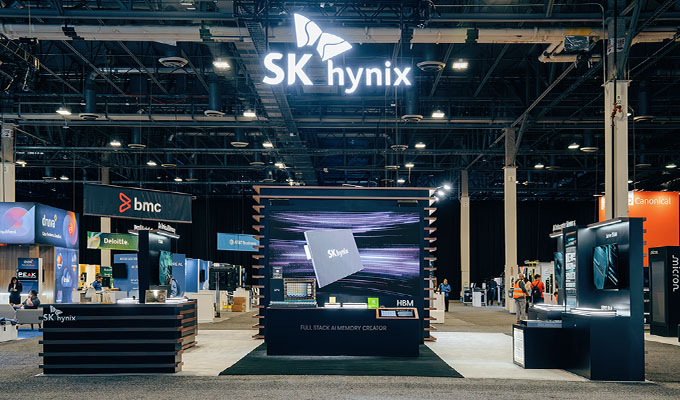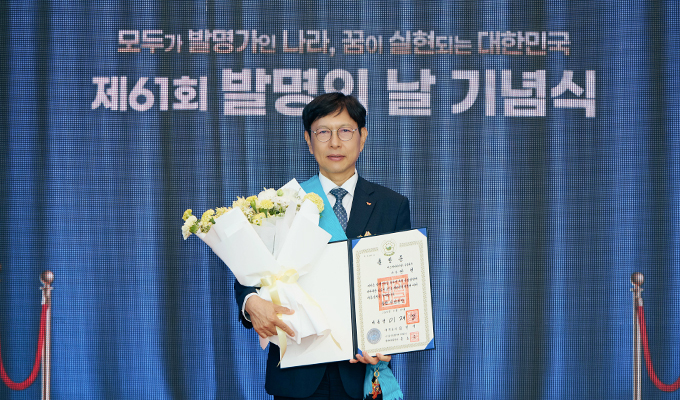
Did you ever stop to think about what really happens after the celebratory speeches? SK hynix just snagged a Gold Tower Order and a Presidential Citation at the 61st Invention Day ceremony. On the surface, it’s a win for their HBM4 and 321-layer 4D NAND. But dig a millimeter deeper, and you see a company signaling a seismic shift in the AI memory landscape. This isn’t just about building faster chips; it’s about architecting an entirely new paradigm for data processing.
Here’s the thing: these awards aren’t just pats on the back. They’re acknowledgments of SK hynix’s role in moving the AI memory market from an era defined by rigid standards to one demanding bespoke, on-the-fly solutions. Chief Development Officer Ahn Hyun’s own words paint this picture vividly:
“The HBM market is transitioning from an ‘era of standards,’ where products are supplied to predefined specifications, to an ‘era of customization,’ where we must respond swiftly to diverse customer needs. We must now evolve beyond being a product provider into a ‘Creator’ that works alongside customers from the design stage to develop optimal solutions.”
That’s a crucial distinction. For years, memory vendors have offered a relatively fixed menu of products. But as AI workloads have exploded in complexity and scale, that model is breaking down. Think about it: training massive language models, running complex simulations, or analyzing petabytes of sensory data – these aren’t monolithic tasks. They demand memory solutions that are intimately tailored to the specific computational patterns and data flows of the application. SK hynix is essentially saying they’re building the bespoke suits, not just the off-the-rack shirts, for the AI era.
The Architecture of AI Memory Customization
What does this shift toward customization actually look like under the hood? It’s a move away from monolithic, general-purpose memory modules toward highly integrated systems. SK hynix is investing heavily in technologies like CXL (Compute Express Link) and PIM (Processing-in-Memory). CXL, in particular, is a game-changer. It allows for coherent memory sharing between CPUs, GPUs, and accelerators, breaking down the traditional I/O bottlenecks that have long plagued high-performance computing. Imagine data not just being moved to the processing unit, but becoming an extension of it, residing in a shared memory pool that’s dynamically allocated and optimized.
Their work with NAVER Cloud on CXL 5 and PIM is a real-world validation of this architectural shift. It’s about proving that these advanced memory technologies can move from the lab into production environments, optimizing system performance in tangible ways. It’s the messy, iterative process of engineering that separates hype from reality, and SK hynix seems to be embracing it.
Then there’s the NAND side of the equation. The ‘AI-NAND Family’ strategy — with products like ‘AIN-P’ for high-speed eSSDs and ‘AIN-B’ leveraging TSV for high bandwidth — is another piece of this puzzle. Traditional NAND, while essential for dense storage, often becomes a bottleneck for the rapid data retrieval needed by AI. By integrating technologies like TSV (Through-Silicon Via), SK hynix is essentially stacking memory dies vertically, shortening the signal paths and dramatically increasing bandwidth. This is crucial for feeding the ravenous appetites of AI models that constantly need to access vast datasets.
Beyond HBM4: The Dawn of Custom HBM
The mention of “Custom HBM” and “HBF3” (likely referring to a Host Buffer Fabric technology) alongside HBM4 signals a future where even high-bandwidth memory isn’t a one-size-fits-all proposition. HBM itself was a revolutionary step, stacking DRAM dies vertically to connect directly to GPUs. But as computational demands diverge, so too will memory requirements. Custom HBM means SK hynix might be designing specialized HBM variants for specific AI accelerators or even for unique computational tasks within a single system. This level of integration and specialization is a far cry from simply shipping more gigabytes of a standard product.
This move also has profound implications for the broader semiconductor ecosystem. It necessitates tighter collaboration between memory manufacturers, chip designers (like AMD, Intel, NVIDIA), and system integrators. The traditional vendor-supplier relationship is evolving into a more symbiotic partnership where co-design and early engagement are paramount. SK hynix’s strategic partnership with SanDisk on AIN-B’s product name HBF exemplifies this trend. They’re not just building components; they’re building integrated solutions.
The Real Story: Mastering the AI Data Pipeline
Ultimately, the awards SK hynix received are just a marker. The real story is their deep dive into the entire AI data pipeline. They’re not just providing the pipes; they’re designing the valves, the reservoirs, and the control systems. From the ultra-fast DRAM layers of HBM to the high-bandwidth, application-specific NAND, SK hynix is positioning itself as a master architect of the data infrastructure that underpins artificial intelligence.
This is more than just technological leadership; it’s a fundamental redefinition of what memory means in the age of AI. It’s about moving beyond speed and capacity to intelligent, adaptive, and deeply integrated data solutions. And that’s a narrative that deserves more than just a ceremonial nod.
🧬 Related Insights
- Read more: Apple’s Memory Grab: Chinese Flagships Face Extinction
- Read more: Intel’s Q1 2026 Earnings Call: Another Chapter in the Chip Giant’s Slow Burn
Frequently Asked Questions
What is the significance of SK hynix’s awards at the 61st Invention Day Ceremony? The awards recognize SK hynix’s leadership in AI memory technology, particularly their work on HBM4 and advanced NAND, signaling a shift towards customized memory solutions for AI applications.
What is CXL and why is it important for AI memory? CXL (Compute Express Link) is a high-speed interconnect standard that allows for more efficient sharing of memory between CPUs, GPUs, and accelerators, reducing bottlenecks and improving overall system performance for AI workloads.
How is SK hynix adapting its NAND strategy for AI? SK hynix is developing an ‘AI-NAND Family’ with specialized products like AIN-P and AIN-B, utilizing technologies like TSV to increase bandwidth and speed, making NAND more suitable for the rapid data access demands of AI.