QLC NAND grabs just 22% of the cSSD market this year. By 2027? 61%, per IDC.
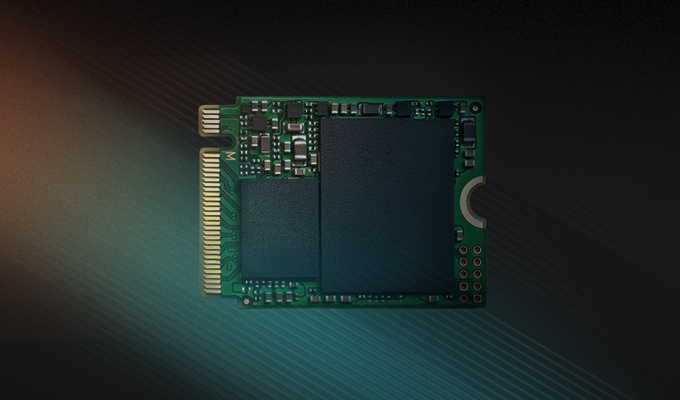
SK hynix wants in on that boom. Badly. They’ve kicked off supplies of their 321-layer QLC cSSD — dubbed PQC21 — to Dell starting April 2026. High capacity, zippy performance, low power. Tailor-made for AI PCs, they say.
But hold on. Is this leadership or just another layer of hype?
Why SK hynix’s 321-Layer QLC Feels Like Déjà Vu
Remember the NAND wars of the 2010s? Everyone stacked layers higher, promising density dreams. Samsung hit 128. Micron piled on. Then endurance woes hit — writes tanked, costs soared for fixes. SK hynix’s 321 layers? Impressive stack. QLC crams four bits per cell, juicing capacity to 1TB or 2TB in slim client SSDs. SLC caching helps burst speeds for hot data.
Sounds solid. Except QLC’s the budget cousin — cheaper per GB, sure, but it wears out faster under heavy writes. AI PCs? Constant model tweaks, dataset churn. That’s write-heavy hell.
SK hynix spins it as ‘overwhelming technological capabilities.’ Cute.
“The supply of the 321-layer QLC-based cSSD marks an important milestone that demonstrates our leadership in the AI PC market,” said an SK hynix official. “We will continue to lead the high-performance NAND solution market on the strength of our overwhelming technological capabilities.”
Overwhelming. Yeah.
Does 321-Layer QLC Actually Boost AI PC Performance?
Look, capacity’s king in AI. Local LLMs gobble terabytes — think 70B-parameter models needing 140GB quantized. 2TB cSSD? Fits multiple. Power sip helps thin laptops. But performance? SLC cache shines for reads, but sustained writes? QLC stumbles.
Dell gets first dibs. Smart move — enterprise validation. Global expansion next. Market share grab in QLC cSSDs. But here’s my unique poke: this mirrors Intel’s Optane flop. Hyped as AI accelerator storage. Died because DRAM-NAND hybrids couldn’t scale costs. SK hynix avoids that trap — pure NAND — but QLC’s durability dodge (via caching) feels like the same PR sleight. Prediction? By 2028, we’ll see AI PC benchmarks calling out QLC throttling.
Short-term win. Long-term? Jury’s out — and skeptical.
Stacking 321 layers isn’t magic. It’s physics pushed hard. Defect rates climb. Yields drop. SK hynix claims they’ve nailed it. We’ll see when volumes ramp.
Is Dell Locked In, or Shopping Around?
April 2026 supply start. Not tomorrow. Gives time for validation. Dell’s picky — AI PCs demand reliability. SK hynix’s play expands options: 1TB for budget, 2TB for beasts.
But competition? Samsung’s 236-layer V-NAND already ships QLC. Micron’s 232-layer TLC dominates enterprise. SK hynix leapfrogs layers, but QLC purity? Risky for pros.
And power efficiency — low draw matters for battery life. AI inference on Copilot+ PCs? Storage I/O bottlenecks kill it. If PQC21 delivers, great. If not, Dell bolts.
Corporate spin screams ‘leadership.’ Reality? Incremental. QLC market grows because TLC prices rise, not because it’s perfect. SK hynix rides the wave, not creates it.
One punchy fact: 321 layers mean tighter etches, better bits-per-die. Math checks out for density. But real-world AI? Datasets write once, read forever. QLC thrives there — until fine-tuning hits.
The Hidden QLC Gotcha for AI Workloads
QLC’s rep: high density, low cost. Tradeoff? Endurance. TLC does 3 bits/cell, lasts 3-5x longer. SLC? 10x TLC. QLC caches SLC mode for speed, drops to QLC for bulk. Fine for consumers. AI PCs? Edge inference, local training bursts. Writes spike.
SK hynix bets caching covers it. Maybe. But my bold call: OEMs add wear-leveling firmware hacks by 2027. Or switch back to TLC for premium SKUs. History repeats — like 3D XPoint’s endurance pitch that fizzled.
Still, credit where due. First 321-layer QLC cSSD. Dell partnership. Momentum.
Market share? IDC’s 61% QLC by ‘27 assumes AI drives capacity hunger. Fair. But if DRAM prices crash or CXL memory pools standardize, local NAND shrinks. Wildcard.
What This Means for Your Next AI Laptop
Buyers, don’t drool yet. 2026 timeline. Test endurance yourself — tools like CrystalDiskMark stress SLC cache quick. Real AI? Run Llama.cpp benchmarks.
SK hynix pushes boundaries. Good. But leadership claims? Prove it in silicon, not slides.
Dry humor aside — this cSSD could pack more AI locally, cut cloud bills. If it lasts.
🧬 Related Insights
- Read more: Nvidia’s Groq 3 LPU: Why Inference Just Ate Training’s Lunch
- Read more: 782 GB Checkpoints Are Bankrupting LLM Training—nvCOMP Fixes It in 30 Lines
Frequently Asked Questions
What is SK hynix 321-layer QLC NAND cSSD?
It’s a high-density client SSD with 321 NAND layers and QLC tech, offering 1TB/2TB capacities for AI PCs. Combines density with SLC caching for speed.
When does SK hynix start supplying Dell?
Full-scale supplies begin April 2026, targeting AI PC storage needs.
Is QLC NAND reliable for AI workloads?
Capacity king, but endurance lags TLC. Caching helps bursts; sustained writes wear it faster. Fine for inference, risky for training.