Slurm job queued. Heart pounding. Will it snag the right NVLink partition on that GB200 NVL72 rack, or scatter GPUs like confetti across domains, torching performance?
We’ve all been there—or will be, if you’re wrangling rack-scale supercomputers for AI workloads. NVIDIA’s GB200 NVL72 and the incoming GB300 siblings aren’t just bigger boxes. They’re 18-tray behemoths, laced with NVLink fabrics that scream high-bandwidth dreams. But here’s the kicker: without topology-aware scheduling, they’re a nightmare.
Why NVIDIA’s Hiding the Real Magic Behind the Hardware Hype
Look, I’ve covered Silicon Valley since the dot-com bust. NVIDIA’s PR machine churns out specs that’ll make your eyes water—1.8 exaflops per rack, shared memory across nodes via IMEX trays. Impressive? Sure. But who cares if your scheduler treats it like a flat GPU puddle?
The original pitch from NVIDIA nails it:
The mismatch between rack-scale hardware topology and scheduler abstractions is where most of the operational complexity lives.
Spot on. Schedulers like vanilla Slurm see nodes, not fabrics. Miss the hierarchical NVLink setup—cluster UUID for the whole rack’s domain, clique ID for partitions—and your multi-node training job crawls.
Rack-scale supercomputers demand brains. Enter NVIDIA Mission Control. It’s the control plane that groks NVLink and IMEX natively, plugging into Slurm or Run:ai. No more blind allocation. Cluster UUID says, “These GPUs share a rack’s fabric.” Clique ID whispers, “Stick to this partition for low-latency bliss.”
But. Cynic hat on: NVIDIA’s not handing this out free. It’s validated software for their Grace Blackwell NVL72, soon Rubin NVL8. Integrates smoothly? Yeah, because it’s their ecosystem. Competitors like AMD or Intel? Good luck reverse-engineering those UUIDs.
Is Slurm Topology Enough for GB200 NVL72 Mayhem?
Short answer: Barely, without tweaks.
Enable the topology/block plugin. Map NVLink partitions to Slurm blocks—one per rack or slice. Jobs default to single-block bliss, preserving Multi-Node NVLink (MNNVL) speed. Spill over? Explicit tradeoffs, not surprises.
Take two racks. Same Slurm queue, sure. But shoving a 16-GPU job across racks? Latency spikes. Performance tanks 10x sometimes—I’ve seen it in early DGX tests. Blocks fix that. QoS at user level gates the premium partitions.
Here’s my unique take, absent from NVIDIA’s post: This echoes the Cray-1 era. Back in ‘76, those vector supercomputers shipped with custom loaders because off-the-shelf OSes couldn’t grok the pipes. NVIDIA’s doing the same—proprietary topology IDs as the new vector registers. Bold prediction: By 2026, hyperscalers ditch generic schedulers entirely, locking into NVIDIA’s stack. Who profits? Not you, the operator scrambling for talent who speaks “clique ID.”
NVIDIA hates admitting it, but hardware’s 20% of the battle. The rest? Software duct tape.
And Run:ai? Smarter still. It layers AI-specific smarts atop Mission Control—dynamic scaling, isolation without silos. For factories churning LLMs, it’s gold. But pricey. Who’s paying? Meta, OpenAI, the usual suspects burning billions on inference.
Why Does NVLink Topology Actually Matter for AI Workloads?
Simple: Placement over count.
Your 256-GPU fine-tune? Spread wrong, and NVLink’s 1.8TB/s per GPU evaporates into Ethernet slop. IMEX trays share memory across nodes—genius for scaling—but only if cliques align.
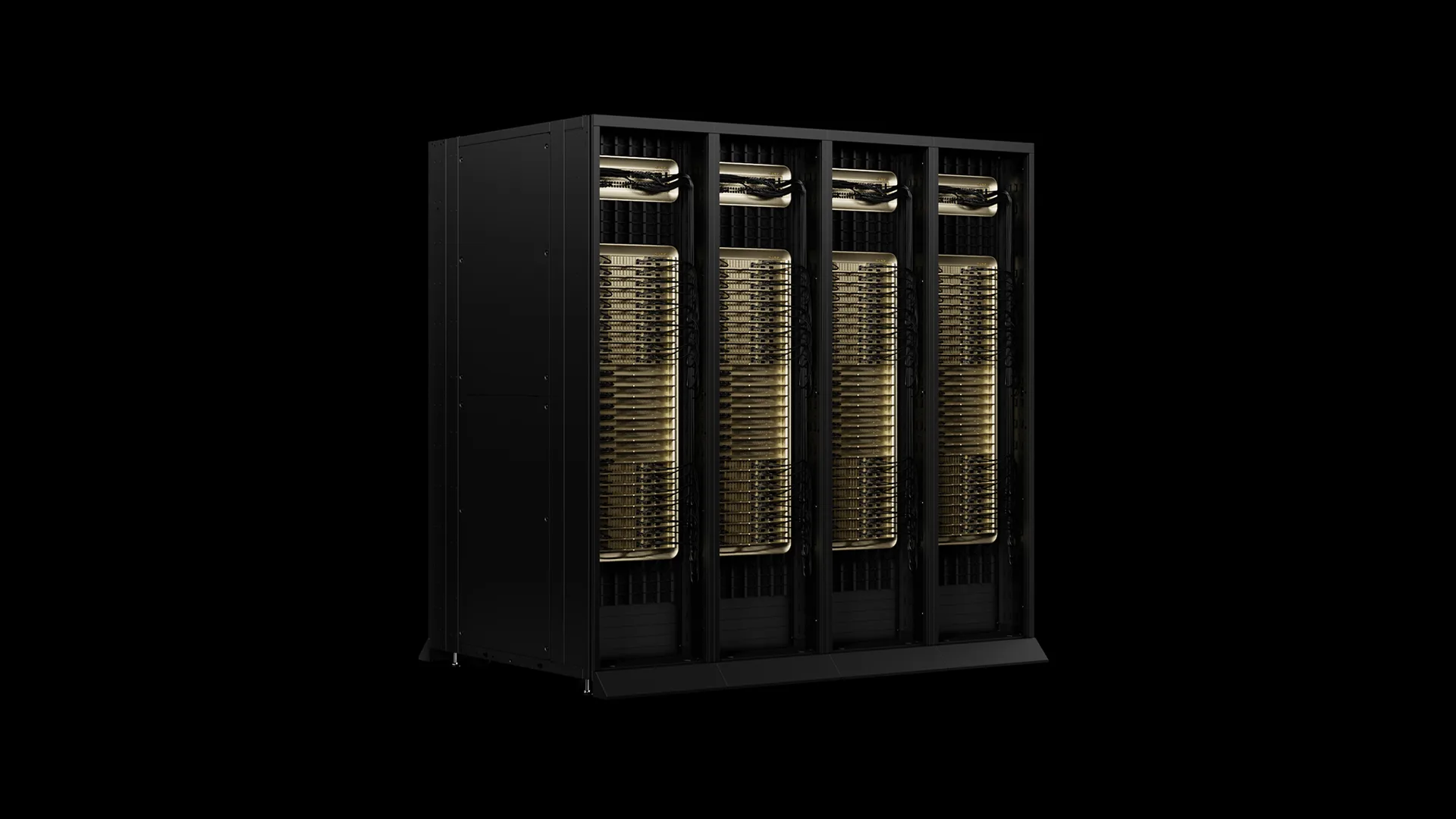
Physical rundown: 72 GPUs, NVLink switches weaving trays. One rack, one cluster UUID. Slice into partitions? Clique IDs diverge. Schedulers query these, allocate accordingly. Boom: Predictable perf, isolation, no noisy neighbors.
Operators love it. Users? Invisible. Job lands optimal, trains fast. No PhD in fabrics required.
Skeptical aside—NVIDIA’s spinning this as “easy AI factory.” Cute. But early adopters whisper of firmware quirks, where UUIDs mismatch post-reboot. Patches incoming, they say. We’ll see.
Future-proofing hits with Rubin NVL8. Smaller? 8 trays maybe, but same smarts. Mission Control scales. Slurm evolves. Run:ai polishes.
My beef: Buzzword-free? NVLink, MNNVL—fine. But “AI factory?” Spare me. It’s a datacenter rack with better plumbing.
The Money Trail: Who’s Cashing In on Rack-Scale?
NVIDIA, duh. Selling racks at $3M a pop? Cha-ching. But Mission Control subscriptions, Run:ai licenses—that’s the annuity. Platform operators? They save on ops teams, but hire NVIDIA-certified wizards. End users? Faster models, sure. But locked vendor? Ouch.
Historical parallel: Sun Microsystems in the 90s. Solaris clustering owned HPC before Linux ate it. NVIDIA’s gunning for that moat.
Critique time: PR spin calls it “operational AI factory.” Translation: We fixed our own mess. Hierarchical hardware begs hierarchical software. Don’t buy the rack without the stack.
Word to the wise: Test in sims first. NVIDIA’s docs gloss over edge cases—like partial rack fills or mixed workloads. Real-world? Two racks, hybrid jobs. Clique sprawl kills.
🧬 Related Insights
- Read more: NVIDIA’s H100 SuperPOD Predicts Millions of Protein Complexes Overnight
- Read more: Symantec CBX: Broadcom’s Bid to Weaponize Security for the Resource-Poor
Frequently Asked Questions
What is NVIDIA Mission Control?
Rack-scale control plane for GB200/GB300 NVL72, bridging NVLink topology to schedulers like Slurm and Run:ai.
How does NVLink topology work in rack-scale supercomputers?
Cluster UUID for rack-wide domain, clique ID for partitions—enables low-latency GPU grouping without user hassle.
Will topology-aware scheduling replace Kubernetes for AI?
Not yet—Slurm leads HPC/AI factories, but K8s with plugins lurks for cloud natives.