AI gets a rocket boost.
Forget incremental steps; we’re talking about a quantum leap, the kind that redraws the map of what’s possible. We’ve been talking about AI as a tool, a clever assistant for crunching numbers. But what we’re seeing now, with advancements like NVIDIA’s new RTX PRO 4500 Blackwell Server Edition, is AI stepping onto the stage as a fundamental platform shift, much like the internet or the smartphone before it. This isn’t just about faster processing; it’s about unlocking entirely new capabilities that were, until now, locked behind insurmountable computational walls.
The twin pillars of modern medicine – understanding disease at the genomic level and finding treatments at the molecular level – are now directly benefiting from this accelerated computational power. Think about it: sequencing the entire human genome used to be a decade-long saga. Now? Hours. This isn’t just a tech demo; it means catching diseases earlier, diagnosing them faster, and tailoring treatments with a precision we only dreamed of a few years ago. The bottleneck hasn’t vanished; it’s simply shifted, from generating the raw data to making sense of it all at the speed of human life. And that’s where the real magic happens.
The Data Deluge Demands a Supercharger
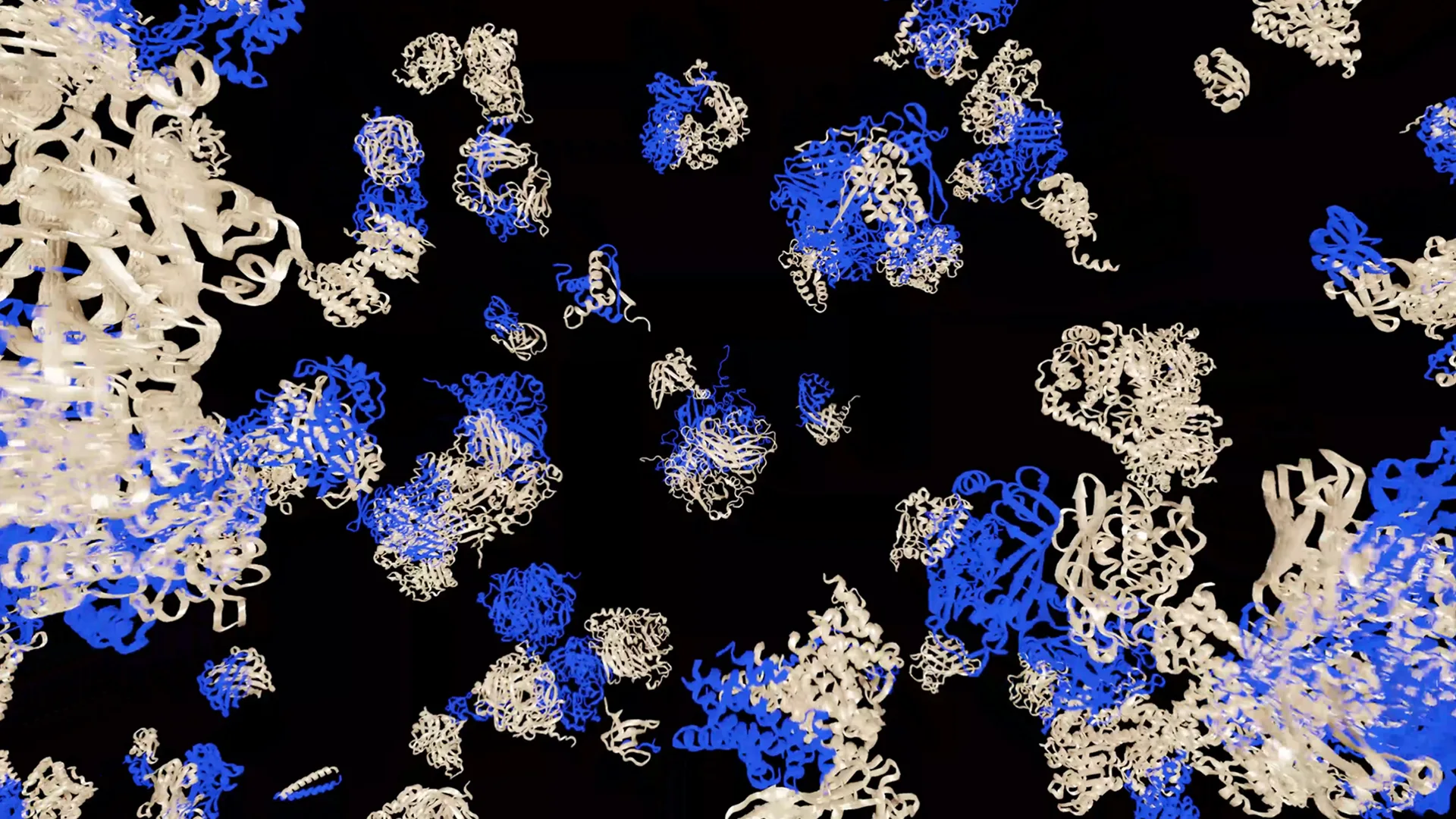
When sequencing speeds plummeted from years to hours, the spotlight swung to analysis. Faster data generation is only useful if you can actually do something with it. Clinicians, especially in high-stakes fields like oncology or NICUs where every second is a precious commodity, need answers yesterday. Waiting days for genomic analysis is like bringing a horse and buggy to a Formula 1 race. It just doesn’t cut it anymore. Similarly, the arduous, years-long process of understanding protein structures for drug development has been dramatically shortened by AI tools like AlphaFold, shrinking it down to mere hours or even minutes. Genomics gives us the ‘what’ and ‘why’ of disease; protein folding gives us the ‘how’ to fight it. They’re two sides of the same vital coin, and now that coin is being minted at an unprecedented speed.
NVIDIA’s BioNeMo platform, coupled with tools like Parabricks and the new RTX PRO 4500 Blackwell, are turning these aspirations into tangible realities. Parabricks, for instance, takes established, open-source genomic analysis tools and supercharges them with GPUs, slashing analysis times from hours to minutes. This isn’t just about shaving off a few percentages; it’s about fundamentally altering the research and clinical workflow, allowing insights to surface and decisions to be made with a speed that mirrors the urgency of the biology itself.
The RTX PRO 4500 Blackwell Server Edition GPU itself is a marvel of engineering. It’s compact, it’s efficient, and it packs a serious computational punch, designed for everything from cloud environments to edge deployments. But its real shine comes when it’s put to work on these demanding life sciences workloads. Taking on tasks like sequence alignment and variant calling – traditionally hours-long CPU-bound slogs – the RTX PRO 4500 Blackwell shows its mettle. Tools like Minimap2 and fq2bam, crucial for mapping genetic sequences, and DeepVariant, Google’s AI-powered variant caller, see performance boosts that are frankly astonishing. We’re talking roughly double the speed for Minimap2 and DeepVariant compared to previous-generation NVIDIA L4 GPUs, and an even more dramatic 2.4x leap for fq2bam.
“We see more than a 2x improvement in basecalling throughput over the L4 GPU, with a power and size profile that opens new possibilities for how and where sequencing analysis can happen,” says Armin Töpfer, senior director of instrument analysis at Pacific Biosciences. “This, coupled with a speed and increase in the Parabricks minimap2 and DeepVariant tools, truly accelerates our ability to deliver critical insights to researchers and clinicians.”
This isn’t just a quote; it’s a roadmap. The ability to perform complex analyses faster, in smaller form factors, and with greater energy efficiency means that cutting-edge genomics and protein folding research can happen not just in massive data centers, but potentially closer to the point of care, or even in more resource-constrained labs. Imagine a world where the computational power to dissect a genome or predict a protein’s behavior isn’t limited to a select few hyperscale facilities. That world is unfolding before our eyes.
Is This the Real Deal, or Just More Hype?
I’ve seen my fair share of product announcements that promise the moon and deliver a slightly shinier rock. But here’s the thing: the integration of powerful AI platforms with specialized hardware like the RTX PRO 4500 Blackwell isn’t just about boosting existing benchmarks. It’s about creating an entirely new ecosystem for scientific discovery. The BioNeMo platform, for example, is designed to democratize access to these advanced AI models. It’s like providing the blueprints and the specialized tools for building the next generation of scientific applications. When you combine that with hardware that can execute those blueprints at lightning speed, you get a virtuous cycle of innovation.
My unique insight here? This isn’t just about accelerating current research; it’s about enabling entirely new scientific paradigms. The speed and scale offered by NVIDIA’s latest hardware, powered by their AI software stack, means we can start asking questions we couldn’t even formulate a few years ago. We can simulate more complex biological interactions, explore larger chemical spaces for drug discovery, and build more sophisticated predictive models for disease progression. This feels less like an upgrade and more like the ignition of a new era for biological and medical science, powered by silicon.
The raw numbers, as highlighted in the table, are compelling:
| Tool | NVIDIA RTX PRO 45002 GPUs(mins) | NVIDIA L42 GPUs(mins) | | Minimap2 | 15.8 | 30.1 | | fq2bam (BWA-MEM – Paired End) | 13.4 | 32.5 | | DeepVariant(Short-Read) | 7.5 | 15.0 |
These aren’t just abstract figures; they represent significant reductions in processing time, which translates directly into faster research cycles, quicker clinical decisions, and ultimately, better patient outcomes. The energy efficiency aspect is also critical – doing more with less power is not only good for the planet but also crucial for scaling these technologies globally. It’s the quiet revolution happening inside the humming servers.
🧬 Related Insights
- Read more: China’s GPU Ban: What Jensen Huang’s Visit Really Means
- Read more: Taiwan’s AI Infrastructure Boom: More Than Chips
Frequently Asked Questions
What does the NVIDIA RTX PRO 4500 Blackwell actually do for genomics? It dramatically speeds up the analysis of genomic data. Tools like Parabricks use it to perform sequence alignment and variant calling (identifying genetic differences) in minutes instead of hours, enabling faster diagnosis and treatment decisions.
Will this new GPU replace scientists or doctors? No, quite the opposite. This technology is designed to empower scientists and clinicians by removing computational bottlenecks. It allows them to focus on interpretation and decision-making, not waiting for data. It’s an accelerant for human expertise, not a replacement.
How does this impact drug discovery? By rapidly processing protein folding simulations and molecular data, it significantly cuts down the time and cost associated with identifying potential drug candidates. This means new therapies can be discovered and brought to market much faster.