Could your professor be replaced by a chatbot, or worse, an algorithm that grades your papers with chilling, soulless efficiency? Don’t get your tweed jacket in a twist just yet. But the conversation is happening. Loudly.
The Ohio Supercomputer Center (OSC) recently hosted a workshop, conveniently titled “AI in Higher Education.” Nearly 100 folks — faculty, administrators, the whole academic shebang — descended upon The Ohio State University. Why? To talk about how to shove machine learning, big data, and those ubiquitous large language models (LLMs) into classrooms and research labs. Because apparently, the digital landscape is evolving, and we all need to use something.
This isn’t just a local Ohio affair. It’s part of a national push, a little something called the National AI Research Resource (NAIRR) Pilot. The University of Colorado Boulder, bless its heart, is leading one of the NSF ACCESS projects, and OSC is tagging along. David Hudak, the OSC’s executive director, chirped that the event was a forum to educate folks about the “growing number of AI resources available through federal programs.” Translation: The government wants to make sure we’re all playing nicely with AI, and they’re providing the playground.
And who better to pontificate on the AI revolution than… more academics? Experts from Ohio State, Purdue, the University of Illinois Urbana-Champaign, and others. They discussed building campus AI services, grappling with AI in clinical research, and the ever-so-delicate dance around privacy, equity, and ethics. You know, the usual hand-wringing that precedes any significant technological shift. Because nothing says “progress” like a panel discussion on ethical quandaries.
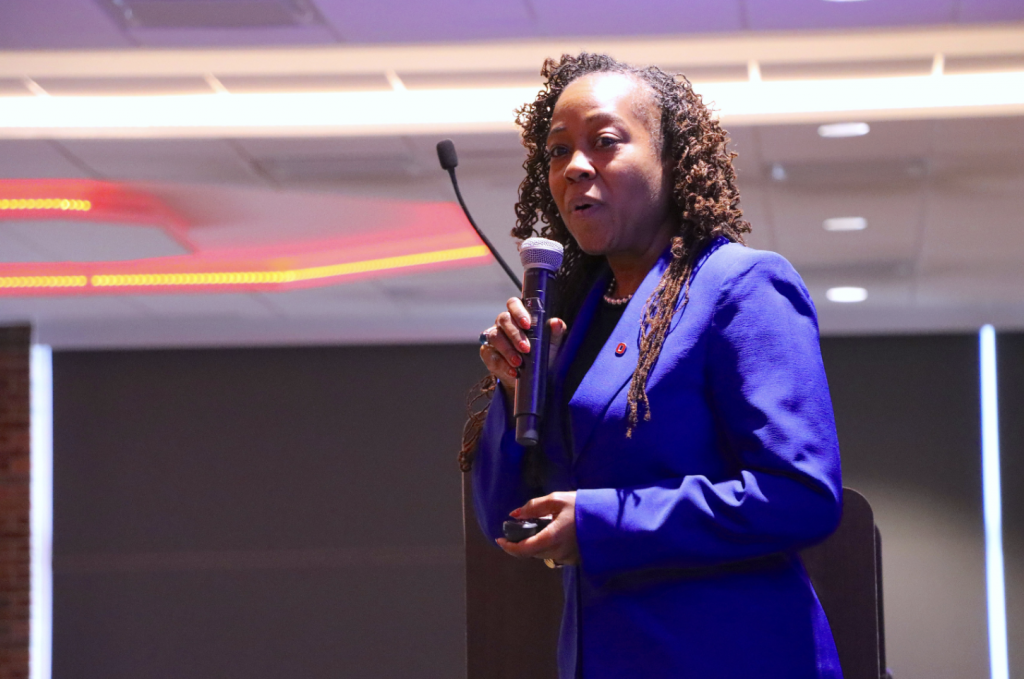
Ayanna Howard, dean of Ohio State’s College of Engineering and author of some book called “Rebooting the Machines,” dropped the keynote. Her thing? Human-AI interactions. She’s been in robotics for thirty years, so she probably knows a thing or two. She talked about how AI fits into the messy reality of our lives. Meanwhile, Timothy Huerta, a medical bigwig at Ohio State, cautioned against letting LLMs run wild. His advice? They should support human judgment, not replace it. A radical idea, I know.
“Weighing issues of privacy, equity, and ethics when using AI tools.”
The workshop also showcased how AI is already being put to work. Designing drugs to counter nerve agents? Check. Tailoring crop management for farmers? Sure. Analyzing millions of images of critters to build a better family tree of life? Why not. It’s not just theoretical navel-gazing; it’s applied AI. And universities are scrambling to create programs to weave this into the student experience. Faculty are being guided on how to teach with AI, and administrators are drafting policies. Mostly to avoid lawsuits, one suspects.
OSC, naturally, hyped its own AI wares: new hardware, new software, and training for all you Ohioans eager to dive into AI workflows. The whole point, really, was to nudge attendees toward using these federal resources. Get them hooked on NSF ACCESS and NAIRR. It’s a classic symbiotic relationship: they provide the infrastructure, you provide the data and the problems.
And in case you were wondering, OSC also hosted its annual Research Symposium. Because if there’s one thing academics love more than a free workshop, it’s another symposium. It was all about how folks in Ohio are using OSC’s supercomputing power for research, education, and innovation. With a special nod to the “fast-growing area of AI.” Naturally.
A Historical Parallel: The Computer Lab Scare of the 80s
Remember when computer labs first popped up in schools? The panic was palpable. Were these machines going to rot young minds? Would students forget how to read and write? It was a similar chorus of doomsaying and cautious optimism. Now, every kid has a smartphone that’s infinitely more powerful than those early mainframes. AI is just the next iteration of that same cycle. Fear, fascination, integration, and eventually, acceptance. The question isn’t if AI will be integrated, but how and by whom. And judging by the OSC workshop, the answer is: slowly, awkwardly, and with a whole lot of committee meetings.
Corporate Hype or Genuine Tool?
Let’s be clear: the hype surrounding AI is deafening. Every company, every university, wants a piece of the AI pie. But underneath the breathless pronouncements, there are actual tools being developed and deployed. The workshops like the one at OSC are crucial for bridging the gap between the buzz and the practical application. Are these tools perfect? Absolutely not. Will they solve all of academia’s problems? Don’t be absurd. But they are becoming indispensable for certain tasks. The trick is to figure out which tasks, and to ensure that human intelligence remains the master, not the servant.
Why Does This Matter for Developers?
For developers, this surge in AI integration in higher education means more demand for AI tools, platforms, and custom solutions. Universities need folks who can build and maintain these systems, integrate them with existing infrastructure, and ensure they’re secure and ethical. It’s also an opportunity to contribute to cutting-edge research, helping to push the boundaries of what AI can do. But it also means understanding the specific needs and constraints of academic institutions, which often operate with different budgets and priorities than commercial enterprises.
Is AI the End of Academia as We Know It?
Probably not. It’s more likely to be a profound transformation. AI can automate mundane tasks, freeing up faculty to focus on teaching, mentorship, and high-level research. It can personalize learning for students, offering tailored support and feedback. But it also raises serious questions about academic integrity, intellectual property, and the very nature of knowledge creation. The institutions that adapt and harness AI thoughtfully will likely thrive. Those that resist or misuse it will probably falter. It’s the classic evolutionary pressure, but applied to higher learning.