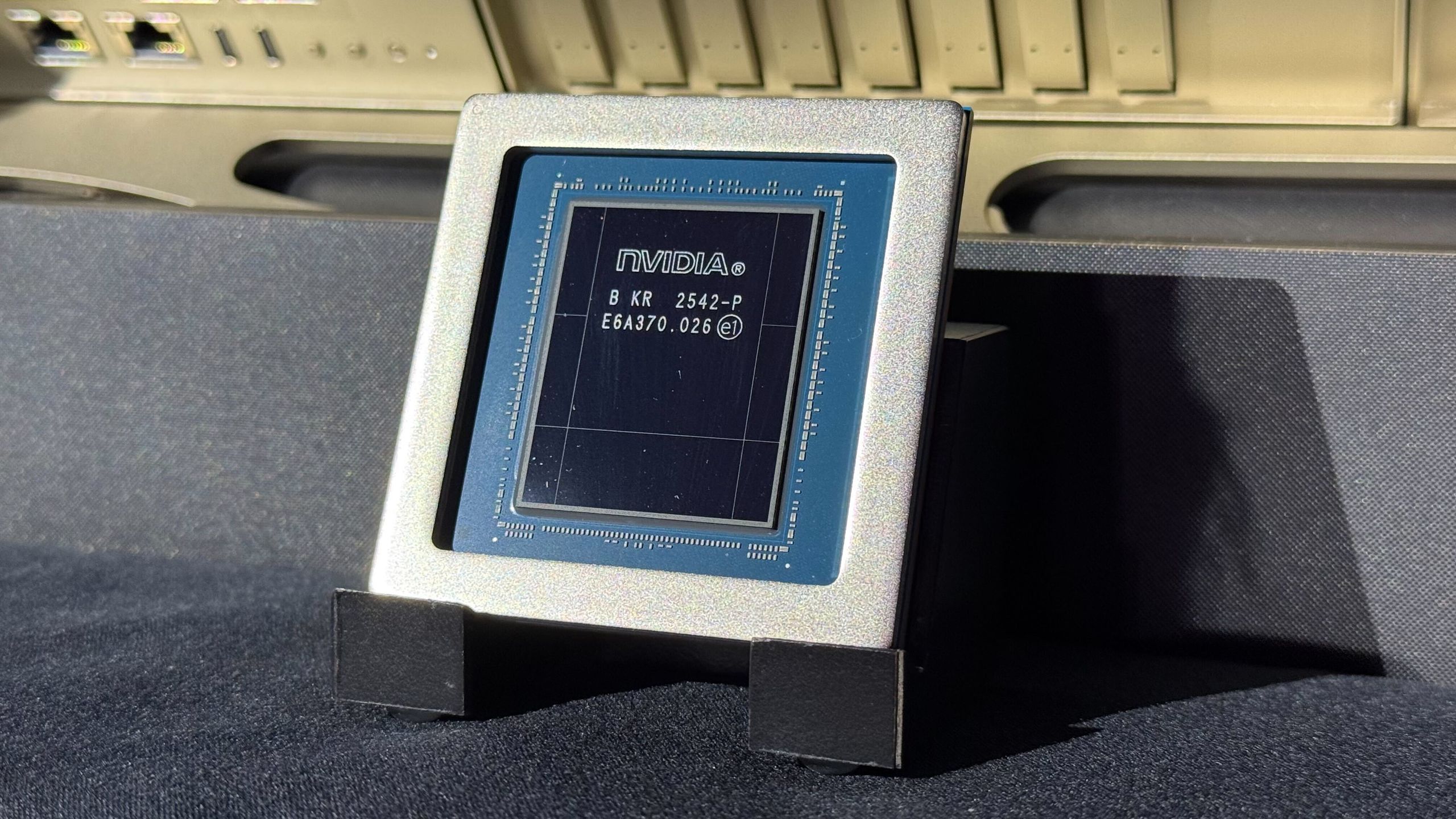
Look, the benchmarks are out. And Nvidia’s 88-core Vera CPU? It’s not just showing up; it’s actually competing. Phoronix, bless their persistent little hearts, got an early look at Nvidia’s custom silicon, and the initial results are… interesting. Forget what you thought about ARM in the server space for a second. This Vera chip, powered by Nvidia’s own ‘Olympus’ cores—not licensed Arm designs, mind you—is throwing haymakers at AMD’s EPYC and Intel’s Xeon. They’re calling it a ‘server-class monster.’ Apt.
Remember Denver? That was Nvidia’s last attempt at a custom CPU core about a decade ago. Cute, but ultimately a footnote. Vera is a different beast entirely. This isn’t some chip scrounging for power on a tablet. This is a data center brute, and the numbers are starting to reflect it. Nvidia invited Phoronix to their Santa Clara HQ. They tested Vera across a suite of common Linux workloads: compilation, memory tests, AV1 encoding, Python, Java, compression, Lua, and databases. The verdict? Vera is right there. Not always winning, but consistently, shockingly close to the top-tier AMD EPYC ‘Turin’ and Intel ‘Granite Rapids’ chips. Michael Larabel of Phoronix put it plainly: Nvidia’s offering “competitiveness to Intel/AMD x86_64 CPUs that [he has] never seen out of any other ARM or non-x86_64 processors.” High praise. And for a first-generation custom server core? Astonishing.
Here’s the kicker: when you look at performance per core, Vera really shines. Historically, ARM’s server strategy was all about core count. Pack enough cores and you can eventually outrun x86. But single-threaded performance? That was always x86’s territory. Not anymore, it seems. In a timed Gem5 compilation, only one AMD EPYC chip edged out Vera on a performance-per-core basis. And in a Linux kernel build? Vera actually beat the competition. This isn’t just closing the gap; it’s redefining the race.
“competitiveness to Intel/AMD x86_64 CPUs that [he has] never seen out of any other ARM or non-x86_64 processors.”
The geometric mean across all tests puts Vera on top. Strong showings in LuaJIT FFTs, ClickHouse, and the Renaissance JVM benchmark absolutely decimated the competition. But let’s pump the brakes slightly. Nvidia, predictably, curated these tests. They focused on what they’re calling their “intended markets and target use-cases.” So, while valid, these numbers aren’t the whole story. Larabel himself admits this is a “small subset” of his usual testing. We’re seeing a highlight reel, not the full documentary.
Power efficiency. The silent killer of ambitious hardware. For consumers, it’s about battery life. For data centers, it’s about the world’s electrical grid groaning under the strain of AI. Nvidia claims a 450W TDP for Vera, plus 50W for its fancy SOCAMM2 memory. The competing x86 chips are rated at 500W before memory. Sounds promising. But TDP is a suggestion, not a guarantee. Actual power draw is what matters when you’re talking about power-hungry AI clusters. We’ll need to see real-world numbers.
Software support, however, is a win for Nvidia. Larabel reports “great upstream open-source support” for Vera. This is huge. How many promising chips have died a slow, painful death due to lack of software love? Vera, at least, looks like it’s arriving with a functioning ecosystem, running on a mainline Linux kernel with no driver hacks required. A small mercy in this industry.
But let’s not get too comfortable. AMD and Intel aren’t standing still. AMD’s upcoming ‘Venice’ is rumored to pack 256 Zen 6 cores. Intel’s ‘Clearwater Forest’ is aiming for 288 Darkmont cores using their bleeding-edge 18A process. The server landscape is about to get a lot more crowded. And a lot hotter.
Is Vera the New King of Servers?
Not yet. These are early benchmarks, hand-picked by Nvidia. The real test will be broader workloads, actual power consumption under load, and how well Vera integrates into the complex mix of enterprise IT. It’s certainly a formidable debut, proving Nvidia can play in the high-end CPU arena. But the competition isn’t just bringing a knife to a gunfight; they’re bringing a railgun.
What About Power Consumption?
That’s the million-dollar question—or rather, the multi-million-dollar data center question. Nvidia reports a 450W TDP for the Vera CPU itself, plus another 50W for its specialized memory. Competitor chips like AMD EPYC and Intel Xeon are typically rated around 500W TDP before factoring in memory. While this suggests Vera might be more efficient, real-world power draw under heavy AI workloads is the true metric and remains to be seen.
🧬 Related Insights
- Read more: AMD’s Ryzen 9 9950X3D2 Dual Edition: 208MB Cache Monster Redefines Gaming Silicon
- Read more: Intel’s Nova Lake: E-Cores Only for Edge?
Frequently Asked Questions
What is the Nvidia Vera CPU? Nvidia’s Vera is a server-class CPU featuring 88 custom-designed ‘Olympus’ cores, utilizing the ARM instruction set. It’s Nvidia’s first major foray into high-performance server CPUs, aiming to compete with established players like AMD and Intel.
How does Vera compare to AMD EPYC and Intel Xeon? In initial Linux benchmarks curated by Nvidia, Vera showed highly competitive performance against select AMD EPYC and Intel Xeon processors, sometimes matching or exceeding them in specific workloads, particularly on a per-core performance metric.
When will Nvidia Vera be available? The provided information focuses on early benchmarks and does not specify an exact release date or availability for the Nvidia Vera CPU.