Imagine you’re a freelance designer, firing up Photoshop, Spotify, and a dozen tabs before coffee’s gone cold. That split-second lag? It’s vanishing from Windows laptops, even against Apple’s vaunted M3 Pro MacBook Pros.
And here’s the kicker—basic app opening tests show modern x86 machines like the ASUS Zenbook S16, powered by AMD’s Ryzen AI 9, pulling ahead of these recent Macs. Not by miles, but enough to notice if you’re picky about responsiveness.
Why Your M3 MacBook Suddenly Feels Last-Gen
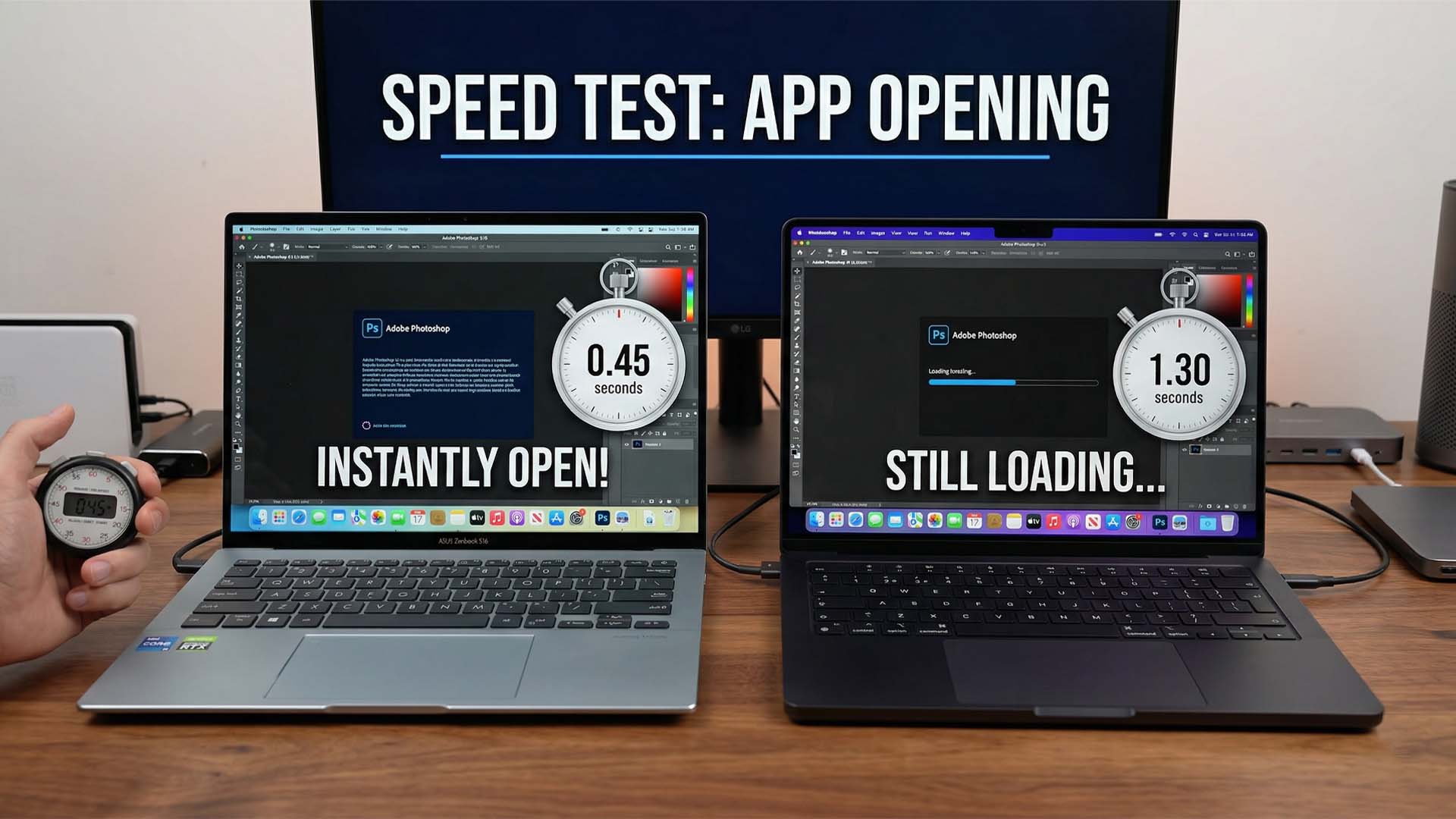
Lewis Doyle, armed with both beasts—his M3 Pro MacBook Pro (36GB unified RAM) and the Zenbook S16 (same memory)—booted them fresh. Mac takes an early lead. Then Evernote? Zenbook wins. MS Word, Spotify? Windows again, snappier every time.
“The start of the test includes a fresh boot, with the MacBook Pro gaining a lead against its rival. Next is Evernote, which opens up faster on the Zenbook S16, and MS Word and Spotify fire up faster on the Windows machine.”
Doyle’s no lab coat; he’s just a guy who owns both, posting raw times that sting for Apple fans.
But wait—don’t trash your Mac yet. Dig into the how. Older MacBook Pros? They’re saddled with PCIe NVMe Gen 4 SSDs at slower speeds. Lower IOPS means apps crawl out of storage. The Zenbook? Faster Gen 4 implementation, zippier NAND pulls data quicker. Fill those drives near capacity (who doesn’t hoard files?), and Macs throttle harder—unmentioned in the test, but real-world killer.
It’s not the M3 Pro chip choking; single-core, it’s still a monster. No, this is storage architecture biting Apple. They’ve leaned on custom flash for years—tight integration with macOS, sure—but commoditized SSDs in Windows rigs are catching up, fast.
Look, a decade ago, PowerPC Macs got smoked by Intel x86 in raw speed, forcing Apple’s hand. History rhymes here: x86 Windows laptops closing the ‘snappiness gap’ not through CPU miracles, but SSD evolution. My unique take? This presages PCIe 5.0 dominance. Windows OEMs will spec it everywhere; Apple’s older lineup can’t pivot overnight. Bold prediction: By 2026, midrange Windows ultrabooks will feel premium-faster than base M-series Macs for everyday launches.
Does SSD Speed Trump Chip Bragging Rights?
Absolutely. IOPS—I/O operations per second—dictate launch times more than peak flops for cold starts. macOS optimizes beautifully for sustained workloads (scrolling Safari? Butter), but Windows? It’s closing the fluidity myth too, especially with Ryzen AI’s NPU tweaks for hybrid scheduling.
Corporate spin alert: Apple’d tout ‘unified memory magic’ here, but tests like Doyle’s expose the gap. M3 Pro should dominate launches—yet doesn’t, thanks to drive specs. Zenbook’s edge? Likely Samsung or WD Gen4x4 sticks hitting 7,000MB/s reads; some M3 configs limp at 5,000ish.
One short para punch: Fair? No. But telling.
Deeper why: Battery life, thermals? Unscored. Windows isn’t macOS-smooth always—hitches in Word scrolling? Possible. Yet for $1,500-2,000 buyers, this levels the field. Students, coders opening VS Code stacks—Windows snappiness means no ‘Apple tax’ for basics.
And the M5 showdown? That’s the real test. Newer PCIe 5-ready SSDs across both camps. But if AMD/Intel keep NAND arms race going, parity sticks. Apple rebuilds lead via software polish, not hardware alone.
Here’s the thing—real people win. No more ‘Macs just feel faster’ dogma without caveats. Test your own: Time Chrome from sleep on both. You’ll see.
How Does This Change Laptop Buying in 2024?
Shoppers, pause on M3 deals. Eye Ryzen AI or Lunar Lake Intel for pure zip. Pros? Benchmark your workflow—video edits favor Mac ecosystem still.
Wccftech nods it’s ‘decent showing’ for Windows, but underplays the shift. Storage commoditization erodes Apple’s moat; expect copycats flooding CES 2025 with ‘AI PC’ badges hiding SSD tricks.
Skeptical? Run the test yourself. Boot, launch, clock it. The gap’s closing—permanently.
🧬 Related Insights
- Read more: BrainChip’s Radar Platform: Teaching Radars to Spot Drones from Ducks
- Read more: NVIDIA’s Isaac Gambit: 90% Synthetic Data by 2030, But Robots Still Stumble in the Real World
Frequently Asked Questions
What makes Windows laptops faster than M3 MacBook Pro for app launches?
Mostly SSD speeds: PCIe NVMe Gen4 variances mean higher IOPS on ASUS Zenbook S16 vs older Mac storage configs. Drive fill levels amplify it.
Will newer M5 MacBook Pro beat Windows rivals in speed tests?
Likely yes, with PCIe upgrades—but Windows will match via faster OEM SSDs. Parity ahead.
Should I switch from MacBook to Windows for snappier performance?
If app launches bug you and you’re not deep in Apple ecosystem, yes—test Ryzen AI machines now.