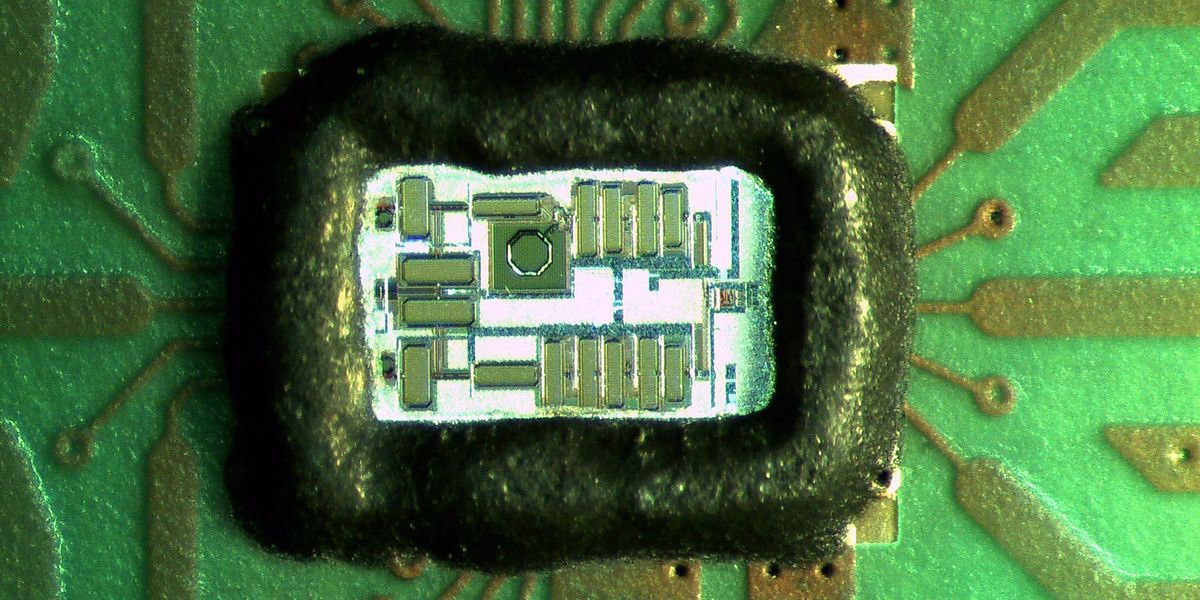
Adam Wang stood in a packed San Francisco ballroom last February, zapping a silicon chip with a low-voltage pulse—watch those tiny arms curl up like hungry flowers, primed to snatch living cells.
Lab-on-a-chip grippers. That’s the breakthrough here, from ETH Zurich’s crew, blending CMOS guts with shape-memory alloys to handle human cells and mini-organs without the usual drama.
Here’s the thing. Growing organoids—those fist-sized brain blobs from stem cells—in a dish is old news. But keeping them pinned for study? Nightmare. Optical tweezers scorch ‘em. Dielectrophoresis fizzles in salty media. And they all guzzle power like bad habits.
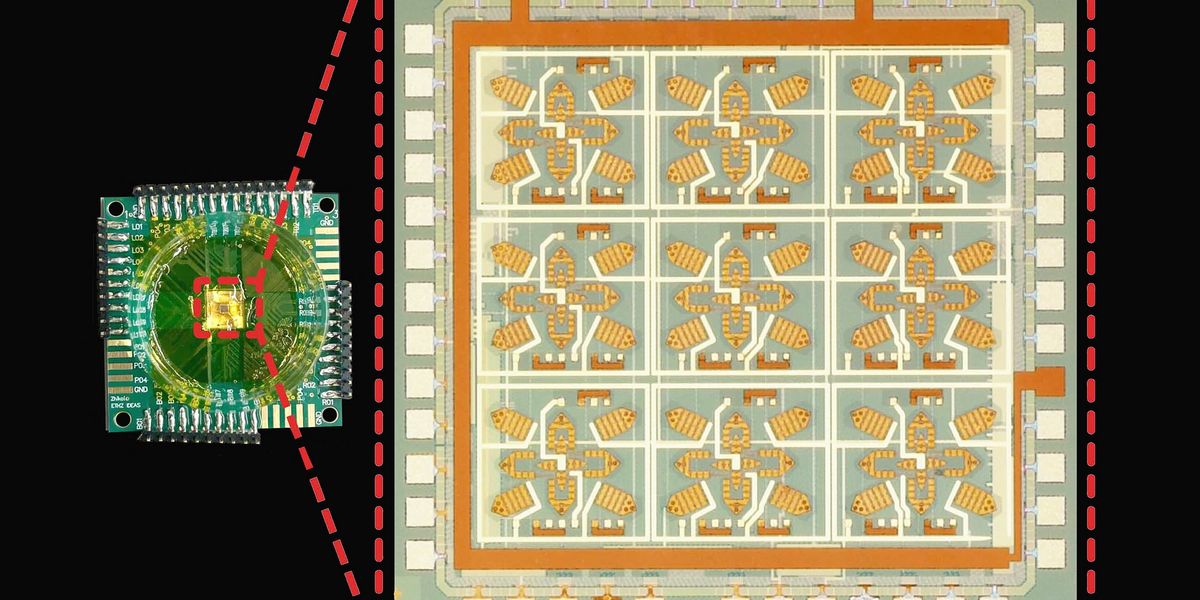
Wang’s team flips that. Their chip packs an array of microcages, nested petals in three sizes: 100, 150, 280 micrometers. Small for lone cells, big for organoid hunks. Made from platinum-titanium layers that remember their shape—no juice needed to hold tight.
How Do These Shape-Memory Grippers Actually Close the Cage?
Zap ‘em with the right polarity. Platinum shifts electrochemical state, arms bend up or flatten down. Done. They stay put until the next zap. Brilliant, right? No continuous current, so no heat frying your delicate neurons.
And it’s CMOS-compatible—standard silicon fab lines crank these out. Electrodes for sensing neurotransmitters? Gold, platinum, palladium mixes boost sensitivity in cell media. Wang demoed it gripping glass beads, sniffing ferrocyanide. Next: real cells.
“Building bioelectronic systems directly on a chip is attractive because it makes it easy to integrate many different features, including chemical sensing, electrical sensing and stimulation, and physical manipulation. However, manipulating biological samples on CMOS chips can be tricky.”
That’s Wang himself, laying bare the pain point. (He’s presenting for lead student Zhikai Huang, who couldn’t make the IEEE Solid-State Circuits gig.)
Look, this isn’t just another MEMS toy. Shape-memory alloys hark back to the ’90s stent boom—metals that snap to life on cue, revolutionizing arteries. Now they’re shrinking to chip scale for bio.
My take? Corporate hype often oversells lab-on-a-chip as ‘organs on demand.’ But this gripper array nails the how: passive holding means scalable arrays, not boutique one-offs. Prediction: pair it with those 10,000-electrode brain eavesdroppers (IEEE Spectrum’s got the scoop), and you’ve got closed-loop neural training on silicon.
Why Are Power-Free Grippers a Game-Changer for Organoids?
Organoids wiggle. They grow unevenly. Study brain dev? You need ‘em stable near sensors—or nudge two together to fuse tissues. Grippers do that gently, low-power.
Traditional traps? Acoustic waves vibrate media, stressing cells. Electric fields? Ions in culture broth kill the pull. This? One-time pulse, bistable lock. Architectural shift: from always-on actuators to event-driven bio-wrangling.
ETH’s nine-spot array mixes sizes per site—like Russian dolls for biology. Control electrodes per set. Sense electrodes everywhere. Future spins? More pads for zapping nerves electrically.
But wait—does it scale? Chips love arrays. Imagine 100x100 cages, auto-sorting stem cells by size, directing diff into neurons or guts. That’s the why: unlocks high-throughput stem cell factories.
Skeptical? Fair. Early microfluidics promised the moon in 2000s, delivered inkjet valves mostly. Yet CMOS maturity (hello, smartphone sensors) tips this toward reality. Wang’s not spinning PR; he’s demoing circuits that work in electrolyte soup.
Can Lab-on-a-Chip Grippers Spark Personalized Med Breakthroughs?
Stem cells from you, grown to mini-liver on this chip. Gripper holds it. Dose with your med cocktail. Sensors watch neurotransmitters spike—or crash. Tweak on the fly.
Why now? Biochips hit adolescence. Past flops ignored integration. This marries manipulation to sensing/stimming smoothly. Historical parallel: MEMS accelerometers killed mechanical gyros in phones. Here, grippers kill tweezers in labs.
Downsides? Alloy biocompatibility—platinum’s safe-ish, but long-term? Tissue adhesion? Tests pending. Still, low-power screams portable diagnostics. Implant? Stretch goal, but organoid co-cultures scream drug screening revolution.
ETH pushes boundaries where Big Pharma drags. No venture fluff, just solid-state ingenuity.
And the brain angle. Neural organoids model Alzheimer’s, epilepsy. Grip ‘em stable, probe with integrated electrodes—hello, in vitro disease models that actually mimic chaos.
The Road from Beads to Brain Blobs
Conference tests: beads gripped, chemicals sniffed. Biological leap next. Wang eyes neurotransmitters, live cells, organoids.
Circuit smarts? Custom drivers pulse precisely, no overkill. Materials play nice in wet worlds—key for CMOS newbies.
Unique edge: nested cages adapt on-site. No swapping chips mid-experiment. That’s architectural gold—flexible without fuss.
Critique time. IEEE crowd geeked on specs, but bio yield? Radio silence yet. Hype risk if cells stick wrong. Still, beats power vampires.
🧬 Related Insights
- Read more: Intel’s Heracles Chip Slashes Encrypted Compute Times by 5,000x—But Is It Ready for the Real World?
- Read more: Nvidia’s Groq 3 LPU: Why Inference Just Ate Training’s Lunch
Frequently Asked Questions
What are lab-on-a-chip grippers?
Tiny shape-memory metal arms on CMOS chips that curl to trap cells or organoids, holding them passively without ongoing power.
How do shape-memory grippers work on biochips?
Electric pulse changes platinum’s state, bending arms up or down; they lock in shape until pulsed again, perfect for low-power biology.
Will lab-on-a-chip grippers replace optical tweezers?
Likely for many apps—cheaper, cooler, CMOS-scalable, though tweezers win for non-contact precision in ultra-clean setups.