A voter taps her phone, encrypts her ballot ID, fires it off to the state database. No decryption needed. The server crunches the match—encrypted—and zips back a yes-or-no in microseconds.
That’s the demo Intel just ran at ISSCC, using its new Heracles chip to showcase fully homomorphic encryption at blistering speed. On a beefy Xeon CPU, the same private query dragged on for 15 milliseconds. Heracles? 14 microseconds. For 100 million ballots, we’re talking 17 days versus 23 minutes.
Why Has Encrypted Computing Been a Snooze Until Now?
FHE lets you compute on data that’s still locked up tight—no peeking required. Dream for paranoid cloud users, genetic testers, or anyone feeding secrets to AI. But here’s the rub: encrypt the data, and it balloons. Orders of magnitude bigger, says Intel’s Anupam Golder.
Ciphertext swamps plaintext. Then you need weird ops—twiddling, automorphisms, bootstrapping to kill noise. CPUs chug through integer math 10,000 cycles slower. GPUs? They parallelize like champs but sacrifice precision for it, generation after generation.
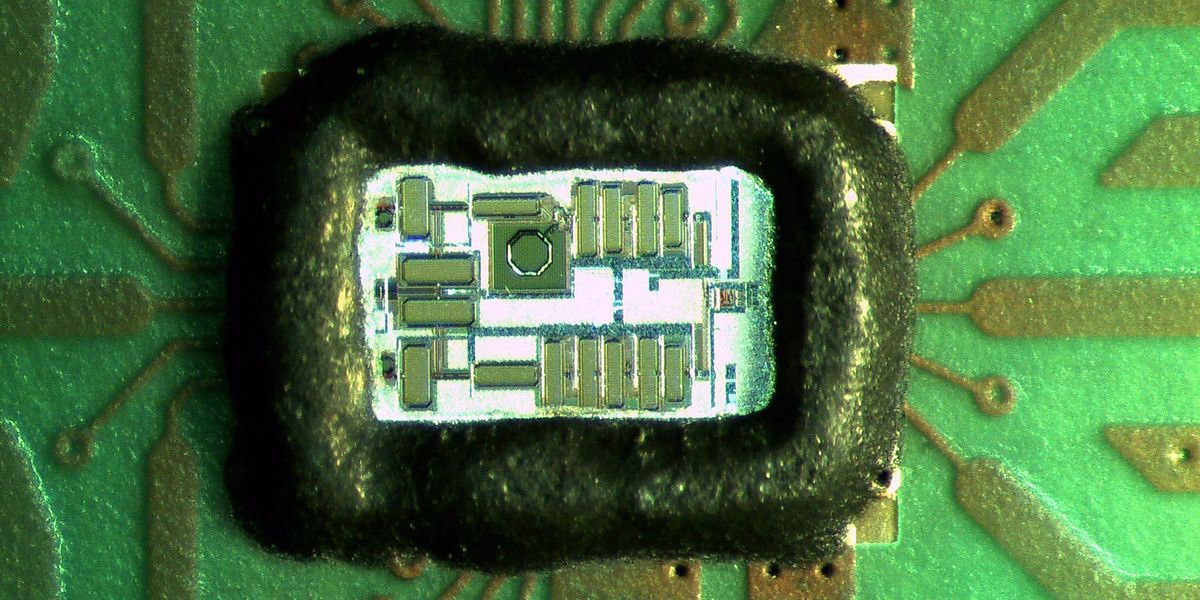
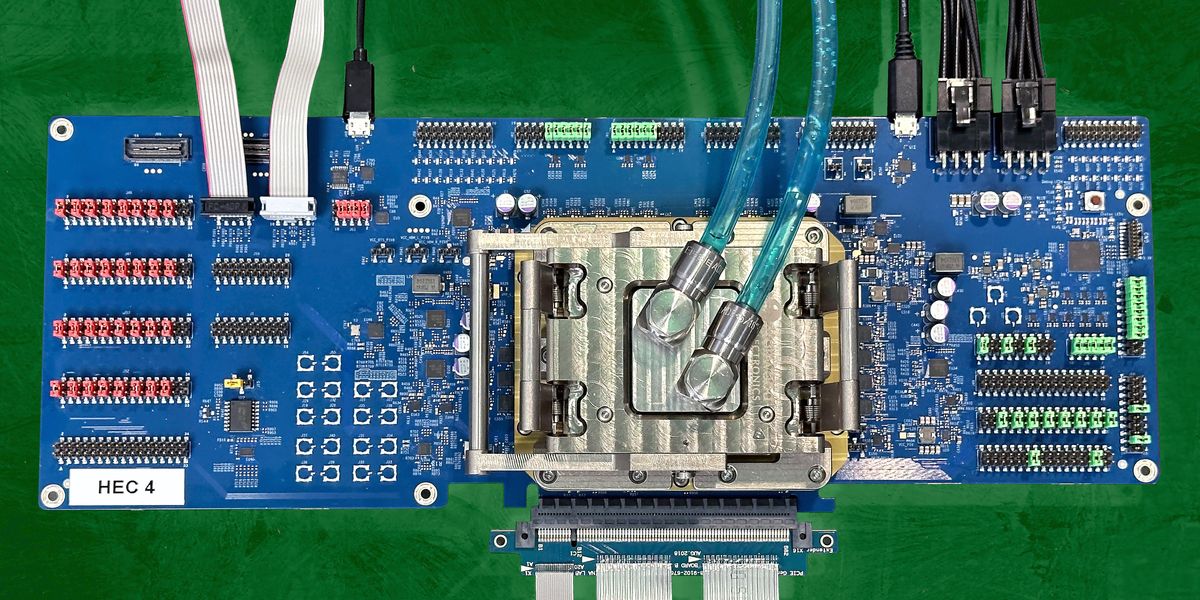
Intel built Heracles to fix that. 3nm FinFET process. Die size 20 times bigger than rivals’ prototypes—400 square mm or so. Flanked by dual 24GB HBM stacks in a liquid-cooled package. GPU vibes, but for crypto math.
Sanu Mathew, Intel security circuits lead, bragged:
“Heracles is the first hardware that works at scale,” he says.
Scale in size, sure. Scale in flops too—promised 5,000x over Xeon for key FHE workloads.
Heracles didn’t spring from nowhere. Five years in, led by Ro Cammarota (now at UC Irvine). They delivered, he claims. “We have proven and delivered everything that we promised.”
But wait—promises in a demo aren’t shipments. Intel’s playing catch-up in the FHE accelerator race. Startups like Zama, Fhenix, even Qualcomm whispers. All chasing chips that make FHE practical.
How Heracles Rewires the Math
FHE’s like a warped Fourier transform—quantum-proof encryption where ops on ciphertext mirror plaintext math. Add encrypted A to B? Get encrypted sum. Multiply? Same deal. But noise builds; bootstrap to refresh.
Heracles packs custom units for that. Number Theoretic Transform accelerators for those giant integers. Parallel pipelines for bootstrapping. HBM feeds the bandwidth beast—FHE chews memory like candy.
It’s not just faster; it’s architecturally shrewd. While CPUs serial-grind, Heracles vectorizes the hell out of it. Think early GPUs for graphics: specialized, exploded performance. My take? This mirrors the 2010s Bitcoin mining rigs—custom ASICs demolished GPUs overnight. FHE’s having its ASIC moment, and Intel’s positioning as the Bitmain of secure compute.
Skeptical? Good. Demos dazzle, but real workloads? AI inference on encrypted models, say. Or federated learning without trust. Heracles hints at it, but Intel’s coy on full specs. No power draw numbers. No cost. And that liquid cooling—data center only, folks.
Startups counter: smaller chips, sooner tape-outs. Intel’s lead? Manufacturing muscle, maybe. 3nm ain’t cheap.
The Startup Sprint—Can They Catch Intel?
Zama’s got FPGA prototypes. Others tape out on TSMC. Intel claims Heracles does more total compute than any. Bigger die, more units. But commercialization? That’s the battlefield.
Here’s my bold call: Heracles won’t kill general-purpose CPUs—too niche. Instead, it’ll spawn hybrid servers. Xeon + Heracles accelerators, like GPUs today. Cloud giants (AWS, Azure) snap ‘em up for secure AI rentals. Prediction: by 2026, FHEaaS becomes a line item, shifting power from hyperscalers to users who demand privacy.
Corporate spin check: Intel touts it as “first at scale.” Fair, but they’ve been late to AI accelerators too. Gaudi3 fights Nvidia—uphill. Heracles could be their privacy moonshot.
What Scares the Bandwidth Hogs
Cloud providers love your data unencrypted—easier mining. FHE flips that. Encrypted genomic analysis? No leaks. Private AI queries? Your secrets stay yours.
But scale it. 100M voters: feasible now. Trillion-parameter models? Heracles scales linearly-ish, but noise management explodes. Libraries like OpenFHE patch software gaps; hardware closes the rest.
One hitch—quantum threats loom, but FHE’s post-quantum ready. Unlike RSA.
And the energy? HBM guzzles watts. Liquid cooling screams rack-scale.
Short version: Game on.
Why Does FHE Matter for AI Developers?
You’re training models on sensitive data. FHE lets inference happen blind. No plaintext exposure. Heracles drops latency from minutes to seconds—viable for chatbots, recommenders.
Edge cases: medical imaging diagnosis without HIPAA nightmares. Or ad tech without stalking.
Downside? Devs rewrite for FHE ops. Not plug-and-play.
Is Intel’s Heracles the FHE Killer Chip?
Maybe. Speed’s there. But ecosystem lags. Software stacks immature. Startups nimbler on iteration.
Intel’s edge: fabs. They build it themselves. No TSMC queues.
Watch ISSCC follow-ups. Tapes out soon?
**
🧬 Related Insights
- Read more: Taiwan’s Chip Middlemen Strike AI Gold While Nvidia Grabs Headlines
- Read more: Edge Inference Emerges as AI’s Real Money Maker Post-GITEX
Frequently Asked Questions**
What is Intel Heracles and what does it do?
Heracles is Intel’s specialized chip for fully homomorphic encryption (FHE), accelerating computations on encrypted data up to 5,000x faster than CPUs.
How fast is Heracles compared to regular processors?
It handles FHE tasks like private database queries in 14 microseconds versus 15ms on Xeon—over 1,000x speedup, scaling to 5,000x on bigger jobs.
When will Heracles be available to buy?
No firm date yet—demo stage. Intel eyes commercialization amid startup competition; expect data center products in 1-2 years.