A forklift hums in a dimly lit warehouse, its hydraulics a low thrum against the silence.
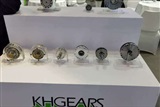
Khgears International, a company whose name sounds like a forgotten 80s synth-pop band, has decided that industrial robot gears aren’t cutting it anymore. Apparently, the future isn’t just about automation; it’s about bots that can trip over their own feet. Starting in 2026, they’re diving headfirst into the burgeoning humanoid robot component market. This isn’t just a minor product line expansion; it’s a full-blown pivot from the mundane to the potentially… existential.
And to make sure they don’t flail around like a newly assembled automaton, Khgears is also sniffing around for a strategic alliance. They’re not just aiming for any partner; oh no. They’re targeting a Tier 1 supplier connected to one of Japan’s four major robot families. Think of it as a high-stakes dating game for industrial behemoths. It’s a smart play, no doubt, but it also reeks of desperation from a company trying to ride the next big wave before the tide goes out.
The Gear Shift: From Industrial to Individualistic Bots
So, what does this actually mean? Khgears, up until now, has been busy making the reliable, unglamorous bits that keep the assembly lines moving. Think heavy-duty gears, precision components – the stuff that doesn’t get a lot of press unless it breaks. Now, they’re aiming for the more nuanced demands of humanoid robots. This involves a whole new ballgame of lighter materials, greater dexterity, and, dare I say, a touch of finesse. It’s the difference between building a bulldozer and building a dancer.
This move isn’t coming out of nowhere. The global market for humanoid robots is projected to grow, and companies like Tesla, Boston Dynamics, and others are pouring serious cash into developing these machines. Khgears, it seems, wants a piece of that action. They’re betting that their experience with strong engineering can translate into building the essential, yet often overlooked, mechanics that will make these walking, talking (or at least, walking) robots a reality.
A Japanese Tango for Tech Dominance
Seeking an alliance with a Japanese Tier 1 supplier tied to one of the big four robot families is a masterstroke of pragmatism, or perhaps just good old-fashioned strategic necessity. Japan has been a powerhouse in robotics for decades, and its manufacturers are deeply integrated into global supply chains. Partnering with such an entity would grant Khgears instant credibility, access to established distribution networks, and crucial technological know-how.
Imagine it: Khgears’ gears, powering the limbs of robots designed and built by some of Japan’s most established players. It’s a symbiotic relationship that could propel Khgears from a background player to a key enabler of the next generation of robotics. The question, of course, is whether they can actually secure such a prestigious partnership. These Tier 1 suppliers are not exactly lining up to embrace every new entrant with open arms. It takes more than just ambition; it takes proven performance and a compelling vision.
My primary concern here isn’t the technology itself, but the corporate pronouncements. When a company like Khgears starts talking about humanoid robots, you can practically smell the PR department working overtime. They’re chasing a buzzword, a trend that might pay off handsomely, or it might end up being another costly misstep, a graveyard for R&D budgets. The tech industry is littered with companies that chased the shiny new object only to find it was made of lead.
Khgears International said it would intensify a robotics push in 2026 by expanding from industrial robot gears into humanoid robot components and by seeking a strategic alliance with a Tier 1 supplier tied to one of Japan’s four major robot families,
This quote, while factual, reads like a corporate press release devoid of genuine excitement. Where’s the spark? Where’s the bold declaration of why they believe in humanoid robots beyond just market projections? I’d rather hear about their vision for a future where these robots help humanity, not just that they’re making the metal bits to get them off the ground. It feels like they’re building the train tracks before they’ve decided if they want to build a passenger train or a cannon.
Why Does This Matter for the Future of Manufacturing?
This strategic maneuver by Khgears highlights a critical shift in the robotics industry. We’re moving beyond single-purpose, industrial automatons to more versatile, human-interfacing machines. If Khgears succeeds, their components could become standard in a wide range of humanoid applications, from manufacturing and logistics to caregiving and perhaps, eventually, companionship (though I shudder to think of the warranty claims on that last one).
For the broader tech landscape, it signifies a potential broadening of the robotics supply chain. Companies that have historically focused on one niche might find themselves adapting to serve entirely new sectors. It’s a Darwinian process for the corporate world, where those who can’t evolve, well, they just become obsolete.
🧬 Related Insights
- Read more: Intel’s Heracles Chip Slashes Encrypted Compute Times by 5,000x—But Is It Ready for the Real World?
- Read more: SK Hynix’s Photolithography ‘Master Key’ Cracks Open AI Memory Scaling Limits
Frequently Asked Questions
What kind of components will Khgears make for humanoid robots? Khgears plans to produce gears and other precision components specifically designed for the more complex and dextrous movements required by humanoid robots, moving beyond their current industrial applications.
Is this a risky move for Khgears? Yes, entering the humanoid robot market is a significant undertaking with inherent risks, including high R&D costs, intense competition, and market adoption uncertainty. However, the potential rewards are also substantial if they succeed in establishing a strong foothold.
Will this alliance with a Japanese supplier guarantee success? An alliance with a major Japanese Tier 1 supplier would provide significant advantages like market access and technological expertise, but success is never guaranteed. Khgears will still need to deliver high-quality products and adapt to market demands.