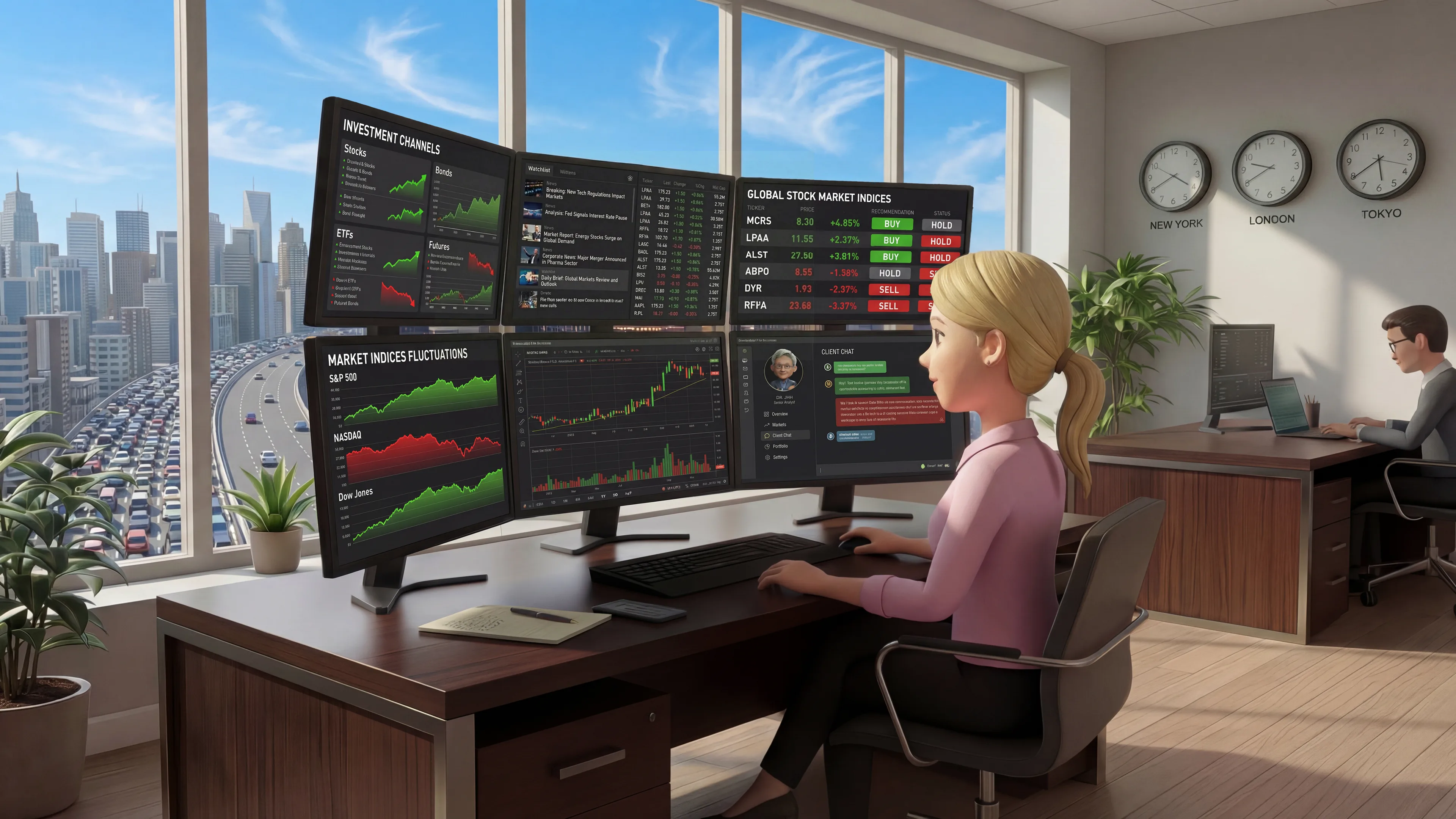
So, what does it actually mean when NVIDIA drops news about a new chip setting an “STAC-AI record”? It means the future of your finances might just get a whole lot smarter, and faster. Think of AI as your personal Wall Street analyst, sifting through mountains of news, tweets, and company reports in the blink of an eye. NVIDIA’s new Blackwell platform is essentially upgrading that analyst from a trusty calculator to a supercomputer on steroids, specifically for understanding the chaotic world of finance.
This isn’t just some incremental bump; it’s a leap. Large Language Models (LLMs) are the engines driving this revolution, and they need serious horsepower to crunch all that unstructured data. We’re talking about predicting stock price movements and automating investment strategies with an accuracy that used to be science fiction. The STAC-AI benchmark, developed by the Strategic Technology Analysis Center (STAC), is designed to specifically test how well these AI pipelines, crucial for finance, perform. They’re the gatekeepers, ensuring that the shiny new tech actually delivers in the high-stakes world of trading.
What’s so special about Blackwell? It’s built for AI, period. The STAC-AI LANG6 benchmark, which focuses on LLM inference – basically, the part where the AI answers your questions or generates insights – is where Blackwell has been flexing its muscles. They’ve been running tests on models like Llama 3.1, using datasets designed to mimic real-world financial analysis, like summarizing company reports (those dense EDGAR filings). This isn’t just theoretical; they’re testing scenarios that mirror how you’d actually use this tech: batch processing huge amounts of data offline, or getting lightning-fast answers in interactive mode.
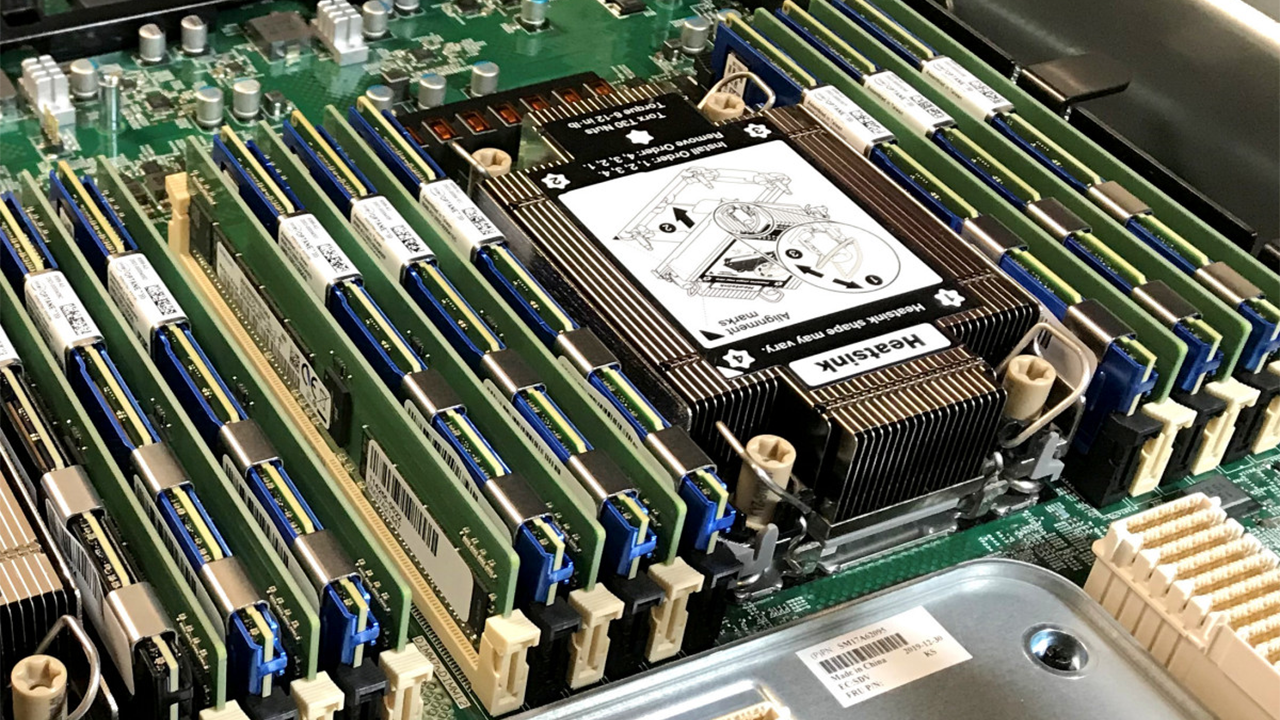
And the results? Well, they’re a big deal. NVIDIA, in partnership with companies like HPE, Lambda, and Supermicro, has shown off systems powered by Blackwell that are simply blowing past previous performance metrics. We’re talking about massive amounts of memory and mind-boggling memory bandwidth on these B200 GPUs, allowing them to handle colossal models and complex requests without breaking a sweat. It’s like giving your AI analyst a library the size of a city to consult, instantly.
The Real-World Ripple Effect: Faster Insights, Smarter Bets
Imagine this: A crucial piece of news breaks. In the past, your trading strategy might have taken minutes, even hours, to fully process and react. Now, with Blackwell-powered AI, that reaction time can shrink to seconds. This means potentially capturing fleeting market opportunities that were previously out of reach. For individual investors, this could translate into more responsive, data-driven portfolios. For big financial institutions, it means a sharper edge in an already hyper-competitive environment. It’s about democratizing access to sophisticated analysis, making it available to more people and businesses.
But let’s be real for a second. NVIDIA’s PR machine is in full swing here, and while the performance numbers are undeniably impressive, it’s important to remember that this is just one piece of the puzzle. The STAC benchmark is rigorous, but it’s not the be-all and end-all. The real test will be how smoothly these systems integrate into existing financial workflows, how secure they are, and how consistently they deliver valuable, unbiased insights. We’ve seen AI hallucinate before, and that’s a terrifying prospect when millions of dollars are on the line. The quality checks embedded in this benchmark are crucial, but user vigilance will remain paramount.
Is This Just Another Speed Bump, or a Platform Shift?
Here’s my take: This is a platform shift. We’re moving beyond AI as a clever add-on and into an era where AI is the fundamental operating system for finance. Blackwell isn’t just a faster chip; it’s an architectural reimagining that is purpose-built for the AI workloads of tomorrow. The sheer scale of performance gains suggests that we’re not just optimizing existing processes; we’re enabling entirely new ones. Think of it like the jump from dial-up internet to broadband – suddenly, a whole universe of possibilities opens up.
This record-setting isn’t just a trophy for NVIDIA; it’s a signal. It means the infrastructure is rapidly maturing to support the most ambitious AI applications. For anyone involved in finance, from developers building trading algorithms to portfolio managers making critical decisions, understanding these advancements is no longer optional. It’s essential for staying relevant. The ability to process and understand vast, complex datasets in near real-time is quickly becoming the ultimate competitive advantage. Blackwell is just the latest, albeit incredibly powerful, enabler of that advantage.
“The STAC-AI benchmark tests the hardware and software stack on the Llama 3.1 8B Instruct and Llama 3.1 70B Instruct models in combination with the following custom datasets.”
It’s fascinating how the benchmark itself has to evolve to keep pace with the technology it’s measuring. These datasets, EDGAR4 and EDGAR5, are designed to simulate the actual, messy work financial analysts do. They’re not just feeding the AI clean, pre-digested prompts; they’re throwing real-world complexity at it. This commitment to practical, use-case-driven testing is what makes STAC’s work so valuable. It’s the bridge between raw silicon and tangible financial outcomes.
What truly excites me is the potential for new forms of financial products and services that we can’t even conceive of yet. When you equip brilliant minds with these powerful tools, they don’t just do the old things faster; they invent entirely new ways of doing things. We’re on the cusp of a new era in finance, powered by AI that’s getting exponentially more capable. Blackwell is a huge step in that direction.
🧬 Related Insights
- Read more: Samsung Rushes Pyeongtaek Fab: Is the Memory Supercycle Here?
- Read more: Google Search Box Redesigned for AI Conversation
Frequently Asked Questions
What does NVIDIA Blackwell do for finance? Blackwell significantly speeds up AI models used for financial analysis, allowing for quicker insights into market trends, news sentiment, and company performance, which can lead to more informed trading decisions and automated strategies.
Will this technology replace financial analysts? While AI like that powered by Blackwell can automate many analytical tasks, it’s more likely to augment human analysts rather than replace them entirely. It handles the heavy lifting of data processing, freeing up analysts for higher-level strategy, interpretation, and client interaction.
How does STAC-AI measure performance for LLMs in finance? The STAC-AI benchmark focuses on the end-to-end retrieval-augmented generation (RAG) and LLM inference pipeline, specifically testing hardware and software stacks on LLMs with financial datasets under batch and interactive modes, measuring metrics like throughput and reaction time.