Swarm intelligence now.
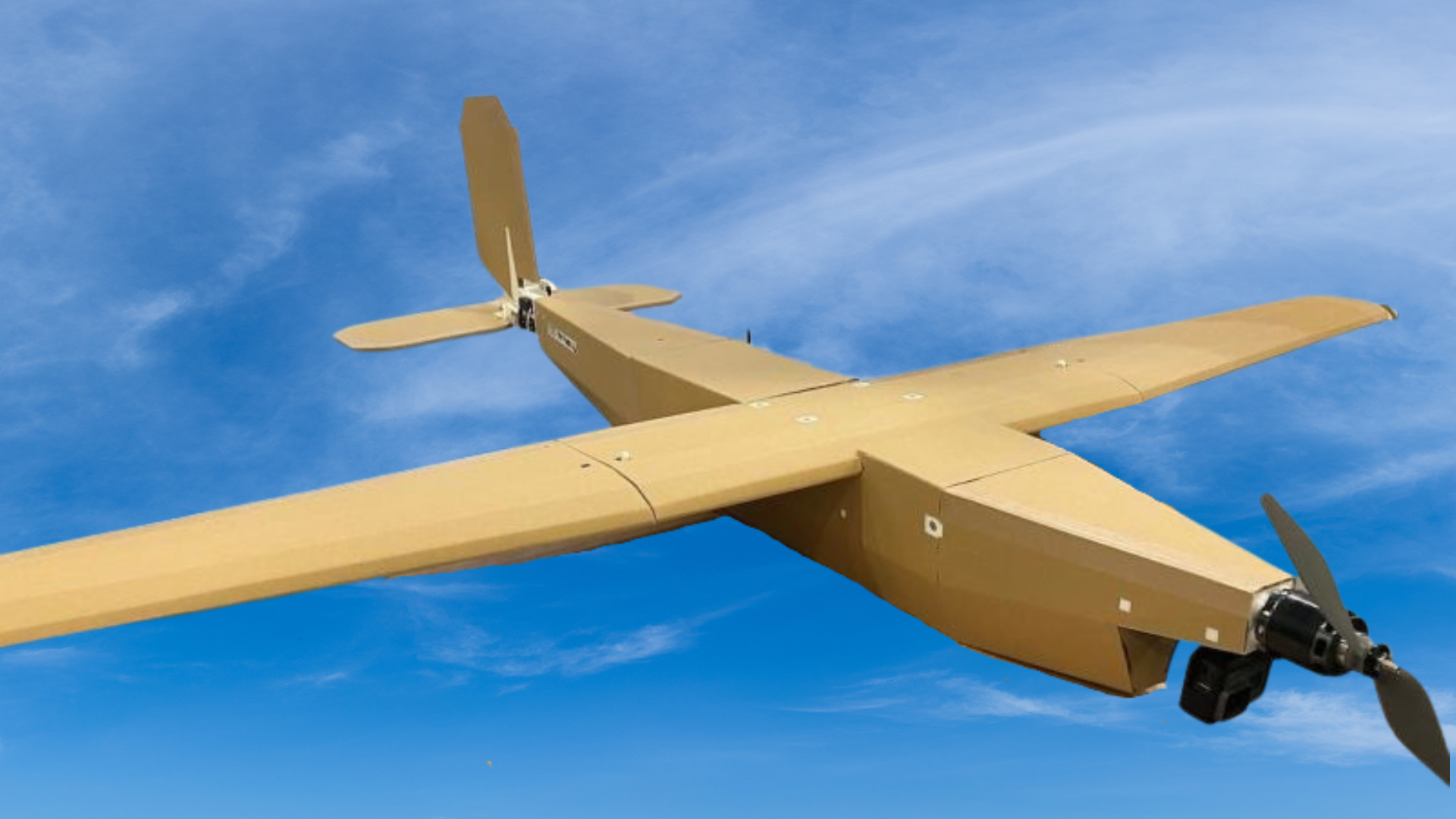
That’s the headline rippling out of Japan, folks, and it’s more than just a catchy phrase. We’re talking about a fundamental platform shift for military technology, a seismic tremor that’s shaking the foundations of how nations wage war. Japan’s Minister of Defense, Shinjirō Koizumi, dropped this bombshell on X: the Japan Maritime Self-Defense Force is already putting expendable cardboard drones into active service. Developed by the clever minds at AirKamuy, these aren’t your grandpa’s war machines. These are the vanguard of a new era.
Imagine, if you will, a fleet of tiny, agile paper airplanes. But these aren’t for schoolyards; they’re instruments of modern conflict, built from corrugated cardboard, coated for water resistance, and costing an astonishingly low $2,000 to $2,500 a pop. That price tag is less than many consumer-grade drones and, frankly, less than some of the gaming PCs you’d find tucked away in a teenager’s bedroom. Conventional military drones, designed with exotic composites and precision engineering, can run into the tens of thousands, even millions. Even the infamous Iranian Shahed drones, which brought attritional drone warfare into stark relief in Ukraine, are estimated to cost ten times, or more, than these cardboard marvels.
This extreme affordability isn’t an accident; it’s a design philosophy. AirKamuy has stripped down the concept of a military drone to its absolute essence. By embracing corrugated cardboard, they’ve bypassed the need for highly specialized aerospace manufacturing facilities. Think about it: this means that during a time of conflict, production can potentially scale up at any ordinary cardboard plant. It’s a supply chain built for speed and volume, a stark contrast to the multi-year lead times for complex aerospace components. This is industrial-scale drone deployment made real.
Why This Matters: Expendability as a Strategic Advantage
The AirKamuy 150 isn’t just cheap; it’s designed to be expendable. It can fly for about 80 minutes, cover roughly 50 miles, and carry a modest three-pound payload. But its true power lies in its numbers. Chief Engineer Naoki Morita articulated the vision at the Singapore Airshow: this platform is primarily conceived as a counter-drone system, operating in overwhelming swarms. Think of it as a digital locust swarm – designed to saturate air defenses, trick enemy radar into revealing its position, or simply absorb incoming fire, shielding more valuable assets. They can also carry small reconnaissance payloads, electronic warfare jammers, or even limited munitions for one-way, kamikaze-style missions.
“There is strong demand for low-cost drones that can operate in large numbers and over long distances,” said AirKamuy CEO Yamaguchi Takumi in an interview with NHK World-Japan. “This model can be manufactured at any cardboard plant, ensuring high mass production capability and a strong supply chain.”
And here’s a subtle, yet potentially significant, advantage: cardboard’s lower radar reflectivity compared to traditional aerospace materials. While it won’t make these drones invisible, it could significantly reduce their radar signature, making them harder to track, especially when operating in large, low-flying formations. It’s like trying to spot a flock of pigeons against a cloudy sky – much harder than finding a single hawk.
This entire deployment signals a profound shift in military doctrine. The old paradigm was about protecting a handful of incredibly expensive, highly capable platforms. The new reality, shaped by conflicts in Ukraine and the Middle East, is about overwhelming adversaries with sheer numbers of cheap, disposable systems. It’s less about a precision sniper rifle and more about a swarm of highly motivated, incredibly cheap bees.
A Glimpse into the Future of Warfare?
The AirKamuy 150, this unassuming cardboard drone, might just be a harbinger of the future of industrial-scale drone warfare. It’s a future where superiority isn’t measured in the sophistication of a single machine, but in the sheer, unyielding quantity of rapidly replaceable autonomous systems. This isn’t science fiction anymore; it’s the unfolding reality of how nations are adapting to a world where the sky is increasingly becoming a battlefield for disposable assets. It’s a proof to human ingenuity, finding incredibly effective solutions in the most unexpected materials.
What’s my unique insight here? This isn’t just about military applications. The principles behind AirKamuy’s success – rapid prototyping, accessible materials, and scalable manufacturing – are precisely the kind of innovative thinking that tech startups everywhere should be studying. This cardboard drone isn’t just a weapon; it’s a blueprint for efficient, mass-producible technology in an era where speed and volume often trump complexity and cost.
🧬 Related Insights
- Read more: Aparna Bawa Jumps from Zoom to Intel: The Culture Fixer Chipmakers Desperately Need
- Read more: Raspberry Pi 5 Hits $305: Memory Crunch Bites, Intel Bets on Musk’s Terafab
Frequently Asked Questions
What is the AirKamuy 150 drone made of?
The AirKamuy 150 is primarily constructed from corrugated cardboard with a water-resistant coating, making it extremely affordable and easy to mass-produce.
How much does an AirKamuy 150 drone cost?
Each AirKamuy 150 drone reportedly costs between $2,000 and $2,500, a fraction of the cost of conventional military drones.
What are the potential uses for these cardboard drones?
Beyond serving as aerial targets, they can be deployed in swarms to overwhelm air defenses, act as decoys, force radar activation, or carry small payloads for reconnaissance or one-way attack missions.