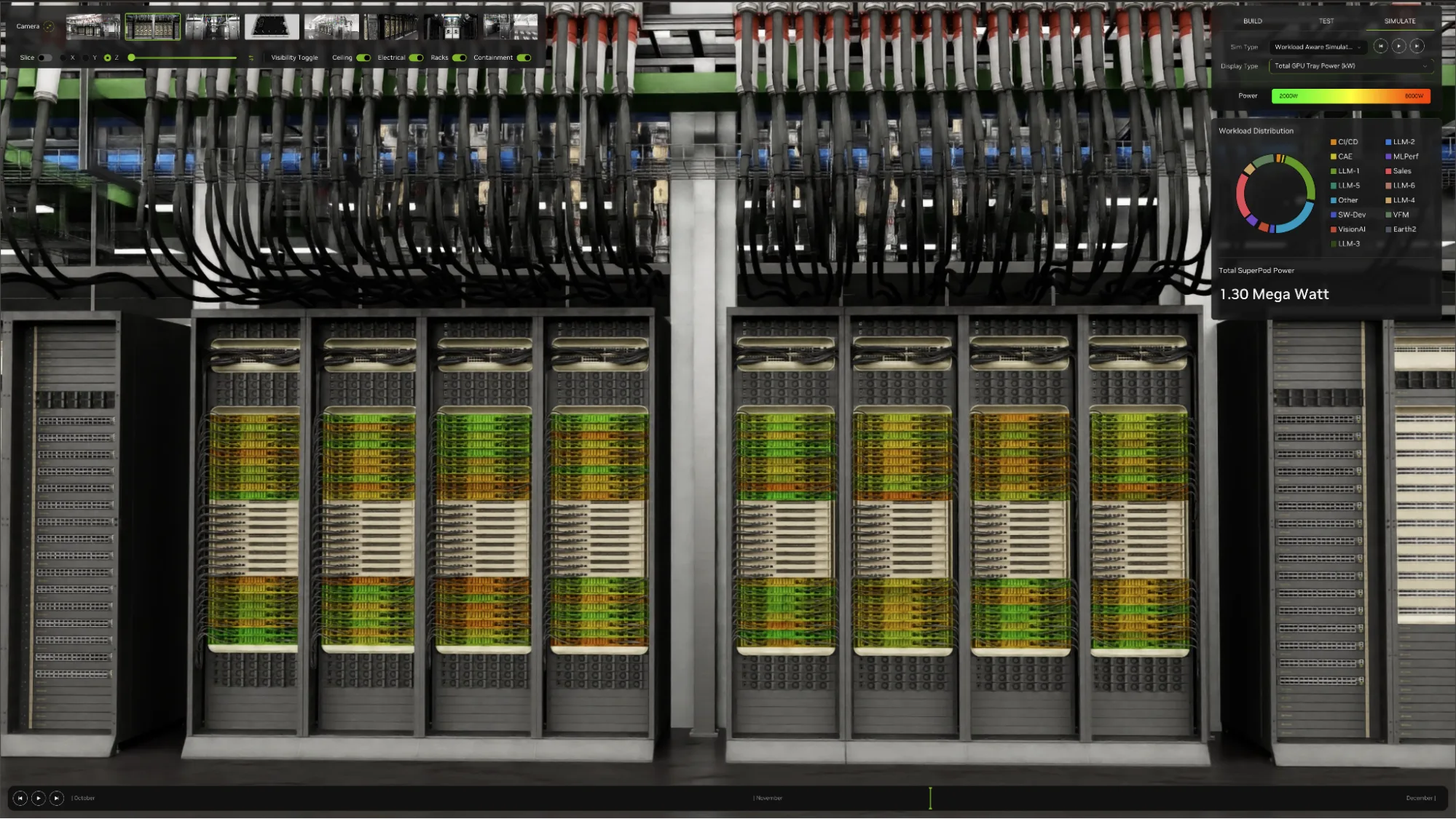
So, NVIDIA’s got a new toy: Fleet Intelligence. They’re billing it as the ultimate answer to keeping tabs on those massive clusters of GPUs humming away in data centers. Real people? What does this mean for them? If you’re one of the poor souls tasked with making sure those expensive accelerators don’t turn into expensive paperweights, it means another layer of software to manage. Another agent to install, another cloud service to log into, another set of metrics that might, or might not, tell you why that crucial AI training job just went belly-up at 3 AM.
Look, the hype machine is always on overdrive with these GPU giants. They trot out terms like “unprecedented opportunities” and then bury you under a pile of “challenges” involving “heterogeneous hardware” and “spiky, multitenant workloads.” It’s the same song and dance, just with more teraflops and fancier jargon. They’re selling you the idea that their new tool will tame the beast, but let’s be honest, the beast is getting bigger and more complicated by the day. So, who’s actually making money here? My money’s on NVIDIA, of course. They’re selling the hardware, and now they’re selling the management layer on top of it.
Is This Just More Shiny Distraction?
NVIDIA claims Fleet Intelligence will give you insight into power, temperature, performance, health, and configuration. All things you should be able to track already. The real question is, does this new service offer anything fundamentally different, or is it just a prettier, more centralized way to look at data you could already get your hands on? They’re touting “GPU-aware monitoring” as essential. Essential for whom? Essential for NVIDIA to ensure their hardware is being used efficiently, which means more hardware being bought? Or essential for the end-user who’s staring at a bill that could fund a small nation?
They talk about detecting “hotspots” and “airflow issues.” Great. So will my existing server monitoring tools. They mention spotting “ECC and XID errors.” Fantastic. So will the operating system logs. The narrative is always the same: problem, solution, NVIDIA solution. The problem, as they frame it, is the sheer complexity of managing fleets of GPUs. The solution? A managed service that use their proprietary tech and learnings from their own gargantuan GPU infrastructure. This feels less like a genuine breakthrough and more like a natural extension of their ecosystem – lock-in, dressed up as helpfulness.
“At scale, teams are juggling heterogeneous hardware, fast‑moving software stacks, tight power envelopes, and spiky, multitenant workloads. A single hotspot, misconfigured driver, or subtle hardware fault can ripple, causing throttled jobs, missed SLAs and wasted spend.”
This quote nails the problem, sure, but the solution feels like putting another band-aid on an already complex wound. For those of us who remember the early days of cluster management, this feels like a rehashing of old ideas with new branding. The promise of “uniform configuration and integrity” is appealing, especially for reproducible results, but the devil is always in the implementation details. Will this actually simplify things, or just add another configuration file to babysit?
Why Does This Matter for Developers?
For the developers actually using these GPUs, the hope is that this will mean fewer headaches. Fewer opaque performance drops, less time spent debugging infrastructure issues, and more time actually coding. The service boasts a low-footprint agent, which is good – nobody wants a resource hog monitoring their resources. And they’re open-sourcing the agent, which is a nice gesture for transparency and auditability. I’ll believe that when I see it. It’s too easy for companies to throw open-source projects out there while keeping the real gravy—the managed service, the support, the insights—proprietary.
The claims of “near real-time” monitoring and “recommendations on remediation actions” sound promising. But my BS meter is tingling. How good are these recommendations, really? Are they generic advice, or truly intelligent, context-aware suggestions that actually save time and money? My gut says it’s the former, at least initially. It’s easy to promise intelligence, much harder to deliver it consistently.
Historically, every piece of infrastructure management software has promised to simplify complexity. And for a while, they do. But then the software itself becomes complex, requiring its own management. It’s a bit like eating cake: satisfying at first, but eventually you’re just dealing with the indigestion.
The service is initially targeting data center and CPU customers managing their own infrastructure. That’s a specific niche, but a significant one. These are the folks who are most likely to feel the pain of unmanaged GPU fleets. It’s also targeting engineers who “require more insight.” Translation: the poor engineers who are already drowning in metrics and are desperate for anything that might give them a glimmer of clarity. This isn’t for the casual user; this is for the battle-hardened ops teams who’ve seen it all and are still showing up for work.
Who Benefits Most Here?
Beyond NVIDIA, the real winners will be the early access customers like Lambda and IREN. They’ve helped shape this thing, so they’ll likely get the best bang for their buck. For the rest of us? We’ll be waiting to see if the real-world implementation lives up to the glossy marketing. Will it finally give us a clear picture of fleet utilization, or will it just be another siren song of data, luring us into a false sense of control?
It’s a tough game, managing large-scale compute. NVIDIA’s pushing a tool to help. Whether it’s a genuinely useful Swiss Army knife or just another fancy screwdriver in an already overcrowded toolbox, only time and widespread adoption will tell. But hey, at least they’re open-sourcing the agent. That’s something. I guess.
🧬 Related Insights
- Read more: UK Chip Packaging Boom: Is Domestic Manufacturing Finally Here?
- Read more: Huawei’s Ascend Chips Ramp Wildly — HBM Emerges as the Real Chokepoint
Frequently Asked Questions
What does NVIDIA Fleet Intelligence do? NVIDIA Fleet Intelligence is a managed service designed to provide continuous monitoring and visibility for NVIDIA data center GPUs, tracking power, temperature, performance, and health.
Is NVIDIA Fleet Intelligence open source? The agent for NVIDIA Fleet Intelligence is being released as an open-source project for auditability, but the managed cloud service itself is proprietary.
Who is NVIDIA Fleet Intelligence for? It’s primarily for teams managing their own data center GPU infrastructure and engineers who need deeper insights into GPU and CPU behavior at scale.