Is the AI gold rush about to get wired?
We’ve all been fixated on the raw horsepower of GPUs, the behemoths driving the current artificial intelligence explosion. But the real bottleneck for scalable, high-performance AI infrastructure might not be in the silicon itself, but in the sheer speed and volume of data it can slurp up and spit out. Enter NVIDIA and Corning, two titans who just announced a significant expansion of their partnership, a move that unequivocally underscores a seismic shift: the AI race is rapidly broadening, extending far beyond the familiar territory of GPUs into the complex world of optical connectivity, photonics, and advanced U.S.-based manufacturing.
Beyond the GPU: Why Optics Matter Now
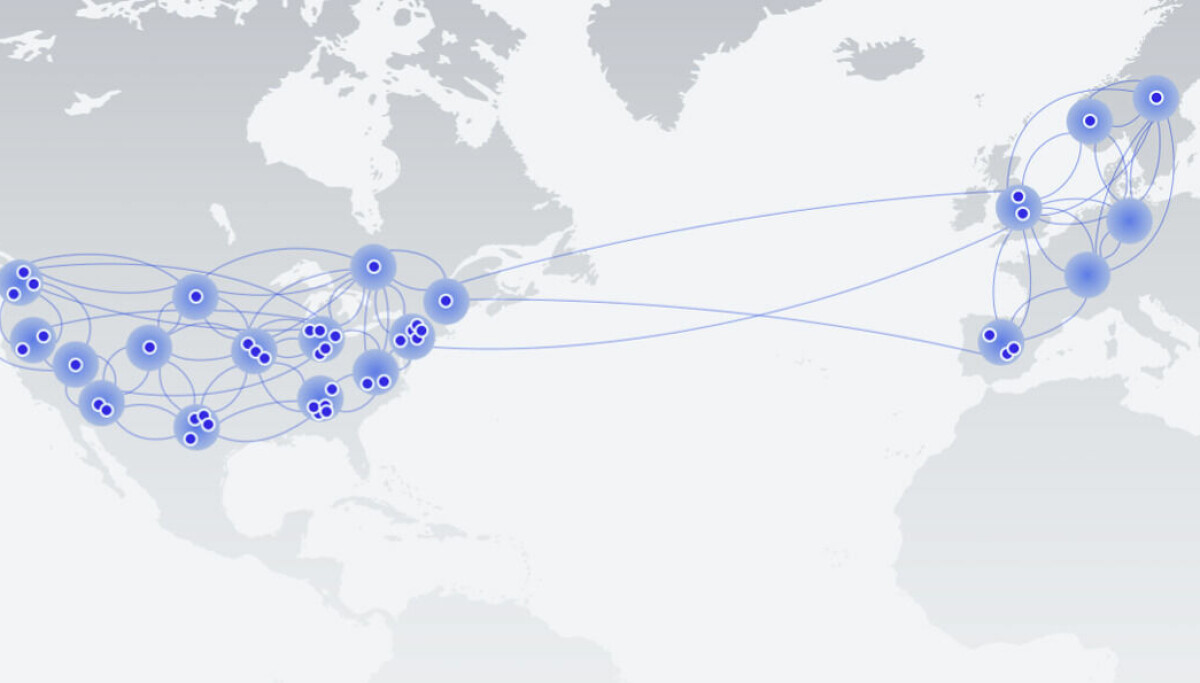
This isn’t just another supply chain announcement; it’s a strategic declaration. The insatiable demand for AI training and inference means data centers are becoming gargantuan networks. Moving petabytes of data between thousands of processors requires incredibly high bandwidth and low latency. Traditional copper interconnects are hitting their physical limits. Fiber optics, particularly advanced solutions like those Corning specializes in, offer a dramatic leap forward in speed and capacity, crucial for the next generation of AI supercomputing. Think of it like upgrading a country road to a multi-lane superhighway – the same vehicles can now move exponentially faster and in far greater numbers. This expansion, centered around building new fiber plants in the United States, isn’t merely about meeting current demand; it’s about future-proofing the foundational elements of AI at a national level.
NVIDIA, the undisputed king of AI chips, isn’t just investing in more GPUs; it’s investing in the arteries that feed them. Corning, a long-standing leader in optical fiber technology, suddenly finds itself as a critical linchpin in the AI revolution. The sheer scale of this undertaking is staggering. Building out U.S.-based manufacturing for these components addresses not only supply chain resilience — a lesson learned painfully over recent years — but also aims to foster domestic technological superiority in a sector with immense geopolitical implications.
“We are expanding our domestic fiber manufacturing capabilities to meet the accelerating demand for AI infrastructure, which relies heavily on high-speed optical connectivity.”
This quote, straight from the press release, is understated to the point of almost obscuring the seismic implications. It’s not just “accelerating demand”; it’s an exponential, almost uncontrollable surge. And it’s not just “high-speed optical connectivity”; it’s the very nervous system of the AI future.
The Price of Progress: A Costly Bottleneck?
Here’s the rub: advanced optical components and their manufacturing are notoriously complex and expensive. While GPUs have seen price wars and intense competition, the specialized nature of high-performance fiber optics, particularly for AI applications, implies a premium. This partnership signifies a significant capital investment from both companies. For NVIDIA, it’s about ensuring their AI ecosystem — from chip to cloud — remains the most capable and fastest. For Corning, it’s a validation of their long-term bet on photonics. But for the broader industry, and ultimately for the cost of AI services, this could translate into higher infrastructure bills. Are we looking at a future where the AI compute cost is dwarfed by the networking cost? That’s a question market analysts will be scrutinizing closely.
This move also puts pressure on competitors. Companies looking to build their own AI infrastructure will need to either secure similar high-capacity optical solutions or find alternative, potentially less performant, pathways. The era of AI being solely about the GPU manufacturer is over. We’re entering an age where the entire data pipeline — from the physical network infrastructure to the compute silicon — is strategically vital. The race for AI supremacy is becoming a battle of integrated ecosystems, and the foundations are being laid with glass and light.
What’s Next for the AI Supply Chain?
The implications extend beyond NVIDIA and Corning. This expansion signals a broader trend: a push for localized, advanced manufacturing of critical AI components within the United States. Expect to see more announcements of this nature, focusing not just on semiconductors but on the specialized materials and equipment required to build out the infrastructure that supports them. The geopolitical undertones are undeniable, as nations vie for leadership in AI technology. By investing in domestic production of optical fiber, the U.S. is attempting to secure a strategic advantage in a field that will define global economic and technological power for decades to come.
This isn’t a short-term play. Building advanced manufacturing facilities, optimizing production lines for cutting-edge optical tech, and integrating them into NVIDIA’s global supply chain will take time and considerable resources. But the message is clear: for AI to scale, the physical infrastructure must scale too, and the most efficient path appears to be through the sophisticated manipulation of light itself.