So you think you’re getting a fair shake when you rent a GPU by the hour? Think again. A new study is blowing the lid off the ‘silicon lottery,’ and it means your cloud computing budget might be going up in smoke.
Look, we’ve all been down this road. You pony up for the latest, greatest silicon, expecting a certain level of grunt. But what if the specific chip you get, even if it’s the same model as your neighbor’s, is just… worse? That’s the messy reality of the silicon lottery, and it’s hitting cloud GPU renters right where it hurts: their wallets.
This isn’t some theoretical problem for academics to wring their hands over. This is about the folks actually trying to build AI models, run simulations, or do whatever else requires a ludicrous amount of graphics processing power, only to find out the hardware they paid for isn’t quite living up to the hype. We’re talking about significant performance dips on chips that are supposed to be identical. It’s like buying two identical cars and finding out one inexplicably gets 10 miles per gallon less than the other, with no obvious reason. Except here, the difference can be upwards of 30-40 percent.
The core issue, as laid bare by research from William & Mary, Jefferson Lab, and Silicon Data, is that not all chips are created equal, even within the same manufacturing batch. This phenomenon, dubbed the ‘silicon lottery,’ has been lurking in the background for a while, but it’s particularly stinging for the cloud computing market where you’re renting, not owning.
So, Who’s Actually Making Money Here?
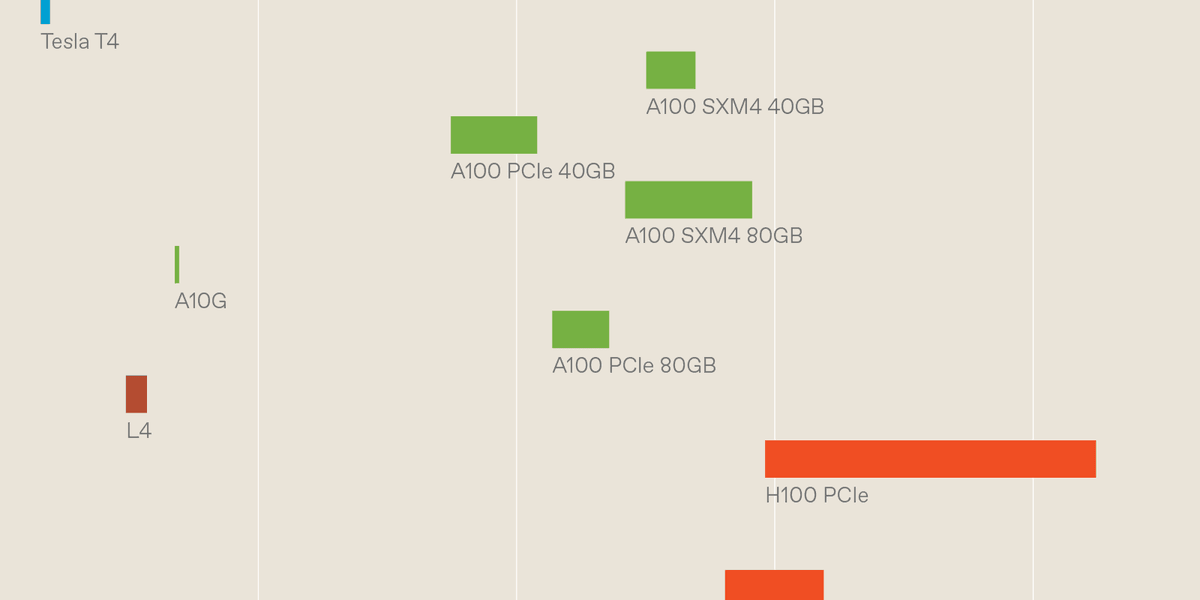
Well, the cloud providers, of course. They’re selling you time on hardware, and if they can mask the inherent variability of that hardware with slick marketing and opaque pricing, they win. The researchers ran a staggering 6,800 benchmark tests across 3,500 randomly selected GPUs from 11 different cloud providers. They used a benchmark called SiliconMark, designed to simulate how well a GPU can handle large language models (LLMs). The results were… unsettling.
For Nvidia’s top-tier H200 SXM chips, memory bandwidth – a key performance indicator – varied by a whopping 38 percent. For the H100 PCIe, raw computing power differed by as much as 34.5 percent. Think about that. You could be paying a premium for a cutting-edge GPU, only to get a chip that’s significantly less capable than another of the exact same model. This isn’t just a minor hiccup; it’s a fundamental problem that undermines the entire premise of predictable performance when you rent.
This kind of random variance in chip performance, likely due to manufacturing quirks at the foundry level, means that a more expensive, supposedly better chip might actually perform worse than an older, cheaper model. The PR spin from cloud providers usually emphasizes the power and scalability of their offerings. What they conveniently leave out is the inherent gamble involved in their hardware.
“The most practical approach is to benchmark the actual rental they receive,” says Jason Cornick, head of infrastructure at Silicon Data. “Running a benchmark tool [such as SiliconMark] allows them to compare their specific instance’s performance against a broader corpus of data.”
That’s the kicker, isn’t it? The researchers are essentially telling you to do the work for them. Instead of trusting that you’re getting what you paid for, you’ve got to run your own tests to verify. It’s a classic case of the buyer having to become the quality control department, all because the sellers are happy to let the ‘silicon lottery’ dictate the terms.
My unique insight here is the historical parallel. We saw this same dynamic play out years ago with CPUs. Early on, overclocking was king, and the variance between chips was so significant that people would pay a premium for a “golden sample” – a chip that was guaranteed to hit higher clock speeds. What the cloud GPU market is doing is essentially institutionalizing that lottery, but without the transparency. You’re paying for the potential of a chip, not its guaranteed performance.
What does this mean for the average Joe or Jane trying to get some AI work done? It means unexpected costs and delays. If your rented GPU consistently underperforms, your training times stretch, your inference requests take longer, and your bills climb higher than they should. It introduces a layer of unpredictability that’s the last thing you want when you’re trying to manage complex projects with tight deadlines. It’s a tax on the uninformed, a hidden cost baked into the very fabric of cloud computing.
Why Does This Matter for Developers?
Developers and AI researchers are already stretched thin, battling complex code, evolving frameworks, and the sheer difficulty of building sophisticated AI. The last thing they need is to be playing a guessing game with their compute resources. This research forces a much-needed reckoning. If the hardware you’re renting has this much variability, how can you reliably estimate project timelines or budgets? How can you trust that scaling up will actually yield proportional improvements? It suggests that the industry needs more transparency around hardware performance tiers, not just model names. Perhaps cloud providers could offer guaranteed performance tiers, or at least allow for instance selection based on benchmark results.
Is This the End of GPU Rentals?
Hardly. The convenience and scalability of cloud GPUs are too attractive to abandon. But this research should be a wake-up call for both renters and providers. Renters need to arm themselves with knowledge and, yes, run their own benchmarks. Providers, on the other hand, have an opportunity to differentiate themselves by offering more transparent performance metrics, perhaps even guaranteeing a certain performance baseline for specific GPU models. Ignoring this problem just kicks the can down the road, and eventually, users will flock to solutions that offer more predictability and value for their hard-earned cash. It’s a free market, after all, and performance variability at this scale is a weakness ripe for exploitation by more honest competitors.
🧬 Related Insights
- Read more: Samsung Strike Sparks Memory Price Surge
- Read more: Taiwan’s Green Power Woes: RE100 Targets Threaten Tech Orders
Frequently Asked Questions
What is the silicon lottery? The silicon lottery refers to the natural variation in performance between identical microchips due to manufacturing imperfections. Even chips of the same model can perform differently.
How does the silicon lottery affect cloud GPU renters? It means that when you rent a GPU in the cloud, the actual performance you receive can vary significantly from one instance to another, even if they are the same model. This can lead to paying for performance you don’t get, impacting project costs and timelines.
What can renters do about the silicon lottery? Researchers suggest that GPU renters should benchmark the specific rental instance they receive using tools like SiliconMark. This allows them to compare their instance’s performance against a wider data set and identify if they are getting a subpar chip.