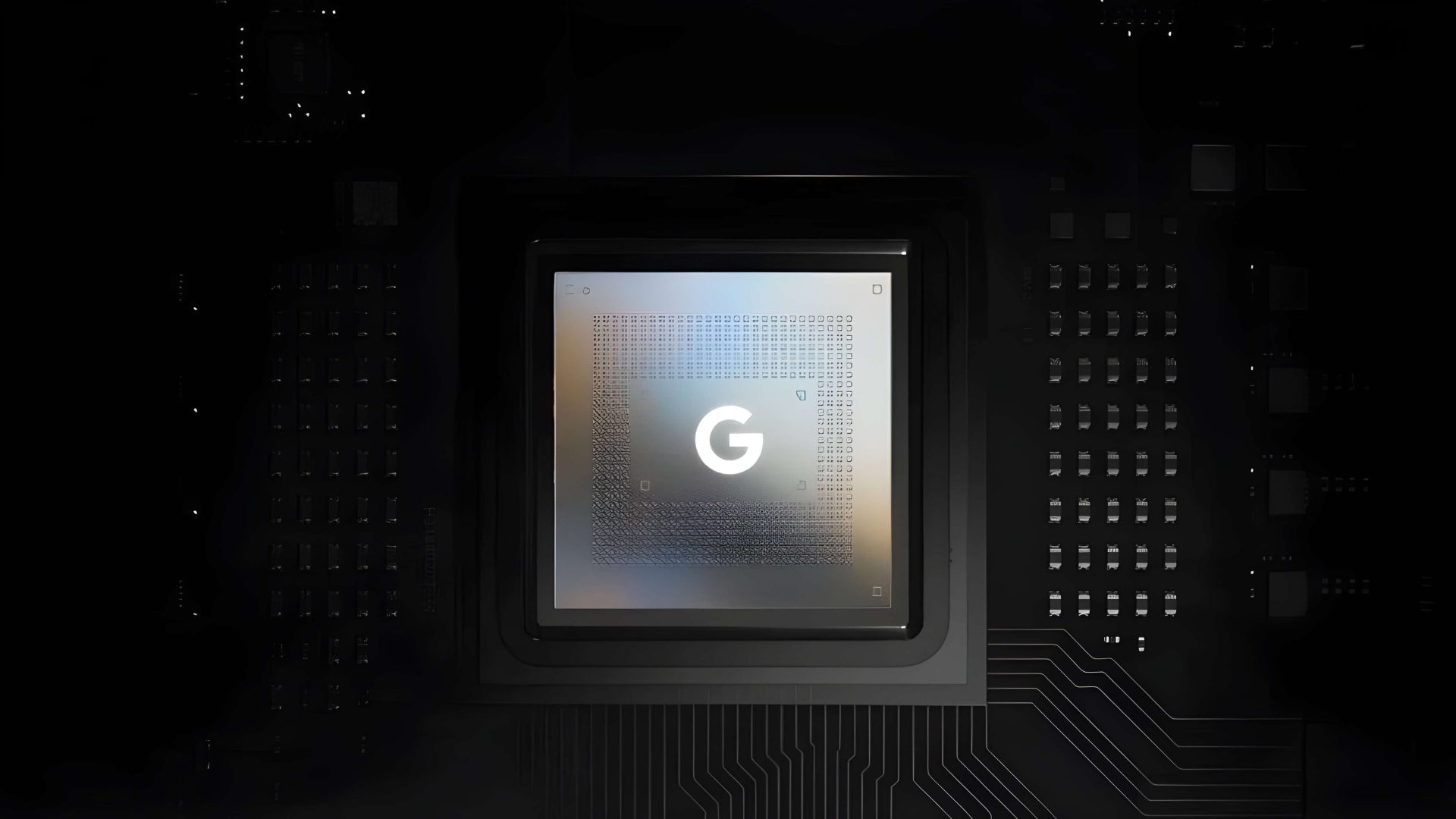
Everyone braced themselves for the next generation of Google’s Tensor chip, expecting a straightforward leap in mobile performance. We pictured more cores, faster clock speeds, a complete overhaul. But here we are, staring at codename ‘Malibu’ – the Tensor G6 – and it’s a curveball. It seems Google is prioritizing something else entirely: an AI-first platform, potentially at the expense of raw graphical grunt.
This isn’t just another chip update; it feels like a fundamental platform shift. Think of it like the early days of the internet. We weren’t just expecting faster modems; we were stepping into an entirely new paradigm. The Tensor G6, with its laser focus on AI through its dual-TPU architecture, signals that Google sees AI not as a feature, but as the core operating system of future devices. It’s a bet that the specialized AI processing will matter far, far more than chasing the latest bleeding-edge GPU.
The Curious Case of the Aged GPU
The whispers started, and then they solidified into reports: the Tensor G6 is slated to feature a GPU based on a design that’s roughly five years old. This is, to put it mildly, quirky. While Google is reportedly opting for a refreshed ‘CXTP’ variant of the PowerVR CXTP-48-1536, likely for better power efficiency, the underlying architecture is decidedly not new. Many expected Imagination Technologies’ latest silicon, not a veteran.
This decision screams cost-consciousness. In an era where chip components, especially memory, are subject to wild price swings (remember ‘chipflation’?), squeezing every penny makes business sense. But it also raises a critical question: can the star player, the Tensor Processing Unit (TPU), carry the entire team?
AI Takes Center Stage: The Dual-TPU Powerhouse
Here’s where the narrative flips from curious to compelling. The Tensor G6 isn’t just relying on an old GPU; it’s doubling down on AI with a sophisticated dual-TPU setup. Codenamed ‘Santafe,’ this setup features a ‘bespoke’ TPU for heavy lifting and a ‘nano-TPU’ to efficiently handle simpler AI tasks. This is the true heart of Malibu.
Imagine two engines in a car. One is a massive V8 for speed and power when you need it. The other is a small, incredibly efficient electric motor that kicks in for city driving, sipping fuel. That’s the dual-TPU approach. It’s about intelligent resource allocation, ensuring that AI computations—the fuel for Google’s future—are handled with maximum efficiency and minimal overhead.
This dedicated AI hardware is the difference between a smartphone that runs AI apps and a smartphone that is an AI platform. It’s like comparing a calculator to a supercomputer. One performs discrete tasks; the other is a generative, adaptive engine.
Under the Hood: TSMC’s Cutting Edge & CPU Compromises
On the manufacturing front, Google is aligning with the industry’s leading edge, expected to use TSMC’s 2nm-based N2 process. This offers significant improvements in efficiency over the G5’s 3nm process, a crucial win for battery life and thermal management. So, while the GPU might be vintage, the underlying silicon fabric is decidedly future-forward.
The CPU, however, continues a trend of optimization over brute force. The G6 is anticipated to drop to a 7-core CPU setup from the G5’s 8 cores, featuring a new ARM C1-Ultra core alongside C-1 Pro cores. This further underscores Google’s focus: if it’s not directly contributing to AI performance or core device efficiency, it’s a potential area for cost reduction.
Beyond the Core: Security, Imaging, and Storage
Google isn’t skimping on the supporting cast. The new Titan M3 security chip provides hardware-level data protection, a non-negotiable in today’s privacy-conscious world. The ‘Metis’ ISP and GXP unit promise enhanced computational photography and video processing, working hand-in-hand with the TPUs. This is where AI magic happens, transforming raw sensor data into stunning images and smooth video.
Storage is another area where Google appears to be playing it safe. While LPDDR5X RAM is on board, the chip will likely retain support for UFS 3.1 and UFS 4.0 storage, eschewing the very latest UFS 5.0. This is another nod to cost control, as UFS 5.0 is still emerging and likely prohibitively expensive for mass-market deployment.
The Price of the Future
Pinpointing the exact cost of the Tensor G6 is difficult, but its predecessor clocked in around $65 per unit. With memory costs soaring, it’s a safe bet the G6 will be pricier. This focus on specialized AI hardware, even with some older components, represents an investment. Google is betting that the AI capabilities will justify the cost to consumers and partners alike.
The Tensor G6 is slated to debut with the Pixel 11 series, targeting an August 2026 release. This timeframe allows for further refinement and integration of this complex SoC. It’s a deliberate rollout, suggesting Google is confident in its AI-centric vision.
The Tensor G6 chip is expected to sport a dual-TPU design, bearing the codename “Santafe”: A bespoke TPU to handle major AI workloads. A nano-TPU to handle relatively simple AI tasks much more efficiently.
Why This Matters
This isn’t just about Google’s next phone chip. The Tensor G6 is a signal flare, indicating a broader industry shift. When a company like Google, with its immense AI research capabilities, designs a chip this way—prioritizing specialized AI silicon over a top-tier GPU—it tells everyone else what direction the wind is blowing. We’re moving beyond raw clock speeds and into the era of intelligent, adaptive computing. The question is no longer if AI will define our devices, but how profoundly it will reshape their very architecture.
🧬 Related Insights
- Read more: NVIDIA CloudXR.js Unlocks Browser XR Streaming—No More App Hell for Enterprises
- Read more: TSMC vs Samsung vs Intel Foundry: Comparing the Big Three Chipmakers
Frequently Asked Questions
What does the PowerVR CXTP-48-1536 GPU do?
It’s the graphics processing unit for the Tensor G6, responsible for rendering visuals on screen, though based on a 5-year-old architecture. It’s expected to have improved power efficiency in its CXTP variant.
Will this chip make Pixel phones much faster?
It depends on what you mean by ‘faster.’ Raw gaming performance might not see a massive leap due to the GPU. However, AI-driven tasks, computational photography, and overall device responsiveness powered by the TPUs are expected to see significant improvements.