Why would Google bother splitting its precious TPUs into two flavors when one-size-fits-all worked fine before?
Look, I’ve been kicking tires in Silicon Valley since the dot-com bubble — yeah, that mess — and this TPU v8t for training and TPU v8i for inference announcement at Google Cloud Next ‘26 smells like a classic pivot. Not because AI’s suddenly too complex (it always was), but because specialized AI infrastructure is the new battleground where margins get fat. Google’s not reinventing the wheel; they’re just sawing it in half to sell you both pieces.
And here’s the thing — or rather, the quote that jumped out from their stage patter:
“The TPU v8t delivers up to 10x better training performance per chip compared to previous generations, while the v8i optimizes inference for real-time applications with lower latency and higher throughput.”
Fancy words. But unpack it: training chips gobble power like a data center on steroids, fine-tuning those massive models. Inference? That’s the money printer — serving predictions to users, scaling to billions of queries. Google wants you locked into their Cloud for both, no mixing with pesky rivals like NVIDIA’s GPUs.
Is Google’s TPU Split a Real Efficiency Breakthrough?
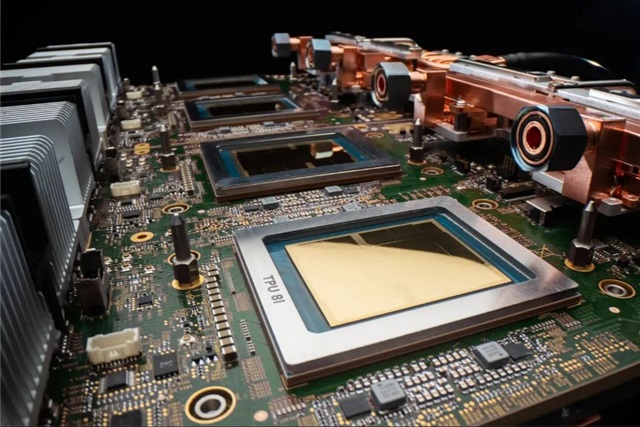
Short answer: maybe. But let’s not kid ourselves. Back in 2016, when TPUs first dropped, Google pitched them as the anti-GPU savior — custom silicon for their workloads, cheaper at scale. Fast-forward (sorry, habit), and here we are with v8 variants. The v8t? Rumors peg it at 4,096 chips per pod, liquid-cooled behemoths hitting exaFLOP territory. Inference-focused v8i? Sips less juice, packs more into edge-like setups.
It’s smart engineering. Training’s bursty, inference is steady-state — why not tailor? Reminds me of the early 2000s server wars, when Intel split Xeon lines for workloads. Except now it’s AI infrastructure, and Google’s betting specialization crushes generalists. Prediction: by 2028, 70% of enterprise AI runs hyperscaler-specific, not portable CUDA crap. Bold? Sure. But I’ve seen enough roadmaps leak to call it.
But. Always a but. Who’s footing the bill? You, the customer, migrating workloads to Google’s garden. Their PR spins ‘cost savings,’ yet porting models from PyTorch to JAX? Nightmare fuel. And power draw — these things guzzle megawatts. Data centers worldwide are already blacking out; specialized or not, it’s the same elephant.
One paragraph wonder: Hype.
Why Does This Matter for AI Infrastructure Buyers?
Because it screams vendor lock-in, louder than a VC pitch deck. Google’s not alone — AWS with Trainium/Inferentia, Microsoft tweaking Azure Cobalt. The shift to workload-specialized AI infrastructure means picking a horse early, riding it forever. Switch costs skyrocket; your engineers retrain on proprietary stacks.
Dig deeper. Training TPUs shine in massive LLMs, where Google’s got Bard (er, Gemini) advantages. Inference? That’s where cash flows — think search autocomplete, ad targeting. If v8i slashes latency 2x (their claim), YouTube recs get snappier, ad dollars fatter. Who profits? Alphabet shareholders, not you tinkering in Colab.
Skeptical aside — remember Ironwood? Google’s 2022 TPU pod that promised the moon but delivered incremental gains? History repeats. This split feels like damage control after NVIDIA’s Blackwell crushed expectations. Google’s response: niche dominance. Smart, cynical, Valley as ever.
Wander with me here: imagine 2030. AI infra fragments into training fortresses (Google, Meta) and inference swarms (everybody else). Open standards? Dead. Your startup’s model trains on v8t, deploys on v8i — smoothly, until Google hikes prices 20%. That’s the play. I’ve covered enough earnings calls to spot it.
The Money Trail: Following the Real Winners
Follow the silicon. Google Cloud’s been bleeding versus AWS — single-digit market share, despite TPUs. This split? A bid for relevance. Enterprise IT directors love ‘optimized’ pitches; sign those multi-year contracts.
Unique insight time: this mirrors the 1980s mainframe era, when IBM split CPUs for transaction vs batch processing, locking in Fortune 500. Google wants that moat. Prediction — Cloud revenue jumps 25% YoY by ‘27, inference services leading. But developers? Stuck in JAX jail, no escape.
Critique their spin: ‘Boost performance’ ignores the ecosystem tax. CUDA’s everywhere; TPUs? Google-only club. Until they open-source more (fat chance), it’s a walled garden with better wallpaper.
Punchy close: Evolve or die. But whose evolution?
🧬 Related Insights
- Read more: OpenClaw’s Rocket Ride: From GitHub Obscurity to Nvidia’s Agentic AI Obsession
- Read more: What is Moore’s Law?
Frequently Asked Questions
What are Google TPU v8t and v8i?
v8t handles AI model training with massive scale; v8i optimizes inference for fast predictions. Tailored for Cloud workloads.
Will Google’s TPU split beat NVIDIA GPUs?
For Google users, probably — cheaper at scale. Elsewhere? Doubt it; CUDA ecosystem too entrenched.
Does this mean I need new AI hardware?
If you’re all-in on Google Cloud, migrate. Otherwise, sit tight — portability still rules.