The prevailing narrative around the semiconductor cycle has been one of protracted gloom, punctuated by tentative forecasts of a slow, drawn-out recovery. Analysts, investors, and frankly, most industry insiders, were bracing for a grind through 2025, with whispers of a meaningful rebound only starting to surface in late that year, if at all. Then came GlobalWafers, the titan of silicon wafer manufacturing, with a prognosis that throws a wrench into those carefully constructed timelines.
This isn’t just a slight uptick on a graph. GlobalWafers is projecting the current semiconductor cycle to hit its nadir in the first quarter of 2026, a date that feels both imminent and jarringly soon given the headwinds. More critically, they’re betting on a recovery that will be both swifter and more strong than anyone had dared to imagine. The driving force? Artificial intelligence, naturally. AI’s insatiable hunger for processing power is creating ripple effects that are now, apparently, strong enough to pull the entire industry out of its funk ahead of schedule.
The AI Tailwind: More Than Just Hype?
For months, AI has been the buzzword, the savior, the ultimate demand driver. But for wafer manufacturers like GlobalWafers, it translates into something far more tangible: raw material. The massive AI chips powering everything from ChatGPT to self-driving cars require wafers, and not just any wafers. They demand the highest grades, the largest diameters – specifically, 12-inch silicon wafers. This is where the story gets particularly interesting for GlobalWafers.
They’re not just seeing demand; they’re seeing the foundations of supply tightening. The company explicitly highlighted a tightening supply of 12-inch wafers, a critical bottleneck that could accelerate price increases and further bolster their recovery narrative. This isn’t a speculative play; it’s a direct observation of their order books and production capacity.
“The demand driven by artificial intelligence continues to drive growth across the industry, leading to expectations for a faster and broader recovery than previously anticipated.”
What does this tightening actually look like architecturally? It means that the leading-edge fabrication plants (fabs) churning out these AI accelerators are consuming capacity at an unprecedented rate. While older, smaller wafer fabs might be idling, the premium 12-inch fabs, particularly those producing wafers with advanced node capabilities, are reaching their operational limits. GlobalWafers, with its significant footprint in this segment, is perfectly positioned to capitalize.
Why Does This Matter for Foundries?
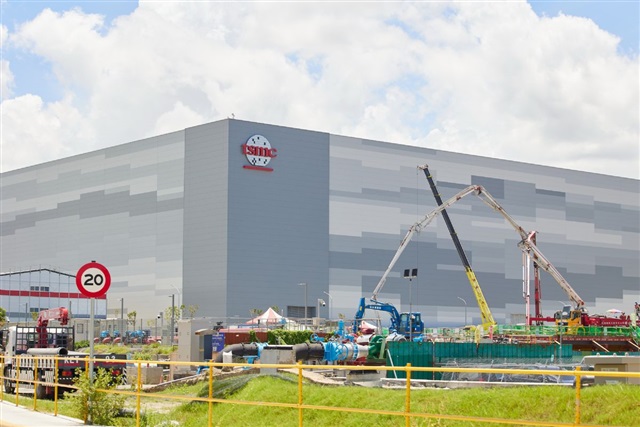
This development has seismic implications for the foundries themselves – the TSMCs, the Samsung Electronics, the Intel Fabs of the world. For a long time, they’ve been juggling overcapacity in some areas with intense demand in others, particularly for their most advanced nodes. The prospect of a unified, faster recovery means they might need to accelerate their own capacity expansions or risk being squeezed by wafer shortages. The cost of silicon wafers, while a fraction of the total chip cost, is a foundational element. A shortage here ripples upstream, potentially impacting chip costs and delivery timelines across the board.
My own read? This isn’t just about GlobalWafers talking their book. The sustained, exponential growth of AI workloads necessitates a fundamental increase in silicon production. The current fabs are being pushed to their limits, and the lead times for building new ones are measured in years, not months. The AI revolution, it seems, is finally forcing the raw materials industry to play catch-up in a way that could redefine the entire manufacturing landscape.
Furthermore, the industry’s tendency to overreact to downturns by slashing capacity means that when demand surges, the rebound is often steeper and faster than predicted. Companies that were too quick to shed staff and mothball equipment now find themselves struggling to scale back up. GlobalWafers’ prediction suggests we might be entering a phase where wafer supply itself becomes a significant gating factor for AI-driven growth.
The Long Game: Beyond the Cycle
While the 2026 recovery is the headline, the underlying trend is the permanent, structural shift driven by AI. This isn’t a cyclical blip that will be forgotten in a few years. AI is fundamentally changing the compute requirements across nearly every sector, from enterprise data centers to consumer devices. The demand for advanced silicon, and by extension, high-quality wafers, is likely to remain elevated for the foreseeable future.
This means that the “tightening supply” narrative isn’t just a short-term market dynamic; it’s a sign of a new baseline. Companies that are only now considering expanding their wafer production capabilities might find themselves perpetually behind the curve. The investment required to build and maintain cutting-edge wafer fabrication facilities is enormous, and the decision-making process is a multi-year affair. GlobalWafers’ foresight here, if their predictions hold, positions them as a strategic linchpin in the next era of computing.
The semiconductor industry has a habit of boom and bust, but the AI boom feels different. It’s not just about building more powerful consumer electronics; it’s about redefining computation itself. And that requires a steady, abundant, and high-quality supply of the most fundamental building block: the silicon wafer.
🧬 Related Insights
- Read more: Intel Hits $300 Billion Market Cap Peak — Echoes of Dot-Com Glory, or Just Hot Air?
- Read more: Arm Breaks Its Licensing Habit With the AGI Server CPU
Frequently Asked Questions
Will this recovery be faster than the previous one? GlobalWafers anticipates a recovery in 2026 that will be both faster and broader than previous cycles, driven primarily by AI demand.
What is the main driver of the expected semiconductor recovery? Artificial intelligence (AI) demand is identified as the primary catalyst, fueling growth across the industry and accelerating the need for semiconductor production.
What does a tightening 12-inch wafer supply mean? It signifies that the production capacity for 12-inch silicon wafers is becoming constrained relative to demand, potentially leading to increased prices and impacting chip manufacturing timelines.