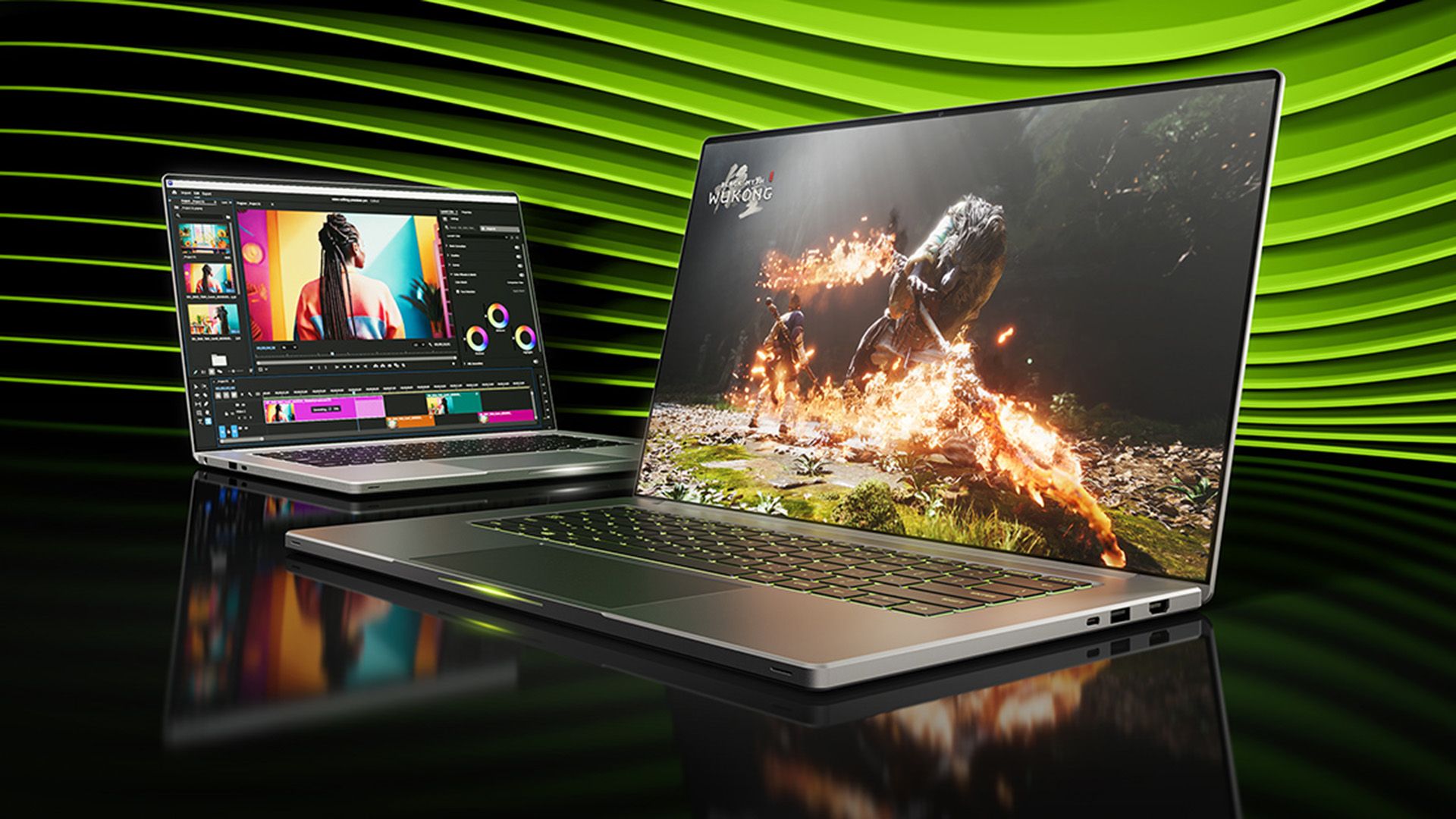
Everyone thought the Framework Laptop 16 was the antidote to disposable tech, a sleek machine where you could swap out components like a GPU module to keep pace with silicon evolution. The dream was always: upgrade the graphics, not the whole laptop. But the announcement of the RTX 5070 12GB Graphics Module throws a cold, hard dose of reality on that utopian vision, revealing just how deeply current supply chain woes—and perhaps manufacturer strategies—are impacting even the most forward-thinking designs.
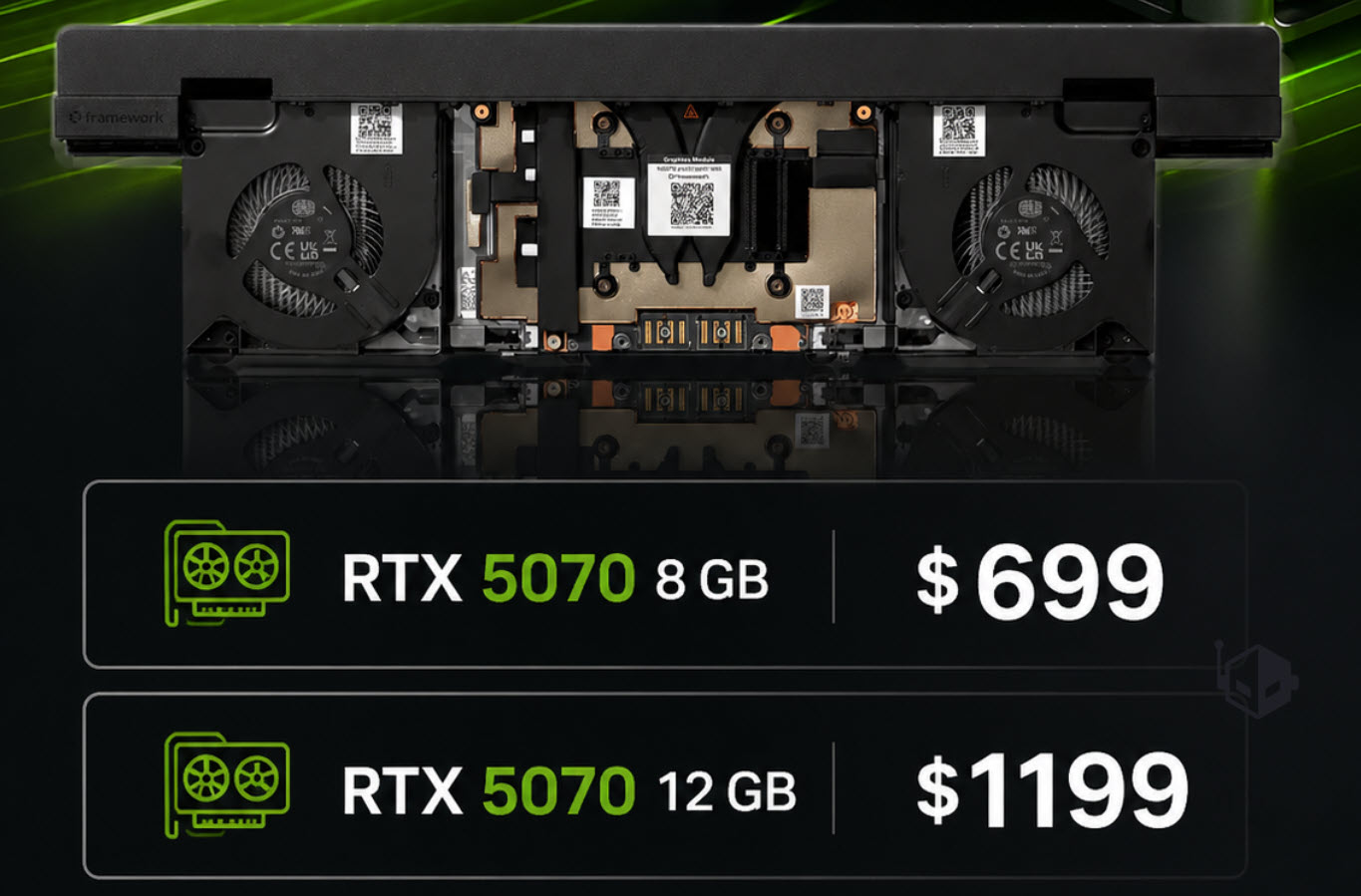
Here’s the thing: the core proposition remains. You buy the Framework Laptop 16, and you can eventually pop in a new, more powerful GPU module. It’s a beautiful concept, an elegant solution to the e-waste epidemic and the insatiable upgrade cycle. Previously, Framework offered an RTX 5070 8GB module for a respectable $699. Now, they’ve unveiled a 12GB version, and while it boasts 50% more VRAM, it comes with a jaw-dropping $1199 price tag. That’s a 72% jump. Seventy-two percent. For just… more memory. And the rest of the silicon? Identical. Same CUDA cores, same clock speeds, same AI TOPS. It’s pure VRAM inflation.
A 72% Premium for the Same Core Chip?
What’s truly striking isn’t just the price hike, but the reason for it. According to the specs comparison Framework provides, the RTX 5070 12GB is essentially the same chip as the 8GB model, just outfitted with more GDDR7 memory and a wider memory bus to support it, ultimately resulting in 384GB/s of memory bandwidth for both. Framework itself notes that the company’s latest laptop 16 graphics module shows just how bad the memory prices have gotten. NVIDIA, in its own release, claims the RTX 5070 12GB GPU helps maximize memory availability, allowing partners to offer a broader range of laptops. But if “maximizing memory availability” means charging an exorbitant premium, the consumer is still left holding the bag. It’s a perfect storm of demand, limited supply of high-density memory chips, and NVIDIA’s own pricing strategy.
The company previously offered an RTX 5070 8 GB graphics module for $699; however, its newest model is priced way higher.
This isn’t just a small bump; it’s a seismic shift. For users who don’t need that much VRAM – and for most gaming and general productivity tasks, 8GB is still plenty – the 12GB module offers no tangible performance benefit. You’re paying a premium for headroom that, for many, will remain untapped. It forces a decision: do you pay a premium for a speculative future, or do you stick with what works now and hope memory prices normalize?
Is This Just Bad Luck, or a New Reality?
The narrative Framework is pushing, and that NVIDIA is enabling, is that this is simply a consequence of the current memory market. Memory prices, we’re told, are “so bad” that you have to fork over an extra $500 for an additional 4GB of GDDR7. This is, in part, true. The demand for high-bandwidth, high-capacity memory is skyrocketing, fueled by AI, and the supply simply hasn’t caught up. Chip fabrication plants are running at capacity, and the specialized equipment needed for advanced memory production is a bottleneck.
However, I can’t shake the feeling that this is also a shrewd move by NVIDIA, and by extension, its partners like Framework. By offering a higher-tier SKU that only differentiates on VRAM, they’re effectively capturing a segment of the market that needs that extra capacity, and charging them handsomely for it. It’s a way to eke out more revenue from existing silicon designs without resorting to costly architectural overhauls. It’s a financial arbitrage on VRAM. And Framework, by choosing to offer this specific configuration, is passing that cost directly to its most dedicated users – the ones who value modularity enough to buy into their ecosystem in the first place.
The Future of Upgradability Under Strain
Framework’s core appeal is its commitment to repairability and upgradability. They’ve built a reputation on empowering users to extend the life of their devices. But this RTX 5070 12GB situation is a critical test. If the cost of future upgrades—specifically, key components like GPUs that require significant memory—becomes prohibitively high, does the modularity still hold its value? It forces us to ask whether the economics of component manufacturing, particularly memory, will ultimately hobble the very philosophy that makes devices like the Framework Laptop 16 unique. It might be that the “upgrade” becomes too expensive to be practical, pushing users back towards the traditional laptop refresh cycle after all.
The module itself adds 0.3kg to the total weight and a bit of bulk, but that’s hardly the headline here. The headline is the price. It’s a stark warning sign for anyone hoping that modularity will indefinitely shield them from market volatility. For now, at least, you’ll have to decide if that extra 4GB of VRAM is worth nearly the cost of a whole new mid-range graphics card from just a couple of years ago.
🧬 Related Insights
- Read more: Sony’s PS5 Price Surge: AI Memory Crunch Hits Consoles Hard
- Read more: Intel’s AI Factory Blitz and Supply Chain Alarms Dominate Chip Week
Frequently Asked Questions
What does the Framework RTX 5070 12GB Graphics Module do? It’s a swappable graphics card designed for the Framework Laptop 16, offering the NVIDIA RTX 5070 GPU with 12GB of GDDR7 VRAM, intended to boost gaming and productivity performance.
Why is the 12GB model so much more expensive? The significant price increase is attributed primarily to the high cost and limited availability of high-density GDDR7 memory chips, coupled with NVIDIA’s pricing strategy for these configurations.
Will this RTX 5070 12GB module make my Framework Laptop 16 much faster than the 8GB version? For most tasks, including general gaming and productivity, the performance difference will be minimal or unnoticeable because the core GPU silicon remains the same. You’ll only see a benefit in highly VRAM-intensive applications.