The faint hum of servers, the glow of monitors – the modern digital world is a ravenous beast, hungry for power. But what if our devices could start feeding themselves?
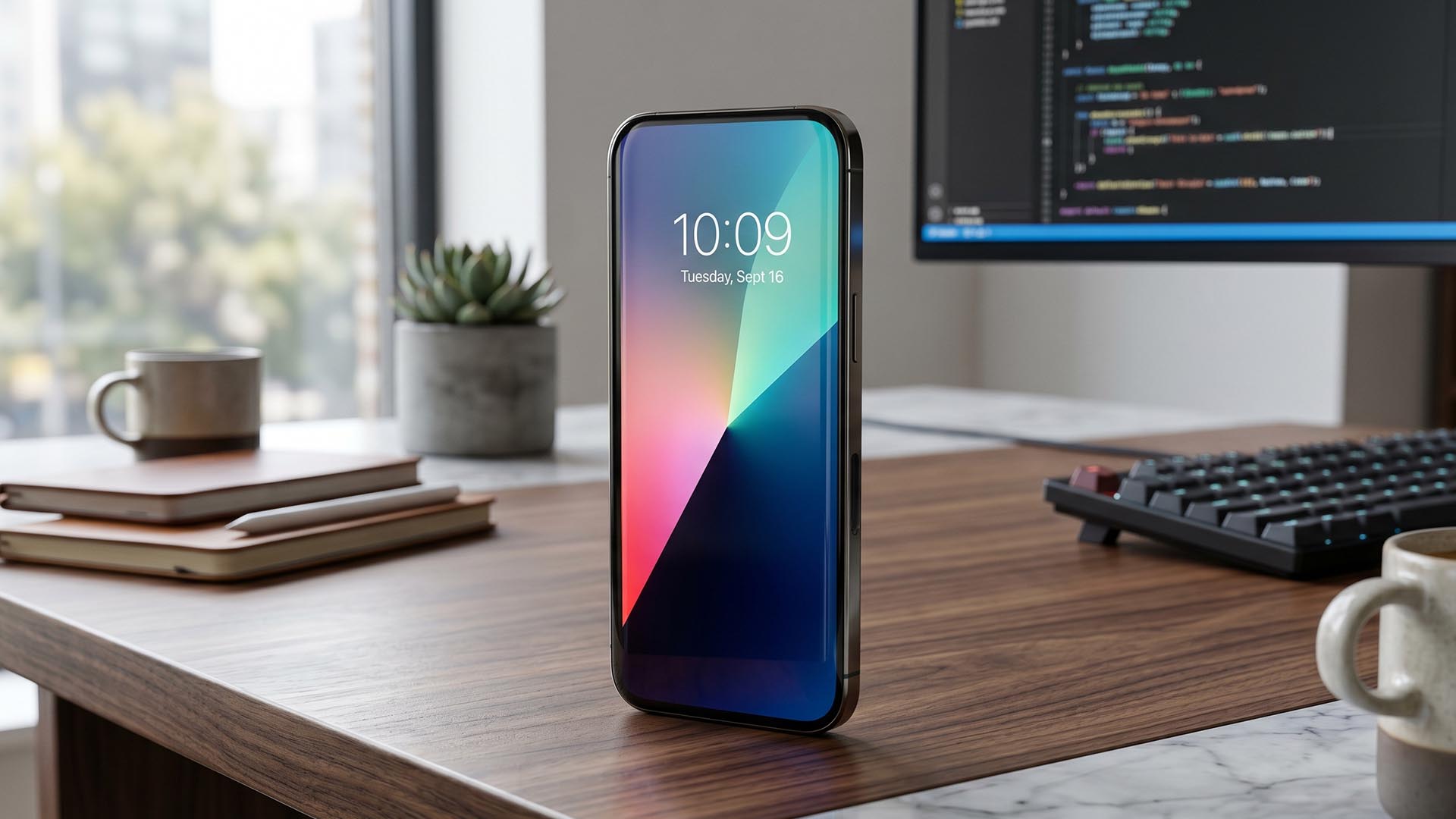
That’s the audacious dream researchers are weaving into reality, and it’s not just science fiction anymore. We’re talking about displays that don’t just show us things, but power themselves, a fundamental platform shift that could redefine everything from our phones to our cities.
The Dawn of Self-Sustaining Screens
This isn’t just about incremental improvements; it’s about a paradigm leap. Think of it like the transition from horse-drawn carriages to automobiles. Both were forms of transport, sure, but one unlocked a whole new universe of speed, distance, and possibility. These new energy-harvesting displays are that kind of leap for electronics.
Researchers are pushing the boundaries, crafting organic semiconductor devices that do double duty: they’re little power plants, soaking up light and converting it into electricity, while simultaneously acting as brilliant displays. The implications are staggering. We’re looking at devices that can be wafer-thin, flexible, even transparent – materials that were the stuff of dreams for rigid silicon.
A Symphony of Light and Power
At the Institute of Science Tokyo and the University of Osaka, a team has engineered an organic semiconductor device that achieved a dazzling 1.36% power-conversion efficiency and a 2% light-emission efficiency, simultaneously. And get this: it pumps out bright red light at a stunning 1,000 cd/m², on par with your everyday smartphone. All this powered by a mere 3.2 volts, making it perfectly happy to run on standard lithium-ion batteries (for now, anyway).
Seiichiro Izawa, an associate professor involved, paints a compelling picture: “Organic devices can be fabricated as lightweight, mechanically flexible, and even semitransparent films, making them highly attractive for applications such as window-integrated photovoltaics, wearable and skin-mounted electronics, and conformable display sensor systems, all of which require form factors that are difficult to realize using rigid materials.”
Imagine smart windows that power themselves and display information, or wearables that never need a charger because they’re constantly sipping ambient light. It’s not just convenient; it’s a path towards truly autonomous, always-on devices.
The Perovskite Breakthrough
Meanwhile, across the globe, researchers at the University of Colorado Boulder and the University of Science and Technology of China are refining perovskite diodes. Their innovation? Embedding micrometer-sized alumina nanoparticle islands within the perovskite. This creates a porous, sponge-like structure that masterfully redirects light. The result is a diode that can harvest ambient light even when it’s not actively being used for display. It’s like giving your device a tiny, built-in solar panel that works tirelessly in the background.
These diodes aren’t just theoretical marvels; they’re hitting impressive numbers. They’re converting sunlight to electricity at a remarkable 26.7% efficiency and emitting light at 31% efficiency. Crucially, they’re proving their mettle with longevity, retaining 95% of their initial solar cell efficiency after an astonishing 1,200 hours of continuous operation. That kind of endurance is a giant leap forward for any new energy tech.
The All-in-One Electronic Dream
And then there are the folks at Chiba University, NHK Science & Technology Research Laboratories, and Kyoto University. They’re pushing the envelope even further with multifunctional organic semiconductor devices that blur the lines between display and solar cell. Their secret sauce? Precisely controlling exciton energy states using MR-TADF materials. This creates interfaces that minimize energy loss and, get this, allow for color adjustment from yellow to blue – enabling full-color operation across the visible spectrum. They’ve reportedly achieved the first-ever power-generating blue OLED. Mind. Blown.
Professor Hirohiko Fukagawa from Chiba University captured the essence of this work: “Considering the 44% intrinsic emission efficiency of the green emitter and roughly 20% light-extraction efficiency, the obtained 8.5% emission efficiency indicates performance close to the theoretical limit, with virtually no electrical loss.” He further elaborated, “By integrating energy harvesting directly into light-emitting surfaces, we can create electronics that are far more energy efficient and convenient for users. We envision a shift from single-function components to integrated all-in-one films. This could enable the widespread adoption of battery-less sensors and wearable electronics that operate autonomously by harvesting light.”
This is the future Chip Beat has been evangelizing: a world where technology isn’t a drain on our environment or our patience, but an integrated, self-sustaining part of it. This isn’t just about better gadgets; it’s about a more sustainable, less tethered existence. The potential for battery-less sensors, truly ambient computing, and devices that feel less like objects we own and more like extensions of ourselves is immense. The energy cost of our digital lives is about to get a serious discount.
Will This Replace My Job?
These advancements are more likely to transform jobs rather than eliminate them. New roles in device integration, material science for these flexible displays, and energy management for self-powered systems will emerge. It’s an evolution, not an extinction event for employment.
When Will I See This in My Hands?
While the research is incredibly promising, widespread consumer adoption typically takes several years. Expect to see niche applications first, perhaps in specialized wearables or smart signage, before these self-powering displays become mainstream in our phones and TVs.
How Does This Tech Differ from Standard Solar Panels?
Standard solar panels are designed solely for energy generation. These new devices are multifunctional, serving as both a display and an energy harvester. They integrate these two functions into a single, often flexible, organic layer, which is a significant departure from rigid silicon solar cells.