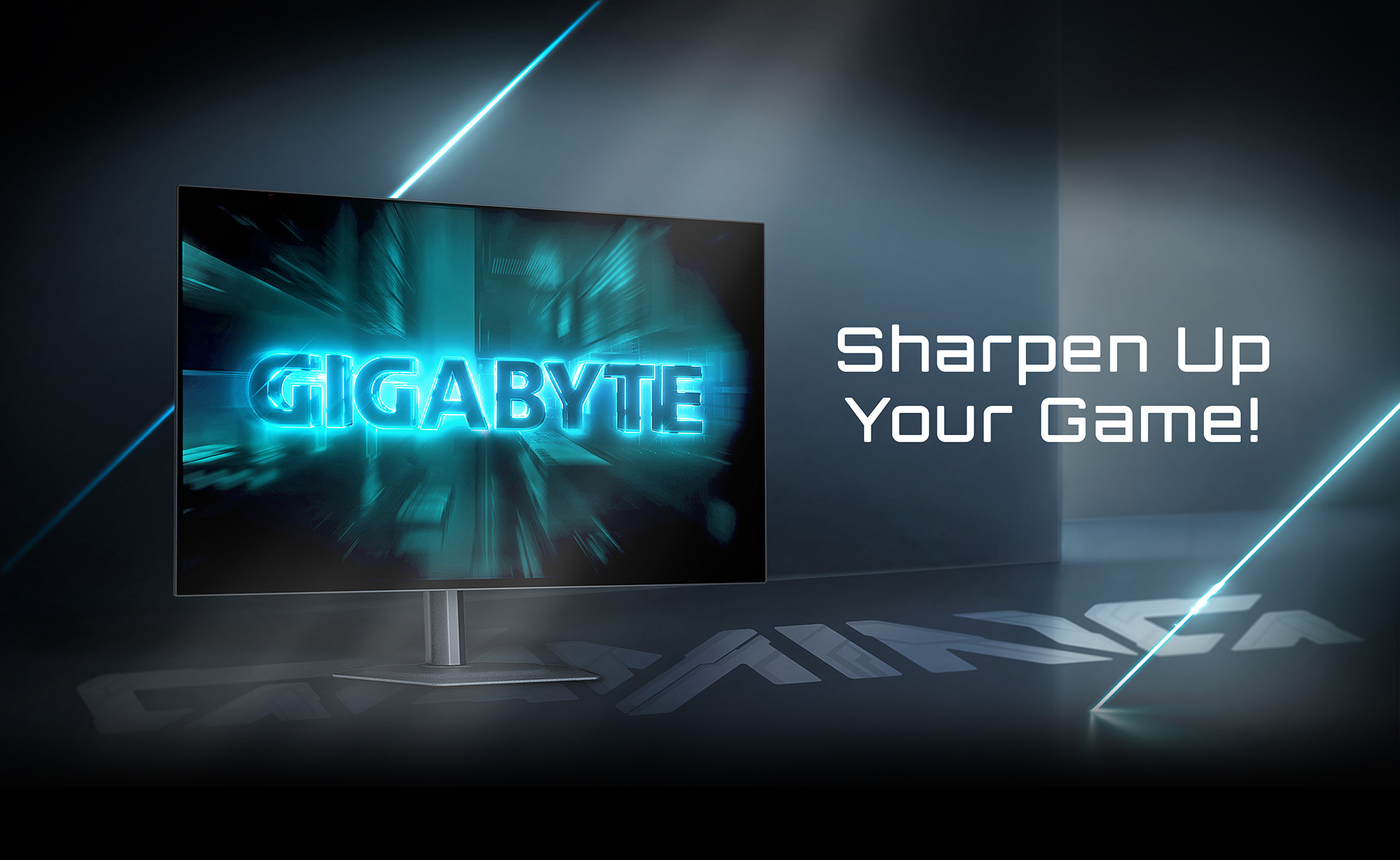
Look, I’ve seen more buzzwords than I care to remember parade through Silicon Valley over the last two decades. This latest offering from GIGABYTE, the GO27Q24G, is no exception. They’re shouting about 1300-nit peak brightness, a blindingly fast 0.03ms response time, and a price tag that’s supposed to make your wallet sing: a mere $399. It’s the latest salvo in the ongoing war to democratize OLED gaming, a war that, frankly, has mostly been waged by established players slapping a premium onto pretty much anything with the letters ‘OLED’ and ‘gaming’ in the same sentence.
So, what are we actually getting here for our hard-earned cash? It’s a 27-inch WOLED panel, which is good news for color accuracy and those impossibly deep blacks that make LCDs look like faded photographs. GIGABYTE is touting its MLA+ (Micro Lens Array+) technology – a fancy way of saying they’ve apparently figured out how to juice the brightness up from a perfectly respectable 275 nits in SDR to a dazzling 1300 nits for HDR content. They’ve also slapped on the DisplayHDR True Black 400 certification, which, while not exactly the pinnacle of HDR performance, is a step above what you’ll find on most budget displays. And yes, it covers 99% of the DCI-P3 color gamut. The usual suspects are there too: a 240Hz refresh rate, AMD FreeSync Premium, and G-Sync compatibility to keep things smooth and tear-free. They’ve even thrown in some gamer-centric extras like ‘Tactical Switch 2.0’ and ‘Black Equalizer’ – marketing fluff, probably, but it’s there.
Is This the OLED Revolution We’ve Been Waiting For?
Here’s the kicker: $399. For an OLED gaming monitor. That’s the price point where you usually start looking at high-end IPS or maybe a very basic VA panel. The fact that GIGABYTE is even contending in this space with OLED is, on the surface, significant. But let’s not get ahead of ourselves. We’ve seen this play out before. Remember when OLED TVs first hit the market? They cost more than a used car. Then prices trickled down, but ‘affordable’ was always relative. This GO27Q24G is positioned against the few other OLEDs that have started inching below the $500 mark, and frankly, it’s about time. The question isn’t just if it’s affordable, but how they’re achieving it and what corners might have been cut.
My cynical old bones have seen enough product launches to know that specs on a spec sheet rarely tell the whole story. Is the MLA+ really as effective as they claim, or is it a marginal improvement dressed up with a fancy name? How does that 0.03ms response time translate in real-world gaming? Will the colors be vibrant, or will they look oversaturated because the panel is struggling to maintain accuracy at those high brightness levels? GIGABYTE claims 10-bit color depth for 1.07 billion colors, which is standard now, but consistency is key. And let’s not forget the glossy finish. Great for contrast, sure, but prepare for a battle against reflections unless your gaming cave is a crypt.
The monitor offers very thin bezels on all sides, making visuals more immersive, and features a sleek design that suits minimalist setups.
This sounds nice, but ‘thin bezels’ are practically a given these days. It’s like saying a car has four wheels. The real story is what’s inside those thin bezels. Who is actually making money here? GIGABYTE is likely banking on volume. If they can capture even a small fraction of the budget gaming monitor market with a genuinely good OLED product, the margins, however slim per unit, add up. They’re leveraging the ongoing hype around OLED technology, positioning themselves as the company that brings it to the masses without the usual astronomical price tag. It’s a smart marketing play, provided the product doesn’t fold under scrutiny.
Why Does This Matter for Developers?
For developers, especially those working on graphics-intensive applications or games, this could be a watershed moment. Access to accurate color reproduction and the unparalleled contrast of OLED at a consumer-friendly price means more people can experience content as it was intended. Think about game developers who rely on subtle lighting and shadow details; seeing those on an affordable OLED can dramatically change their testing and debugging process. It also means that the benchmark for visual fidelity in budget gaming setups just got significantly higher. Companies developing SDKs or engine features will have to account for this broader accessibility of high-end display tech. It’s a good problem to have, frankly, forcing innovation down the entire pipeline.
It’s still early days for the GIGABYTE GO27Q24G. We need to see independent reviews, rigorous testing, and real-world usage before we can definitively say if this is the budget OLED savior we’ve been waiting for, or just another shiny spec sheet designed to sell units. But at $399, it’s certainly piqued my interest. The question that lingers is: can it deliver on the promise, or will it be another case of too good to be true?
🧬 Related Insights
- Read more: Power Chip Crunch: AI & GaN Collide [New Crunch Looms]
- Read more: NVIDIA RTX 5090 Skyrockets Past $4,000 Amid VRAM Chaos
Frequently Asked Questions