Power. Inefficiency.
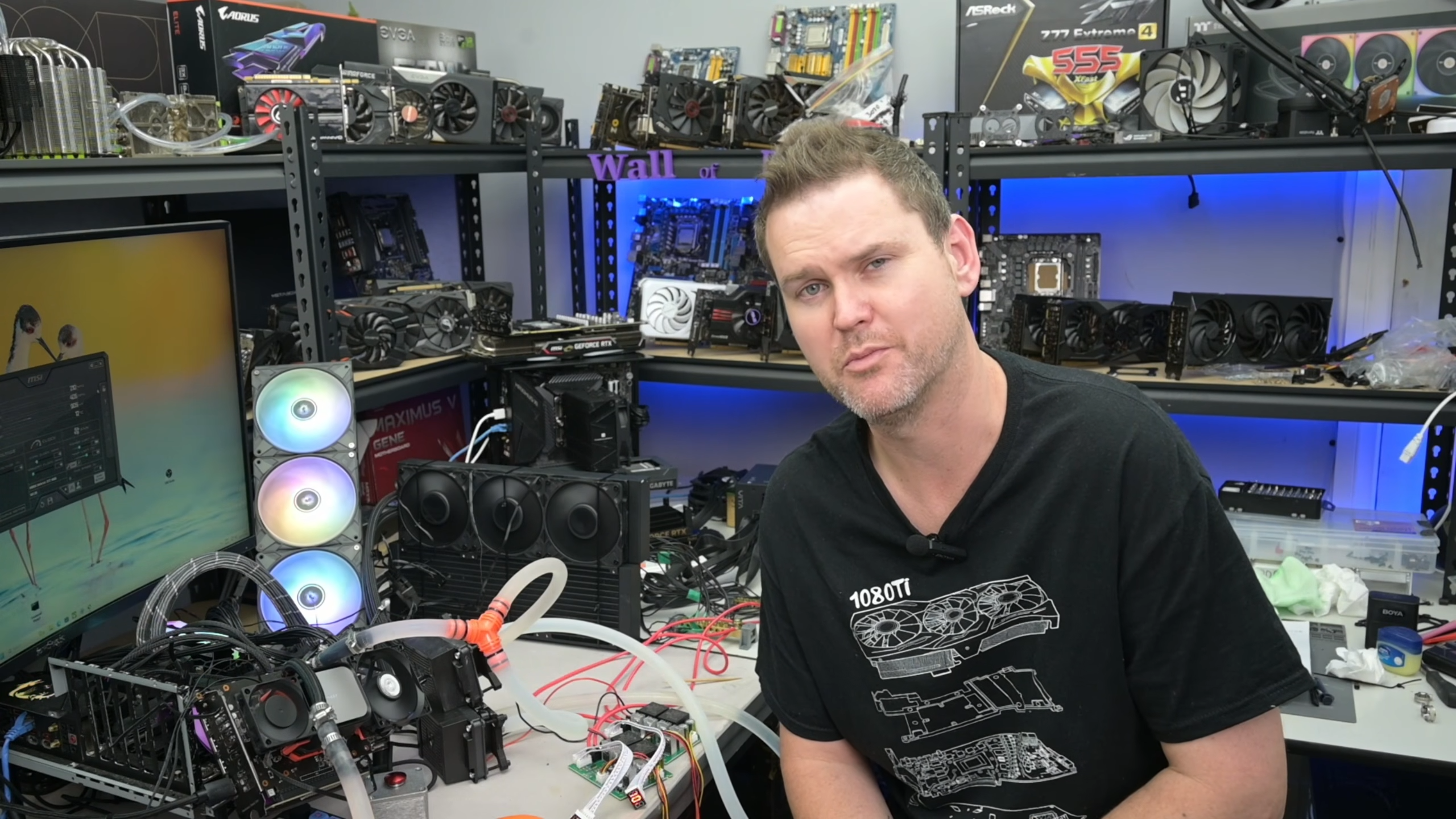
That’s the blunt, cold truth at the heart of TrashBench’s ambitious, frankly awe-inspiring, attempt to build a do-it-yourself Peltier thermoelectric cooler for graphics cards. We’re talking dual 360mm AIOs, homemade DC controllers, a custom loop that looks like a mad scientist’s plumbing experiment – all aimed at pushing an RTX 4060 and RTX 3070 into sub-ambient territory. And while the sheer engineering chutzpah is undeniable, the results? Well, let’s just say the Thermoelectric Effect Giveth, and the Thermoelectric Effect Taketh Away, primarily your electricity bill.
The concept itself is elegantly cruel. You apply electricity to a semiconducting material. One side gets cold, the other gets hot. Your liquid cooling system then gets tasked with the unenviable job of cooling the cold side to make it colder, and simultaneously evacuating the heat generated by the hot side. It’s a heat pump, but one that seems to eat power like a black hole. TrashBench’s setup was no different; a hefty 360 watts flowing into the Peltier modules alone, a figure that immediately raises a skeptical eyebrow.
“The YouTuber’s testing demonstrates the Achilles heel of Peltier cooling solutions: extreme power inefficiency.”
When the dust settled and the benchmarks ran on an RTX 4060, the numbers told a familiar story. Baseline: a perfectly respectable 38°C GPU core, 24°C liquid, with ambient air at 23°C. Fire up the Peltier rig, give it twenty minutes to settle in (a critical step, implying the system needs time to overcome its own thermal inertia), and we see a drop to 28°C GPU core and a frigid 14°C liquid. That’s a 10°C gain on the core, and a 10°C gain on the liquid. Not bad, on paper. A subsequent “warm start” test, where the Peliters are turned back on after a period of load, yielded slightly warmer, but still sub-ambient, results. Then came the RTX 3070, a hotter chip. Baseline at 40°C core, 29°C liquid. Peltier-activated: 33°C core, 21°C liquid. Again, a decent improvement, but at what cost?
This is where the deep dive begins, beyond the temperature readouts and wattage figures. The fundamental architecture of Peltier cooling, particularly when applied to something as power-hungry as a modern GPU, is an inherent battle against itself. You’re not just cooling the chip; you’re fighting the secondary heat load generated by the cooling device itself. And for that secondary heat load to be effectively managed, you need substantial cooling for the cooler. TrashBench’s dual 360mm AIOs, tasked with cooling the Peltier modules rather than the GPU directly, highlight this architectural paradox. They’re essentially running a high-performance cooling loop just to enable another cooling process, which then creates more heat. It’s a recursive thermal nightmare.
This inherent inefficiency is precisely why Peltier cooling remains on the fringe, a technological curiosity rather than a mainstream solution. Cooler Master’s ML360 Sub Zero, a commercial attempt at this very concept, garnered a middling three-star rating for similar reasons: poor performance-to-power ratio. It struggled against standard AIOs while guzzling nearly 200 watts. TrashBench’s DIY rig, while more elaborate, faces the same existential hurdle. The build is impressive, a proof to dedication and skill, but the underlying physics of thermoelectric cooling make it a losing proposition for high-performance computing where energy efficiency is increasingly becoming a design imperative, not an afterthought.
My unique insight here? We’re seeing a microcosm of a larger trend in high-performance computing. As chips get more powerful, the cooling demands escalate. But instead of chasing exotic, power-hungry solutions like Peliters, the industry is pushing for architectural efficiencies within the chips themselves and more sophisticated, yet fundamentally passive or moderately active, cooling architectures. TrashBench’s project is a fascinating retrospective on a path not taken, and likely for good reason. It’s like building a steam-powered rocket ship to get to the moon when you already have a functional electric car.
Why Does Sub-Ambient Cooling Even Matter?
Achieving temperatures below the ambient air is the holy grail for some overclockers and enthusiasts. The theory is that by getting components colder, they become more electrically stable and can be pushed to higher clock speeds without errors or thermal throttling. For GPUs, this means potentially higher frame rates in games or faster render times in professional applications. However, as demonstrated by this Peltier cooler build, the practical gains are often dwarfed by the immense power draw and complexity required.
Is This DIY Peltier Cooler a Warning?
Absolutely. It’s a stark, high-wattage warning. While the craftsmanship of TrashBench’s setup is laudable, the project underscores the fundamental limitations of Peltier technology for high-power devices like modern GPUs. The energy cost of achieving sub-ambient temperatures far outweighs the marginal performance benefits. It’s a classic case of diminishing returns, where the effort and resources poured into the cooling solution don’t translate into a proportional improvement in the device being cooled.
🧬 Related Insights
- Read more: Memory Chip Shortage: AI’s Feast Means Your Famine for Years
- Read more: Nvidia’s Software Flexes Hard in MLPerf Inference Blowout
Frequently Asked Questions
What does a Peltier cooler actually do? A Peltier cooler uses the thermoelectric effect to transfer heat from one side of a device to the other when an electric current is applied. This results in one side becoming cold and the other hot.
Will this Peltier cooler improve my gaming performance significantly? Likely not. While it can achieve sub-ambient temperatures, the massive power consumption and the complexity of the system mean the performance gains are often minimal and not worth the energy cost compared to conventional cooling methods.
How much power did this custom Peltier cooler use? The dual Peltier modules alone consumed 360 watts, not including the power for the GPUs or the pumps and fans for the liquid cooling system.