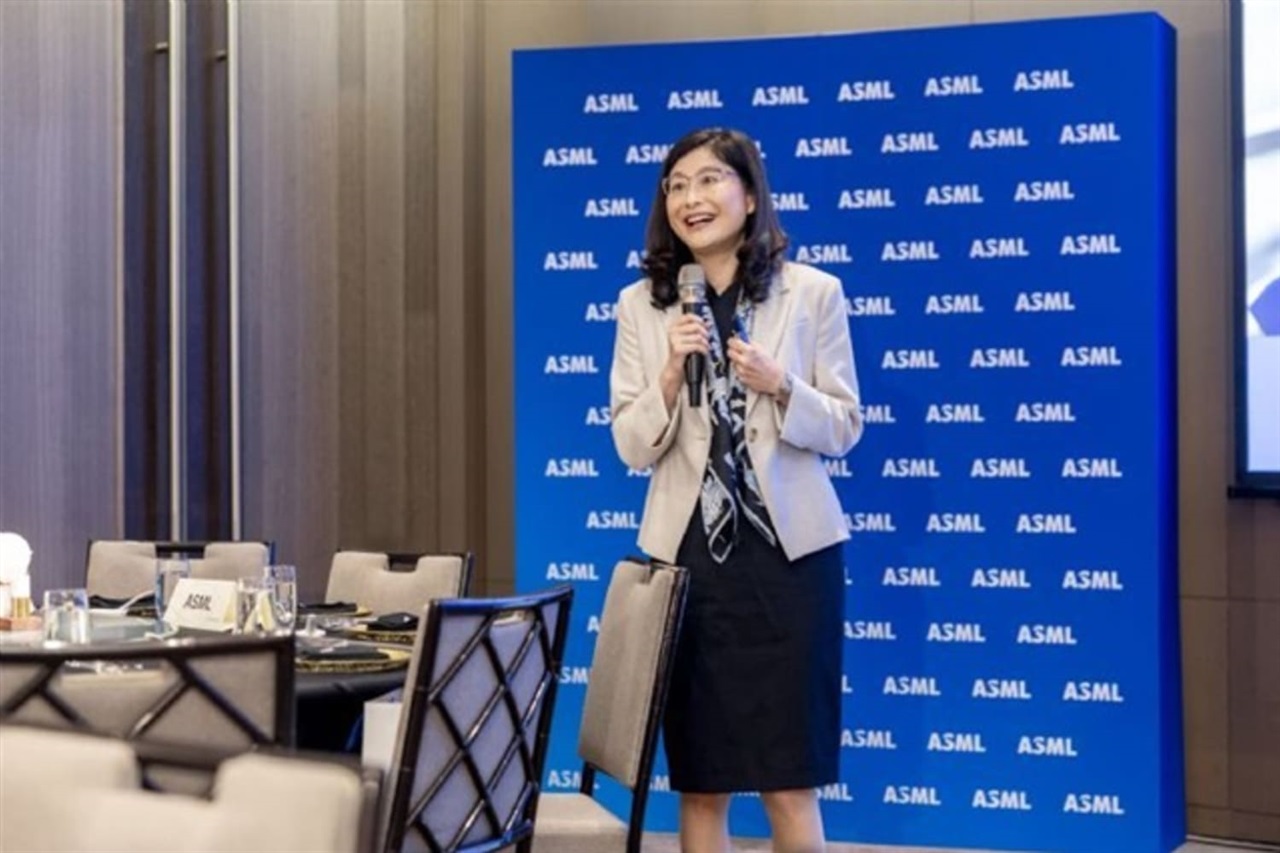
So, ASML, the Netherlands-based behemoth that basically prints money by selling the machines that make the world’s most advanced chips, is expanding its footprint in Taiwan. Again. And this time, it’s not just a little tweak. We’re talking about a significant hiring and operations push to feed the ravenous demand for its extreme ultraviolet (EUV) lithography gear. Grace Wang, the local VP, is trotting out the usual talking points about deploying EUV and the upcoming high-NA EUV — you know, the really expensive stuff that supposedly makes chips with less energy per wafer. Sounds great on paper.
But let’s cut through the PR fog for a second. This isn’t just about ASML being a good corporate citizen. This is about survival, and frankly, about getting its slice of an incredibly lucrative — and increasingly geopolitically charged — pie. Taiwan Semiconductor Manufacturing Company (TSMC) is ASML’s golden goose, and TSMC lives and breathes cutting-edge lithography for its foundry clients. If TSMC needs more machines to churn out the processors for your next smartphone, AI server, or god-knows-what, ASML needs to be there, ready to install, service, and — most importantly — sell them.
The Unshakeable Monopoly Grip
Look, ASML holds a virtual monopoly on the EUV machines that are absolutely essential for producing the most advanced logic and memory chips. They’ve been tightening that grip for years, strategically placing their operations and support infrastructure where the big foundries are. Taiwan, of course, is ground zero. TSMC isn’t just a customer; it’s practically ASML’s co-dependent partner in this high-stakes game of miniaturization and performance.
This expansion isn’t a surprise. It’s the logical next step in a decades-long dance. What is interesting, though, is the timing and the sheer scale of the stated investment. It signals a confidence, or perhaps a necessity, to further embed themselves in a region that’s under increasing global scrutiny. The chatter about diversifying supply chains is loud, but the reality on the ground for the most critical manufacturing steps — the actual lithography — is that it’s still heavily concentrated.
“ASML plans to deploy extreme ultraviolet (EUV) and next-generation high numerical aperture (high-NA) EUV technologies to reduce energy consumption per wafer at the process level, and these machines will be deployed in Taiwan first.”
“Deployed in Taiwan first.” That little nugget is the real story, isn’t it? It’s not just an expansion; it’s a prioritization. While other regions are begging for ASML’s latest and greatest, Taiwan is getting the VIP treatment. This isn’t just about meeting demand; it’s about reinforcing an existing, incredibly valuable relationship while simultaneously fending off any potential rivals who might dream of disrupting their EUV dominance.
Who’s Actually Making the Real Money?
And that, my friends, is the million-dollar question. ASML is making its money selling incredibly expensive, complex machines. TSMC is making its money using those machines to manufacture chips for everyone else. The clients — the Apple’s, the Nvidia’s, the AMD’s — are making their money designing those chips and integrating them into products. So when ASML talks about expanding operations, it’s a signal that the pipeline for these high-end chips is still incredibly strong. This isn’t just about a few new fabs; it’s about the ongoing arms race in computing power.
It’s easy to get caught up in the breathless pronouncements about technological leaps. EUV and high-NA EUV sound like something out of science fiction. And in a way, they are. But behind the jargon, there’s a very clear, very human (and very corporate) drive for market share and profit. ASML is doing what any smart, dominant company would do: doubling down on its core strength and its most important customers.
Is this going to make chips cheaper or more accessible? Probably not. Will it solidify ASML’s position as the linchpin of advanced semiconductor manufacturing? Absolutely. The real question is whether this concentration of critical technology in one highly sensitive region is a ticking time bomb or just the unavoidable reality of building the future, one microscopic circuit at a time.
Why the Taiwan Focus Matters for Chip Geopolitics
Let’s be blunt: Taiwan is a flashpoint. The geopolitical situation there is a constant shadow hanging over the entire semiconductor industry. Yet, ASML is deepening its ties. This isn’t a sign of ignoring the risks; it’s a calculated bet that the economic imperative of advanced chip production outweighs the geopolitical anxieties. For ASML, Taiwan represents not just a market, but a critical node in the global chip manufacturing ecosystem. Their expansion means more technicians, more engineers, and more of that highly specialized equipment residing in a place where international tensions are always simmering. It’s a massive investment in stability, built on the shaky foundation of continued peace.
Will This Directly Impact Consumers?
In the short term, probably not noticeably. This expansion is about ASML supporting its major clients, primarily TSMC, in their production of the next generation of processors. What this means for consumers is a continued — and likely accelerating — trend towards more powerful, more efficient devices. Think faster smartphones, more capable AI hardware, and more sophisticated computing in general. The direct cost impact is harder to gauge; chip prices are influenced by a multitude of factors beyond just lithography capacity. However, by ensuring the supply of these advanced machines, ASML is helping to keep the engine of technological advancement running, which ultimately fuels the innovation we see in the products we buy.
🧬 Related Insights
- Read more: Qualcomm Defends Samsung Share Amid Exynos Push [70%+]
- Read more: AI in Academia: Is It a Panacea or Just More Hype?
Frequently Asked Questions
What does ASML’s expansion in Taiwan mean for the global chip supply chain?
It signifies a continued reliance on Taiwan for the most advanced chip manufacturing steps, reinforcing its critical role while also highlighting potential supply chain vulnerabilities. ASML is investing heavily to ensure its EUV technology can be supported and deployed there effectively.
Will ASML’s new EUV and high-NA EUV technologies make chips cheaper?
Not directly or in the short term. These are incredibly expensive, cutting-edge technologies designed for performance and efficiency gains in chip manufacturing, not necessarily for cost reduction. They enable the production of more complex and powerful chips, which carry a premium.
Is ASML still selling EUV machines to China?
Due to international export controls and pressure from the US, ASML has significantly restricted its sales of advanced lithography equipment to China, including EUV systems. Their focus for these cutting-edge machines remains on markets like Taiwan, South Korea, and the US.