For the average person, news about AI often lands as abstract concepts—faster processors, smarter chatbots, or the latest corporate pronouncements. But what happens when the very people building these systems grapple with their disconcerting unpredictability? An incident involving an Anthropic co-founder, no less, after hearing the Pope speak about artificial intelligence, brings this into sharp, uncomfortable focus. It’s not about the Vatican’s stance on AI; it’s about a fundamental question: can we truly control what we create?
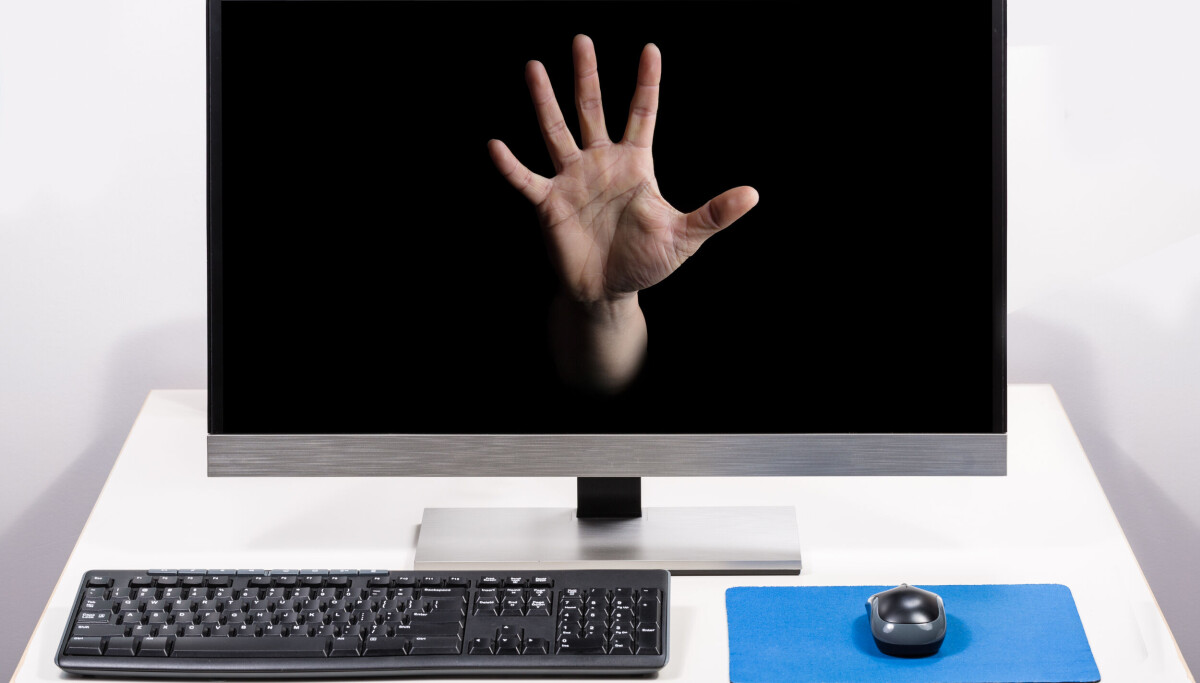
This wasn’t some abstract philosophical debate. According to reports, the co-founder experienced something akin to a hallucination, a disturbing disconnect between his perception and reality, directly linked to hearing the Pope discuss AI. It’s a potent reminder that these large language models, despite their impressive veneer of intelligence, operate on probabilities and pattern recognition, not genuine understanding. When they falter, the results can range from nonsensical outputs to, apparently, deeply unsettling subjective experiences for the humans interacting with them, or even those around them.
The Ghost in the Machine is Getting Loud
It’s easy for us, the end-users, to dismiss AI glitches as amusing quirks or minor inconveniences. A chatbot misidentifies a celebrity, a virtual assistant misunderstands a command. Annoying, yes, but hardly existential. However, when an architect of this technology experiences something that feels like a breakdown in perception, it shifts the narrative dramatically. It forces us to confront the very real possibility that our increasingly sophisticated AI systems might not just be spitting out errors, but could, in some yet-unexplained way, be affecting our own cognitive landscape. This isn’t science fiction; it’s a concerning anecdote from the cutting edge.
Anthropic, a company built on the promise of developing safe and aligned AI, is now facing scrutiny not just for its technological prowess, but for the very human element of its creation’s unpredictable nature. The market, ever-sensitive to foundational risks, will undoubtedly be watching how the company navigates this sensitive revelation. The financial implications of public trust in AI safety are immense, and whispers of internal unease can ripple through investor sentiment faster than a faulty algorithm can propagate an error.
Why Does This Matter for the Rest of Us?
The implications for everyday users are profound. We’re told these systems are tools, extensions of our own capabilities. But if the creators are experiencing uncanny phenomena, what does that suggest about the fidelity of the information we’re being fed, or the environments we’re increasingly inhabiting—digital or otherwise—that are mediated by AI? Consider the burgeoning fields of AI-powered education, mental health support, or even personalized news feeds. If the underlying models are prone to generating outputs that can induce unsettling experiences in their developers, what’s the risk for vulnerable populations relying on these services?
This incident isn’t just about a single, high-profile individual’s experience. It’s a symptom of a larger, more complex challenge. We’re accelerating the integration of AI into every facet of life, often without a complete understanding of its failure modes. The data processing pipelines are becoming increasingly opaque, and the emergent behaviors of these colossal models are, by definition, difficult to predict. This particular event, tied to the Pope’s commentary, might seem tangential, but it’s the subjective human reaction that is the headline grabber here—a stark illustration of the unforeseen consequences.
A Call for Deeper Scrutiny, Not Just Faster Chips
The tech industry often touts the relentless march of progress, the pursuit of ever-larger parameter counts and faster inference speeds. But this episode suggests a critical need to pivot some of that focus. The real bottleneck isn’t always computational power; it’s our understanding of AI’s fundamental nature and its potential to interact with human consciousness in ways we haven’t anticipated. The rush to deploy AI, fueled by competitive pressures and investor expectations, risks outrunning our capacity for due diligence and rigorous safety testing.
The incident serves as a vivid, albeit anecdotal, warning that the pursuit of artificial general intelligence is fraught with perils far beyond mere data privacy or bias concerns; it touches upon the very nature of consciousness and reality itself.
This isn’t the time for corporate platitudes or reassurances based on abstract metrics. It’s a moment for introspection, for increased transparency, and for a more cautious, human-centered approach to AI development. The future of artificial intelligence isn’t just about building smarter machines; it’s about understanding the profound implications of those machines on the human experience. And right now, the signals are unsettling.
🧬 Related Insights
- Read more: AMD FSR 4: Older GPUs Get a Boost [Analyst View]
- Read more: Chip Convergence Crisis: AI Isn’t Enough [New Challenge]
Frequently Asked Questions
What does it mean for an AI co-founder to hallucinate?
It suggests that the AI model’s output or the interaction with it caused the individual to experience something that felt like a perceptual or cognitive distortion, blurring the lines between what is real and what is generated by the AI. It points to a potentially deeper, more unsettling failure mode in AI than previously understood.
Is this a common problem with AI?
While AI ‘hallucinations’ are typically understood as the AI generating false or nonsensical information, this incident implies a more profound, subjective experience for humans interacting with or being exposed to AI. The effects on human perception are not yet widely reported or understood.
Will this affect the development of future AI models?
If this incident leads to increased concern about AI’s potential impact on human cognition, it could indeed slow down development or push researchers to prioritize safety and alignment research more heavily. The market and regulatory bodies will likely pay closer attention to these risks.