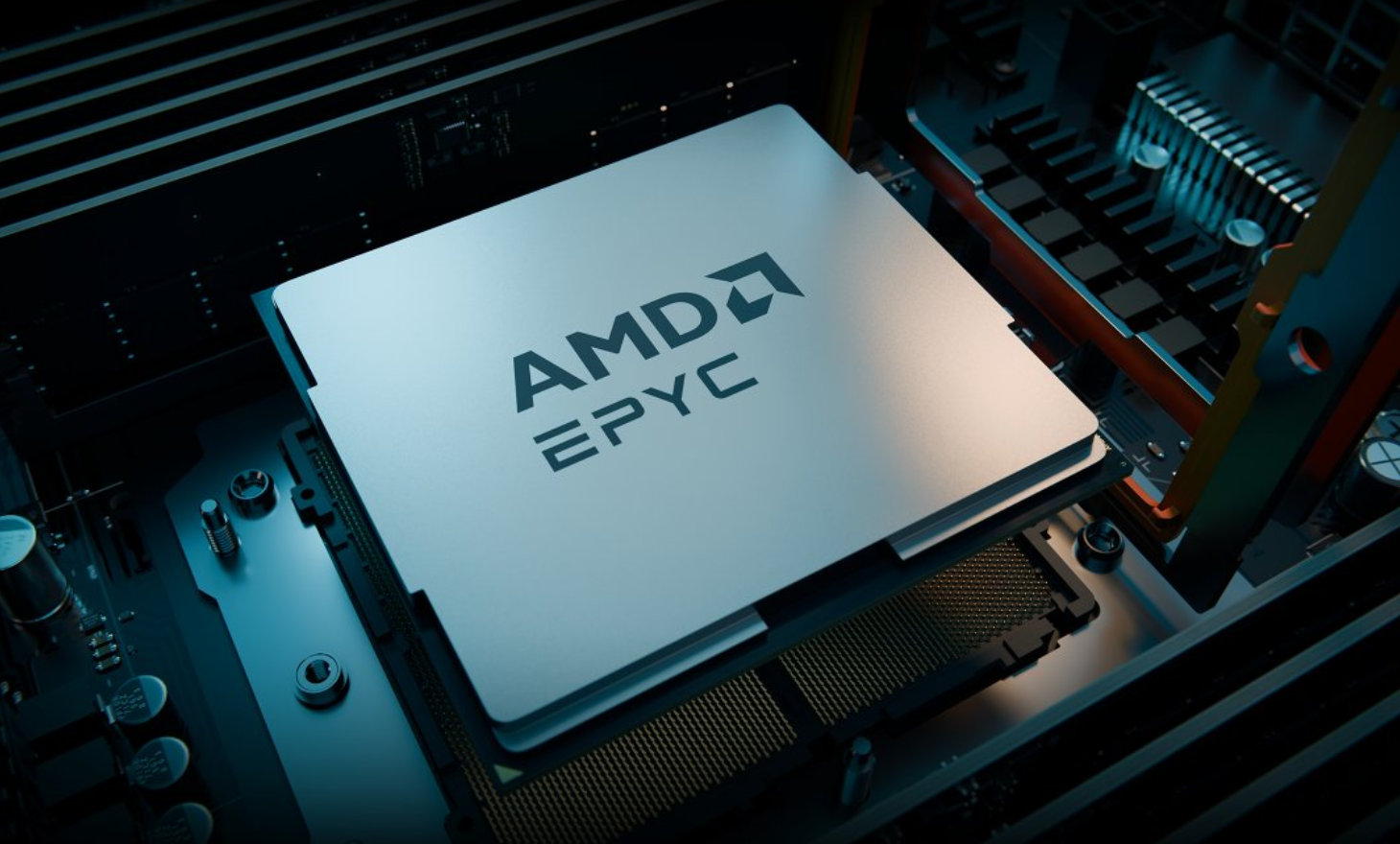
Look, I’ve seen enough product launches in my day to know when a company’s trying a little too hard to sell you the sizzle instead of the steak. AMD’s new EPYC 8005 ‘Sorano’ processors are the latest case in point.
They’re touting an 84-core behemoth, the 8635P, packed with nothing but the full-fat Zen 5 cores. No Zen 5c here, folks. Remember Zen 4c on the previous generation EPYC 8004 ‘Siena’? This is a different beast, and that’s not necessarily a bad thing, but let’s not pretend it’s some kind of quantum leap for the masses.
So, Who’s This ‘Sorano’ For, Anyway?
AMD’s pitching these chips at the edge, vRAN, and storage markets. Think cell towers, those outdoor cabinets humming away, or server closets that can’t afford the power bill of a full-blown data center. They’re talking about a 70W to 225W TDP range, which is, admittedly, pretty tame compared to their EPYC 9005 brethren. This is about fitting serious compute power into tight, power-starved spots. And you know what? For that specific use case, it actually makes some sense.
What’s interesting is that AMD is touting some frankly bananas integer performance claims against Intel’s Xeon 6716P-B. We’re talking up to 91% higher performance while sipping 10W less. If those numbers hold up in the real world – and that’s always the big if with these kinds of vendor-provided benchmarks – then this could be a genuine pain point for Intel in certain segments.
Against Intel’s 40-core Xeon 6716P-B, AMD claims up to 91% higher integer performance while operating at 10W lower TDP.
But here’s the cynical old journalist in me speaking: who is actually making money here? It’s easy to throw around core counts and performance per watt figures, but the real story is always about who’s buying this stuff, why, and how much they’re paying. For the edge, where system integration costs and power consumption are king, a powerful single-socket CPU with good I/O and memory support could be a very attractive proposition. It’s not about building the next hyperscale cloud, it’s about getting solid performance where you couldn’t before.
Is This Just a Cut-Down Data Center Chip?
AMD’s PR machine is working overtime to insist this isn’t just a cut-down data center GPU. They’re emphasizing the PCIe 5.0 lanes, DDR5 memory support, and the overall ‘right-sized’ platform. This suggests they’ve actually thought about the system integrators and the final deployments, not just cranking out more silicon.
This focus on the edge is a smart move. The traditional server market is a bloodbath, and while AMD is doing well there, carving out a niche where power and space are the primary constraints could be a lucrative play. It’s less about raw horsepower for massive parallel tasks and more about efficient, reliable performance in environments where a full rack is out of the question.
The skip from Zen 4c to full Zen 5 cores on these edge-focused chips is a bit of a head-scratcher at first glance. Usually, you’d expect the ‘c’ variants to be the ones aimed at density and power efficiency. But perhaps AMD found that the full Zen 5 cores, with their architectural improvements, could hit the desired performance and power targets without needing the dense-but-less-capable ‘c’ cores. Or maybe they just wanted to simplify their product stack for this particular segment. Who knows. It’s always a gamble.
My money’s on this being a calculated move to address a specific market demand. They’re not trying to dethrone the big iron data center CPUs with Sorano; they’re trying to win over the edge and storage players who’ve been underserved by high-power, one-size-fits-all solutions. It’s about delivering a premium experience – modern cores, decent cache, fast I/O – in a package that doesn’t require a new substation.
What About the Competition?
Intel’s been in this power-constrained space for a while, and their Xeon line has always had a strong presence. But AMD’s aggressive pricing and performance claims, especially in integer workloads, could really shake things up. If these EPYC 8005 processors can deliver on their promises of high performance per watt and offer a compelling value proposition, they could steal market share from Intel in the edge server and specialized storage segments. It’s not about who has the most cores on paper; it’s about who can deliver the most useful work for the least amount of power and money, and that’s where Sorano seems to be aiming.
In the end, the EPYC 8005 Sorano lineup is AMD playing a strategic game. They’re not trying to reinvent the wheel, but they are trying to put a very well-engineered wheel in places where people haven’t had one before. Keep an eye on these for edge deployments; they might just surprise you.