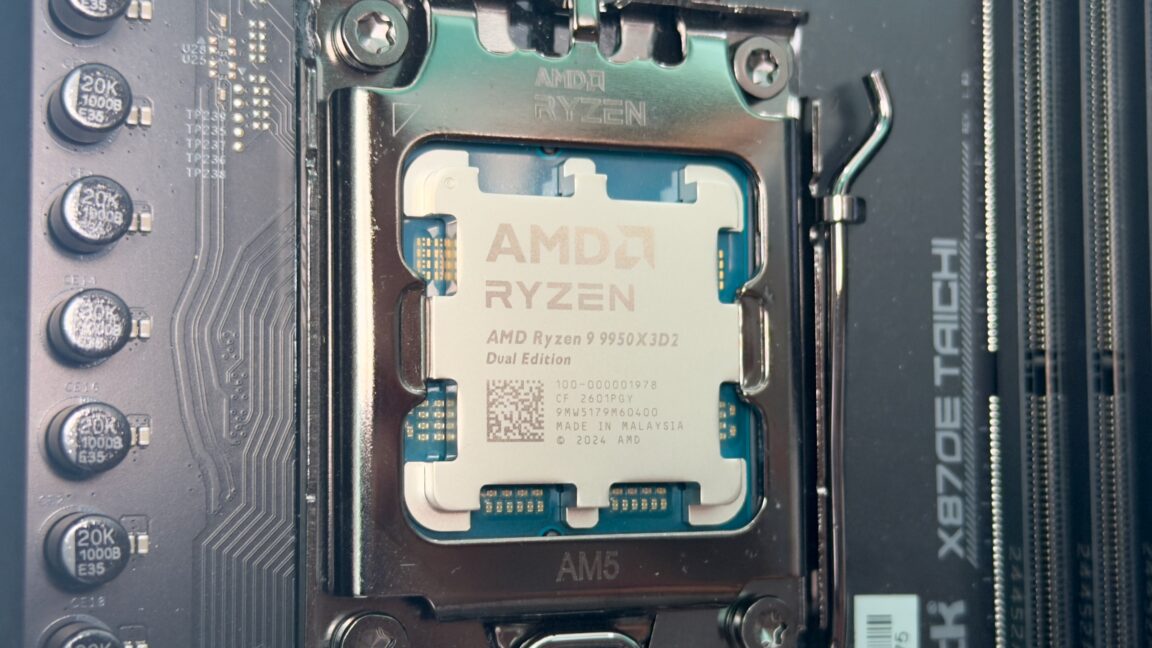
Ever wondered if AMD’s secret sauce is just extra pricey sprinkles on the same old donut?
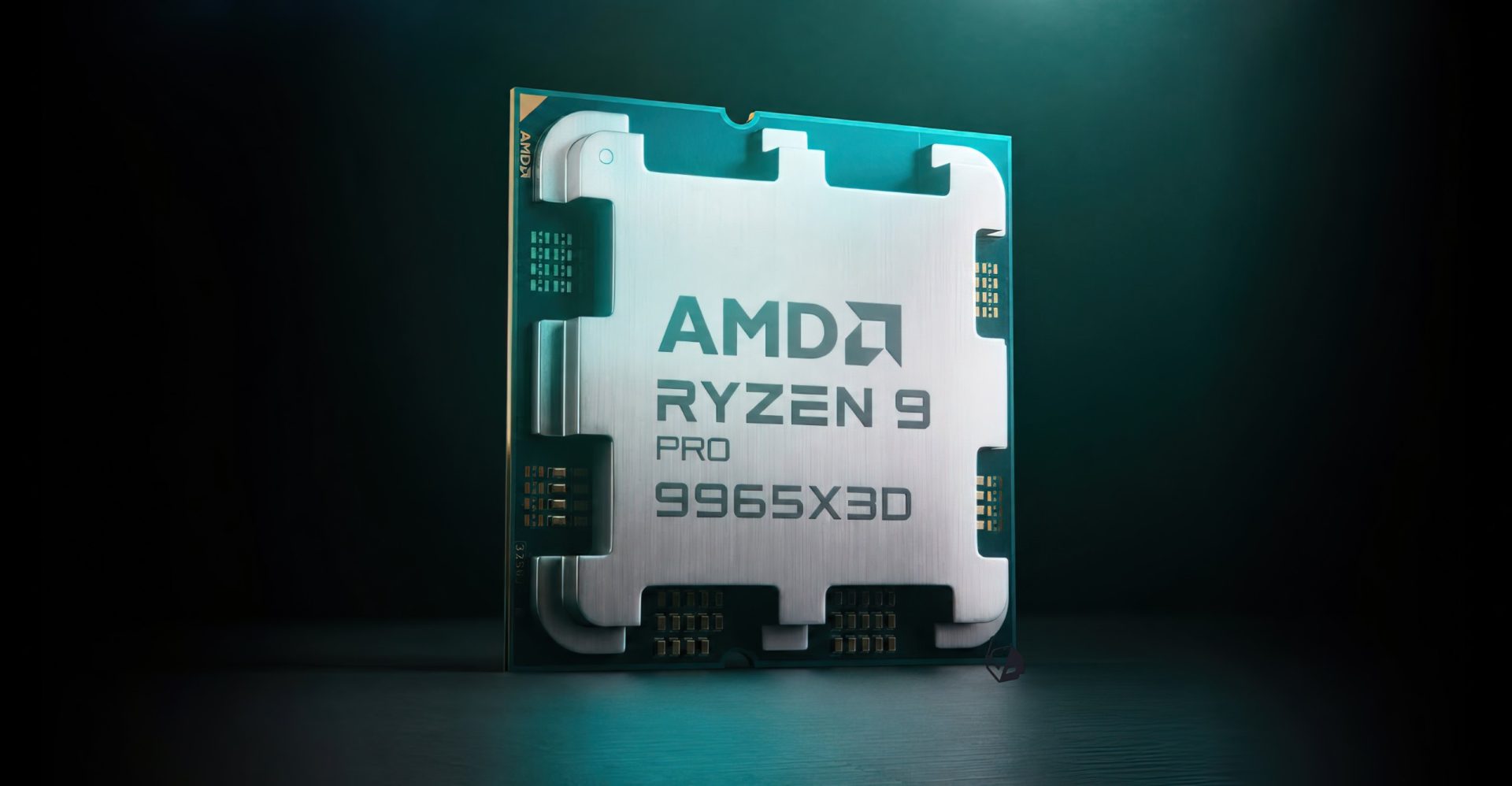
That’s the Ryzen 9 9950X3D2 Dual Edition in a nutshell. Dropping April 22 for $899—yep, that’s $240 more than the street price of its single-cache sibling—this 16-core Zen 5 beast stacks 208MB of L3 cache across both chiplets. Double the 3D V-Cache fun. Or is it?
Look, AMD’s been tinkering with this stacked-cache magic since the Ryzen 7 5800X3D blew minds back in 2022. Remember that? Gaming leaped forward without melting your motherboard. Smart. But here’s the acerbic truth: diminishing returns hit like a freight train.
Is the Ryzen 9 9950X3D2 Dual Edition Worth $899?
Short answer: No. Not for most mortals.
The review nails it cold. In general-purpose benchmarks, video encoding, and—crucially—gaming, this Dual Edition edges out the regular 9950X3D by a ‘smidge.’ We’re talking consistent, but tiny, gains. Power draw? Same in games, even lower in encoding despite a 200W TDP versus 170W. Impressive engineering, sure—AMD’s ironed out the old 3D V-Cache kinks, like uneven performance from mismatched chiplets.
“In our general-purpose CPU benchmarks, video encoding tests, and gaming tests, the 9950X3D2 is consistently just a smidge faster than the regular 9950X3D.”
But that quote? It’s damning. A smidge. For $899? Laughable. The original 9950X3D—MSRP $699, streets at $660—delivers nearly identical results thanks to AMD’s hybrid cache trick: one chiplet cached, one not. Hybrid works. Costs less. End of story.
And here’s my unique dig—the one the original skips: this reeks of enterprise grift dressed as consumer bling. Back in the ’90s, Intel pulled the same stunt with overclocking-locked chips for servers, charging workstation premiums to hobbyists. AMD’s playing catch-up, segmenting the market with ‘Dual Edition’ nonsense. Prediction? Street prices crash to $750 by summer, making it a fool’s errand unless you’re benchmarking world records.
Power users might squint. That extra cache shines in cache-sensitive workloads—think massive simulations or poorly optimized games. But for you, encoding your vacation footage or fragging in Cyberpunk? Nah. The regular X3D laughs all the way to the wallet.
Why Does AMD Bother with This Cache Madness?
Blame the arms race. Intel’s Arrow Lake looms, Apple’s M-series cache wizardry mocks from afar, and Nvidia’s GPU empire eyes CPU turf. AMD needs headlines. ‘208MB cache!’ screams sexy. Reality? Marketing spin on incremental tweaks.
Don’t get me wrong—kudos for efficiency gains. Eliminating hybrid downsides means future Zen 6 could stack cache everywhere without power bloat. But charging 30% more for 1-2% uplift? Corporate greed, pure and simple. It’s like selling a Ferrari with an extra cupholder.
Gaming benchmarks tell the tale. Both chips crush comers like Intel’s Core Ultra 9—X3D lineage owns frames per second. Dual Edition sips power better under load, too. Nice. But that $240 delta buys a whole second GPU, or—gasp—a vacation.
Productivity? Encoding zips faster by a hair, power dips. General compute? Yawn. If you’re not thread-starved in niche apps, save your cash.
But wait—supply and demand could spike that $899 to $1,000. AMD’s playing scarcity poker. Smart for margins, dumb for loyalty.
Ryzen 9 9950X3D2 vs Regular: The Numbers Don’t Lie
Pull out the calculator. Regular X3D: $660. Dual: $899. Performance parity: 98-99%. Value ratio? Dual Edition tanks at 73% of the original’s bang-for-buck.
Historical parallel? Nvidia’s RTX 4090D ‘China Edition’—nerfed for export rules, priced like the real deal. Consumers balked. AMD risks the same backlash if enthusiasts smell the hype.
Upgrade path? If you’ve got a 7950X3D, sit tight. This ain’t it.
So, what’s the play? Snag the regular 9950X3D on sale. Dual Edition’s for flexing in Reddit threads or corporate benches where budgets ignore reality.
AMD’s 3D V-Cache saga evolved from gimmick to staple. Dual Edition polishes the formula—without reinventing it. Skeptical? Good. Blind faith built Theranos.
🧬 Related Insights
- Read more: NVIDIA’s Isaac Gambit: 90% Synthetic Data by 2030, But Robots Still Stumble in the Real World
- Read more: SK Hynix’s Photolithography ‘Master Key’ Cracks Open AI Memory Scaling Limits
Frequently Asked Questions
Does the Ryzen 9 9950X3D2 beat Intel in gaming? Yes, handily—X3D cache magic still reigns, with Dual edging regular by a smidge.
Is Ryzen 9 9950X3D2 Dual Edition worth $899? No, unless you’re cache-obsessed; regular version’s 99% as fast for $240 less.
When does Ryzen 9 9950X3D2 release? April 22—stock up on patience, prices might fluctuate.