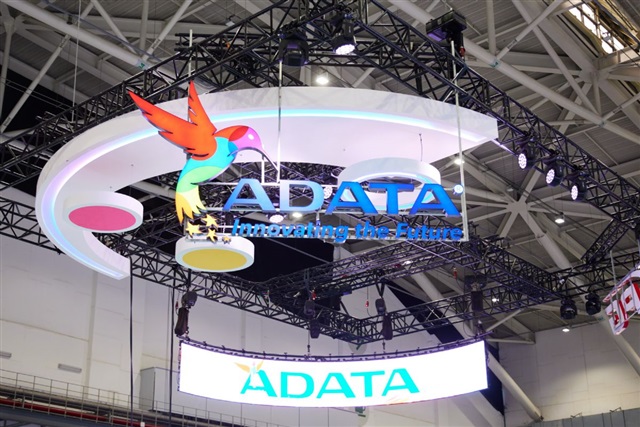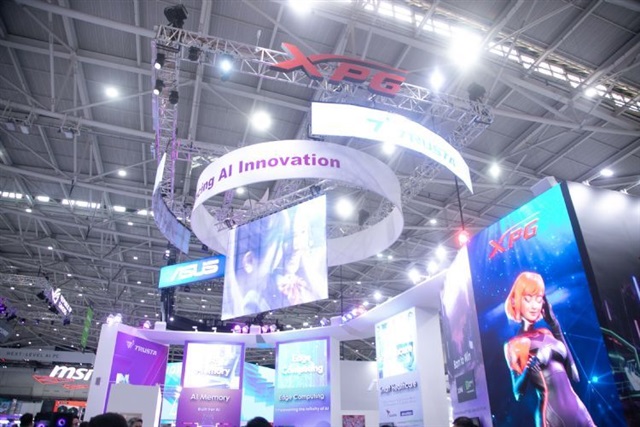
Look, we’re standing on the precipice of something colossal. Forget the incremental upgrades, the faster processors that shave milliseconds off your gaming load times (though those are nice, too!). We’re talking about a fundamental platform shift, an AI tidal wave that’s about to reshape how we interact with pretty much everything. ADATA, a name usually synonymous with sturdy storage and flashy gaming gear, just dropped a bomb at COMPUTEX 2026 that hints at just how deep this revolution is going.
They’re not just talking about a new AI chip or a smarter server rack; they’re painting a picture of a complete cloud-to-edge AI ecosystem. Think of it like this: imagine your smart home, your factory floor, your autonomous delivery drone, and your massive cloud data center all speaking the same hyper-intelligent language, all orchestrated by ADATA’s integrated hardware and software. It’s like they’re building the nervous system for the next generation of intelligent machines and environments.
What’s in ADATA’s AI Toolbox?
This isn’t a one-trick pony. ADATA’s pulling all its aces out of the deck: TRUSTA for enterprise storage, ADATA Industrial for the rugged stuff, XPG for the gamers (because even gaming needs an AI boost!), and ATrack for the AIoT brains. They’re stitching these disparate threads into a cohesive fabric, aiming to deliver end-to-end AI solutions. It’s a bold move, and frankly, it’s the kind of holistic thinking we need if AI is to move beyond the hype and into tangible, everyday improvements.
Their new “AI Scaler” is particularly intriguing, designed for cost-effective deployment at the edge. This isn’t about building the next supercomputer; it’s about democratizing AI, getting intelligent processing power into more devices and more places without breaking the bank. This is the engine that will power the real-world AI applications we’re only just beginning to dream about – think predictive maintenance on a farm tractor, real-time traffic optimization in a city, or even personalized healthcare monitoring in your own home.
ADATA is demonstrating a complete cloud-to-edge AI ecosystem, integrating its enterprise storage brand TRUSTA, ADATA Industrial, gaming brand XPG, and AIoT unit ATrack to showcase hardware and software for a wide range of AI applications.
Is This Just More Corporate Hype?
Here’s where my skepticism kicks in. On the surface, it sounds fantastic. A unified ecosystem? Cost-effective edge AI? Sign me up! But let’s be real, the devil is always in the details – and in the execution. Many companies talk a big game about ecosystems, only to deliver fragmented experiences. ADATA needs to prove that this isn’t just a collection of rebranded components loosely tied together. The true test will be in how well these pieces actually play with each other, and whether the AI Scaler lives up to its promise of genuine cost savings and performance.
I’m genuinely excited about the potential here. We’ve seen AI promise so much, and for a while, it felt like it was stuck in research labs and enterprise data centers. ADATA’s move feels like a powerful push to bring AI out into the wild, making it accessible, practical, and affordable. This isn’t just about a new product announcement; it’s about a strategic vision that could accelerate the adoption of AI across countless industries, from manufacturing floors to smart cities and beyond.
Think about it: for years, we’ve been building individual smart devices, each with its own little brain. Now, imagine those brains being able to coordinate, share insights, and learn from each other in real-time, all managed from a central hub. It’s the difference between a choir of soloists and a symphony orchestra. ADATA is essentially providing the conductor’s baton and the sheet music.
The implications for developers are massive, too. Building applications for a fragmented, complex AI landscape is a nightmare. A unified ecosystem, if executed well, simplifies development, making it easier to create and deploy AI-powered solutions. This could spark a new wave of innovation, allowing smaller companies and individual developers to build sophisticated AI applications without needing the R&D budgets of tech giants.
And for us, the end-users? Get ready for more intuitive experiences. Your devices will understand you better, your environments will adapt to your needs, and the world will feel a little bit smarter, a little bit more responsive. It’s not science fiction anymore; it’s the next phase of computing, and ADATA’s making a serious play to be a major architect of it.
**
🧬 Related Insights
- Read more: AMD EPYC Sorano Drops Zen 5c, Courts Edge With 84 Zen 5 Cores
- Read more: Intel’s Arc Pro GPUs Claw Back Ground in MLPerf v6.0 — Still Nvidia’s Shadow?
Frequently Asked Questions**
What does ADATA’s cloud-to-edge AI ecosystem actually do? It integrates ADATA’s various brands (storage, industrial, gaming, AIoT) to create a unified system that allows AI processing to happen both in large data centers (cloud) and on individual devices or local networks (edge).
Will ADATA’s AI Scaler make AI cheaper for consumers? Its primary target is cost-effective deployment at the edge for businesses and industrial applications, which can indirectly lead to more affordable AI-powered products and services for consumers down the line.
Is this the first time ADATA has been involved in AI? While ADATA has been involved in components and solutions that enable AI, this marks a significant push towards showcasing a comprehensive, integrated AI ecosystem and specific AI-focused hardware like the AI Scaler.