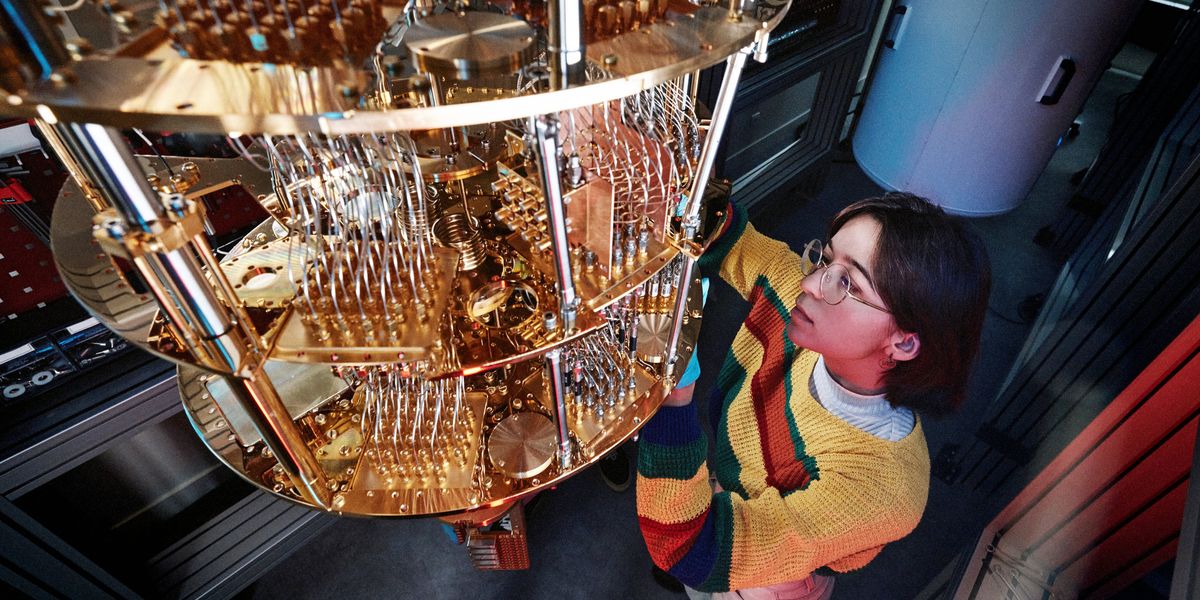
The hum of a quantum computer isn’t yet a sound you hear in laboratories, but the US government is certainly listening to its potential. A substantial $2 billion chunk of the CHIPS Act funding is now earmarked for quantum hardware development, a clear signal that Washington views this nascent technology not as a scientific curiosity, but as a cornerstone of future national infrastructure.
This isn’t just about building faster chips; it’s a geopolitical play disguised as technological advancement. The modalities receiving this backing span the spectrum of quantum approaches—superconducting qubits, trapped ions, photonic systems, and more—each representing a distinct architectural bet on the path to quantum supremacy. The strategy is clear: build the foundational bricks, and the use cases will follow. Or so the thinking goes.
But here’s the thing: building the engine is only half the battle. The real work, the grind that separates flash from substance, is about making that engine do something valuable. This massive hardware investment is, in essence, an audacious gamble. Washington’s bet is on the potential of quantum, on the idea that once you have the raw computational power, the applications—from drug discovery and materials science to financial modeling and breaking encryption—will materialize.
The Hardware-Centric Bet: Why Now?
The sheer scale of this investment underscores a fundamental strategic decision: the US government is prioritizing the physical infrastructure of quantum computing. This is a departure from earlier, more scattershot approaches to emerging tech. It’s a top-down, hardware-first directive, aiming to solidify American leadership in a field where international competition is heating up. Think of it as building the highways before you’re entirely sure what kind of vehicles will drive on them, or where they’ll ultimately go. The rationale, no doubt, is that without cutting-edge hardware, there’s no platform for innovation, no foundation upon which to even begin exploring practical applications.
The harder task is turning that hardware into useful applications.
This quote, stark and unadorned from the EE Times original, cuts to the heart of the matter. It’s the journalistic equivalent of a cold splash of water on a room full of excited engineers. The government is betting on the engineers and scientists to figure out the how and why of quantum utility, armed with the best tools money can buy. It’s a vote of confidence, certainly, but also a colossal delegation of the most complex problem.
Is the US Missing the Software Boat?
My unique insight here? This hardware-first approach, while strategically sound in its attempt to control the foundational layer, risks echoing past tech booms where software innovation lagged catastrophically behind hardware. We saw it with early personal computers, where the machines themselves were marvels, but truly transformative software took years to develop and gain traction. The risk is that we’re building incredibly sophisticated, impossibly expensive machines that sit idle, or are relegated to niche, academic problems, while the real-world problems continue to be solved by more mundane, yet accessible, classical computing. It’s a classic case of building a Ferrari without a roadmap for a race track.
The focus on hardware modalities is understandable. Each approach—superconducting qubits, trapped ions, topological qubits, etc.—has its own unique set of engineering challenges. From coherence times and error rates to scalability and interconnectivity, the physical realization of a fault-tolerant quantum computer is a monumental undertaking. This $2 billion is designed to fuel that race, to accelerate breakthroughs in qubit stability, control systems, and cryogenic engineering.
But where’s the commensurate investment in the algorithms, the quantum programming languages, and the hybrid quantum-classical software stacks that will actually use this hardware? The government’s announcement feels like a massive build-out of the nation’s power grid without simultaneously investing in the development of electrical appliances that would actually consume that power.
The utility question isn’t merely a technical hurdle; it’s an economic and societal one. What problems can quantum computers solve better than classical ones, and by what margin? Without clear, demonstrable use cases that offer a compelling return on investment, widespread adoption will remain a distant dream. Private industry, while certainly investing in quantum R&D, is often more pragmatic, focusing on nearer-term applications. A public, strategic push needs to bridge this gap, not just by providing the silicon, but by fostering the software ecosystem that makes it sing.
It’s a fascinating dilemma. The US is essentially creating a national quantum infrastructure. The challenge now is to populate it with meaningful work, to ensure these multi-billion-dollar investments don’t become the most sophisticated paperweights in history.
🧬 Related Insights
- Read more: HWMonitor and CPU-Z Downloads Serve Up Malware—Official Links Compromised
- Read more: iPhone 20 Leaks: Quad-Curved Display, Silicon-Anode Battery
Frequently Asked Questions
What does the $2 billion CHIPS Act funding for quantum mean? It means the US government is heavily investing in the physical hardware components of quantum computers, viewing them as critical future infrastructure. This funding aims to accelerate the development of different types of quantum processors.
Will this funding lead to new quantum computers immediately? Not immediately for widespread public use. The funding is primarily for research and development of the underlying hardware. Practical, fault-tolerant quantum computers are still years, if not decades, away from being readily available or solving complex commercial problems at scale.
What are the challenges in quantum computing besides hardware? The major challenge is developing useful applications and algorithms that can use the power of quantum computers. This includes creating quantum software, programming languages, and understanding which real-world problems can be solved more efficiently or effectively by quantum systems compared to classical ones.