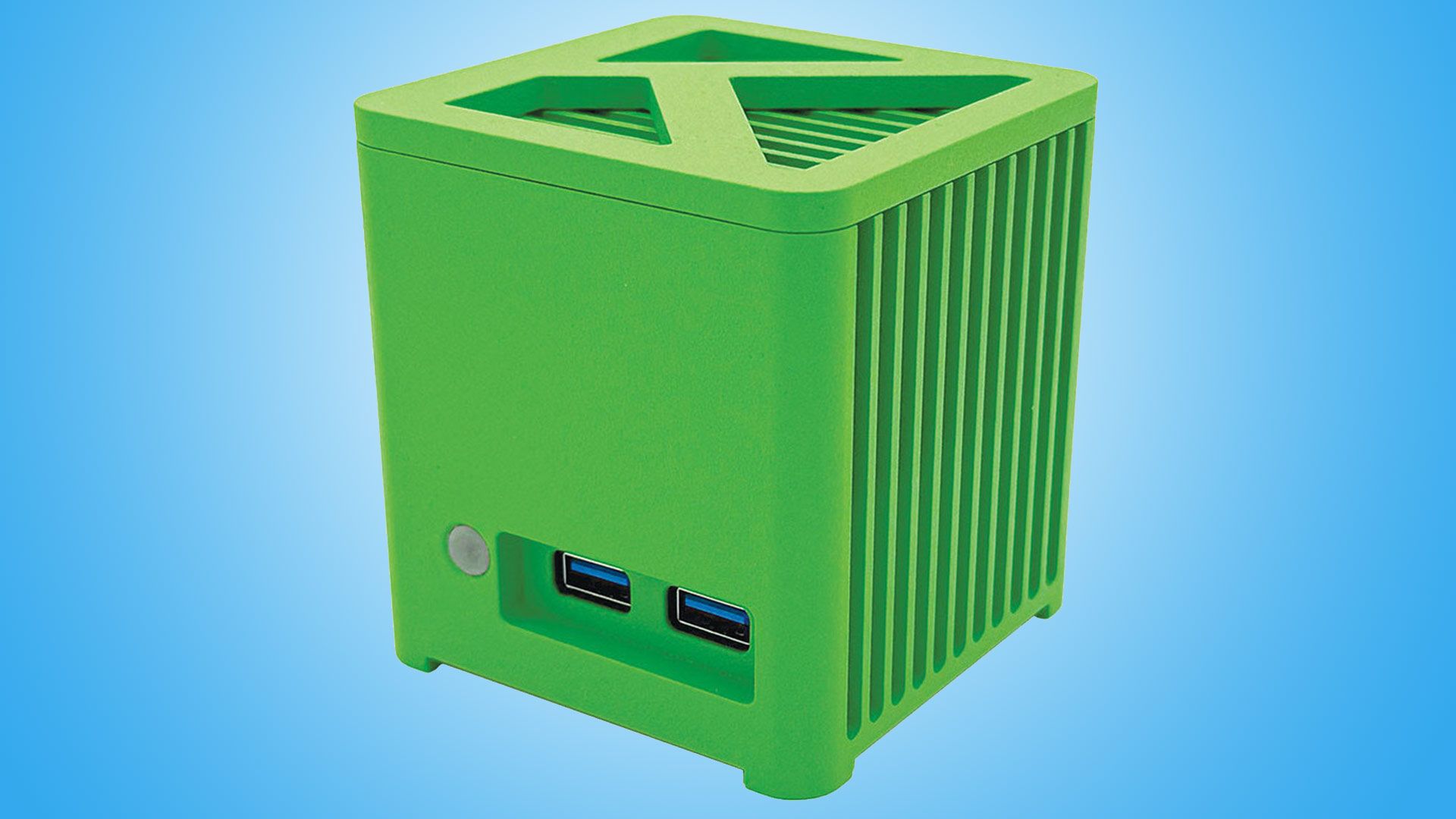
The faint hum of a PC is anathema to the silent computing enthusiast. For years, this pursuit of quietude has meant a monochromatic existence: beige boxes, utilitarian black, or brushed aluminum that’s more about blending in than standing out. But what if silence could also come with a splash of personality? That’s the audacious proposition of Kubb’s new Mini PCs, tiny 3-inch cubes that ditch the predictable for the vibrant, rolling off the line in shades of red, orange, green, and blue, alongside the obligatory black and white.
They’re calling it the Kubb Mini range, and the initial sticker shock of $500 (€430) might make you blink. Yet, look closer. This isn’t just another sterile appliance; it’s an attempt to imbue a utilitarian device with character, a subtle rebellion against the beige tyranny of the passive PC market. The hardware itself, while not pushing any bleeding-edge boundaries, is a considered choice for the fanless architecture, leveraging Intel’s energy-efficient Twin Lake processors. We’re talking about the N150 — a 4-core/4-thread chip that sips power at a mere 6W base TDP, or its slightly beefier sibling, the Core i3 N300, an 8-core/8-thread affair that nudges up to 7W. Fabbed on Intel’s 7 process and sporting 6MB of Smart Cache, these are CPUs designed for efficiency, precisely the kind that allows for strong passive cooling without breaking a sweat.
Is Silence Really That Dull?
The core premise of a passive PC is a quiet workspace. No whirring fans, no vibrating chassis, just pure, unadulterated computing hum. Traditionally, this has meant embracing a design philosophy that favors discretion. Think of the sleek, anodized aluminum chassis of a Mac Mini, or the utilitarian, often black, boxes that populate server rooms and professional studios. The assumption has always been that if you’re prioritizing silence, you’re also prioritizing a certain understated aesthetic, a desire to fade into the background. Kubb is directly challenging that assumption. By offering these Minis in unapologetically bright colors, they’re suggesting that a silent PC can also be a statement piece, a pop of color on your desk, or a discreetly vibrant addition to your home entertainment setup. It’s a curious architectural shift, moving the design focus from mere function to function and form, in a way that’s decidedly playful.
This commitment to color, however, doesn’t come at the expense of substance. The $500 configuration, for instance, pairs the Intel N150 with a generous 16GB of LPDDR5-4800 RAM and a 256GB NVMe SSD, all running on Windows 11 Pro out of the box. Bump up to the Core i3 N300, and you’re adding another $105, a reasonable premium for the increased core count and clock speed. While the RAM is capped at 16GB – a common limitation in such compact, passively cooled designs – storage can be expanded to 512GB or even 1TB for those who need it. The connectivity is what you’d expect from a machine this size: a single gigabit Ethernet port, Wi-Fi 6, Bluetooth 5.2, a smattering of USB 3.2 ports, dual HDMI 2.0 for dual monitor setups, and a 3.5mm audio jack. Power is delivered via a barrel jack or, intriguingly, through one of its USB-C ports – a small touch that adds to its minimalist appeal.
Kubb themselves envision these little color bombs tackling “office tasks, management, accounting or web browsing.” They also tout them as silent thin clients, consuming a fraction of the power of a traditional desktop. But it’s their suggestion of suitability for “entertainment and retrogaming” that really catches the eye. Imagine this little cube, perhaps in a bold green, tucked away next to your TV, serving up a weekend of nostalgic gaming without a whisper. It’s a compelling image, one that use the silent operation for a more immersive, less intrusive home theater experience. It’s also worth noting that Kubb has a history with larger, similarly fanless designs, sometimes even incorporating wood and leather into their aesthetic, suggesting this foray into vibrant color isn’t a one-off experiment but part of a broader design philosophy.
Kubb reckons the Mini would also be a good choice for “entertainment and retrogaming for the whole family,” plugged into the living room TV while not becoming an eyesore.
Here’s the thing: the market for passively cooled PCs is often populated by enthusiasts and professionals who prioritize function above all else. They’re looking for reliability, for silence, for a machine that just works without drawing attention. Introducing such a bold aesthetic into this space feels like a calculated risk, a move designed to attract a slightly different demographic. It’s not just about the tech inside; it’s about the desire to integrate technology into living spaces in a more aesthetically pleasing, even expressive, way. This isn’t about making a PC disappear; it’s about making it part of the decor, a piece of functional art. And that, in itself, is a noteworthy shift in the usually staid world of passive computing hardware.
Will This Disrupt the Silent PC Market?
Probably not entirely. The core audience for passive PCs is deeply ingrained in their preferences. However, for a segment of users who are tired of the utilitarian look and want something that reflects their personality without sacrificing silence, Kubb’s colorful cubes offer a compelling alternative. It’s about broadening the appeal, making silent computing accessible and attractive to a wider audience.
Why Choose Fanless Over Traditional PCs?
The primary driver is noise reduction. Fanless PCs eliminate the most common source of computer noise: fans. This is ideal for environments where silence is paramount, such as offices, libraries, recording studios, or bedrooms. Additionally, fanless designs can be more reliable as there are fewer moving parts to fail, and they often consume less power due to the efficiency of the processors used.
Is the $500 Price Tag Justified?
For a passively cooled system with 16GB of RAM, a decent SSD, and a legitimate operating system, $500 isn’t outrageous, especially considering the unique design and vibrant color options. While you can find cheaper traditional mini-PCs, they will likely have fans. The premium here is for the silence, the compact form factor, and the aesthetic flair.