Forget the abstract discussions of model architectures for a moment. What this latest pivot from Google, and indeed the broader tech industry, means for the average desk jockey and their increasingly AI-assisted tasks is the real story. It’s not just about having a smarter chatbot; it’s about AI agents that can do things for you, autonomously, and within the complex labyrinth of corporate data and systems.
The message is clear: the era of simple generative AI prompts is giving way to a future where AI agents will be deeply integrated, orchestrating workflows, managing data, and ultimately, (supposedly) boosting productivity by a significant margin. And judging by the budget numbers and executive pronouncements, businesses are ready to embrace it, despite the lingering anxieties.
According to PwC, a staggering 88 percent of senior executives plan to increase their AI budgets, with many anticipating hikes of 10 to over 50 percent. This isn’t a cautious exploration; it’s an all-in bet on agentic AI. The majority already claim to have adopted AI agents, and a significant chunk reports tangible productivity gains. It’s a remarkable surge, especially considering the persistent concerns around data, security, and privacy that still gnaw at corporate leadership.
The Platform Play: Why Google’s Investment Matters
This isn’t happening in a vacuum. The entire IT industry is essentially being rewired. Tech vendors are pouring resources into developing their own agentic tools, making AI agents the star attraction at their annual conferences. And Google, predictably, is right at the forefront, signaling its intent with colossal capital expenditures – a jump from $31 billion in 2022 to a projected $175-$185 billion this year, with a significant chunk earmarked for machine learning compute within its cloud division.
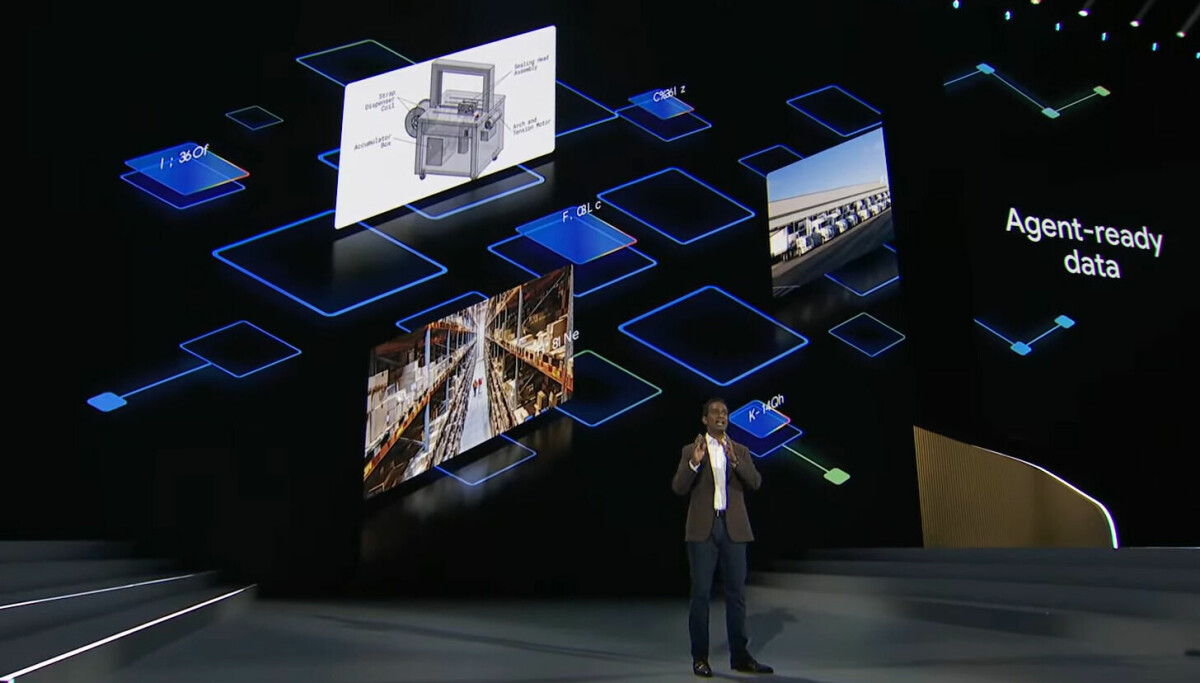
Thomas Kurian, CEO of Google Cloud, laid it bare at the recent Google Cloud Next conference. The company isn’t just dabbling; it’s building a complete agentic AI stack. His message? You can’t stitch together fragmented silicon and disconnected models and expect real value. The architecture needs to be holistic: chips designed for models, models grounded in your data, and agents built on top, secured by the infrastructure.
“Just one year ago, we stood on this same stage and promised a new future for AI,” Kurian said during his keynote. “Today, that future is running in production at a scale that the world has never seen. Over the last year, we didn’t just see adoption. We saw transformation.”
This emphasis on a unified stack is a critical architectural shift. It moves beyond the fascination with individual frontier models and focuses on the practical, scalable deployment of AI agents. It’s about creating an environment where agents can reliably operate, access data, and integrate with existing systems without constant developer intervention.
From Vertex AI to Gemini Enterprise Agent Platform: A Deeper Dive
Google Cloud’s enhancements to its Vertex AI platform — now rebranded and expanded into the Gemini Enterprise Agent Platform — are the tangible manifestation of this strategy. Developers are being offered new tools to build agents capable of complex tasks, encompassing orchestration, integration, DevOps, and security. These agents are then intended to be accessible to employees through applications like Gemini Enterprise.
For developers, the platform offers two primary routes: the low-code, visual Agent Studio for quicker prototyping, or an upgraded Agent Development Kit (ADK) for more AI-native coding and faster production deployment. This caters to a wider range of skill sets, attempting to democratize agent creation.
Behind the scenes, the platform is beefing up its runtime capabilities. An Agent Runtime designed to handle long-running processes, maintaining context via persistent memory through a Memory Bank, is crucial for agents that need to retain information over extended periods. Centralized control is managed through Agent Identity, Registry, and Gateway tools, ensuring agents operate within defined guardrails. And to assure quality, Agent Simulation, Evaluation, and Observability features are designed to track agent execution and reasoning.
Crucially, the platform now includes native integration with Anthropic’s Model Context Protocol (MCP). This interoperability aims to simplify how agents access external data sources and applications, a common sticking point in agent development. It’s a recognition that AI agents don’t operate in a closed loop; their value lies in their ability to interact with the real world of enterprise data.
The Architectural Underpinnings of Agentic AI
What’s particularly interesting is the underlying architectural philosophy. Google is not just building for agentic AI; it’s building its infrastructure around it. The massive investment in TPUs, specifically the eighth-generation ones, is geared towards accelerating the demands of these complex agents. The shift in machine learning compute allocation within Google Cloud towards its cloud business underscores a strategic realignment.
This move represents a subtle but significant shift in the AI arms race. It’s less about which company has the single largest or most performant foundational model and more about who can build the most effective and integrated ecosystem for deploying these models as functional agents. It’s the difference between having a powerful engine and building a complete, drivable car.
For businesses, this means a potential for deeper, more impactful AI integration. Instead of isolated AI tools, imagine a future where agents smoothly manage your calendar, draft complex reports based on real-time data, and flag potential issues before they arise. The promise is enticing, but the practical challenges of data governance, security, and ensuring these agents act as allies rather than liabilities remain.
This platform-centric approach is the next logical step. The frontier models were the proof of concept; the agentic platforms are the industrialization. And for users, it promises a future where AI isn’t just a tool you interact with, but an active participant in your daily professional life. The question is, are we ready for it?