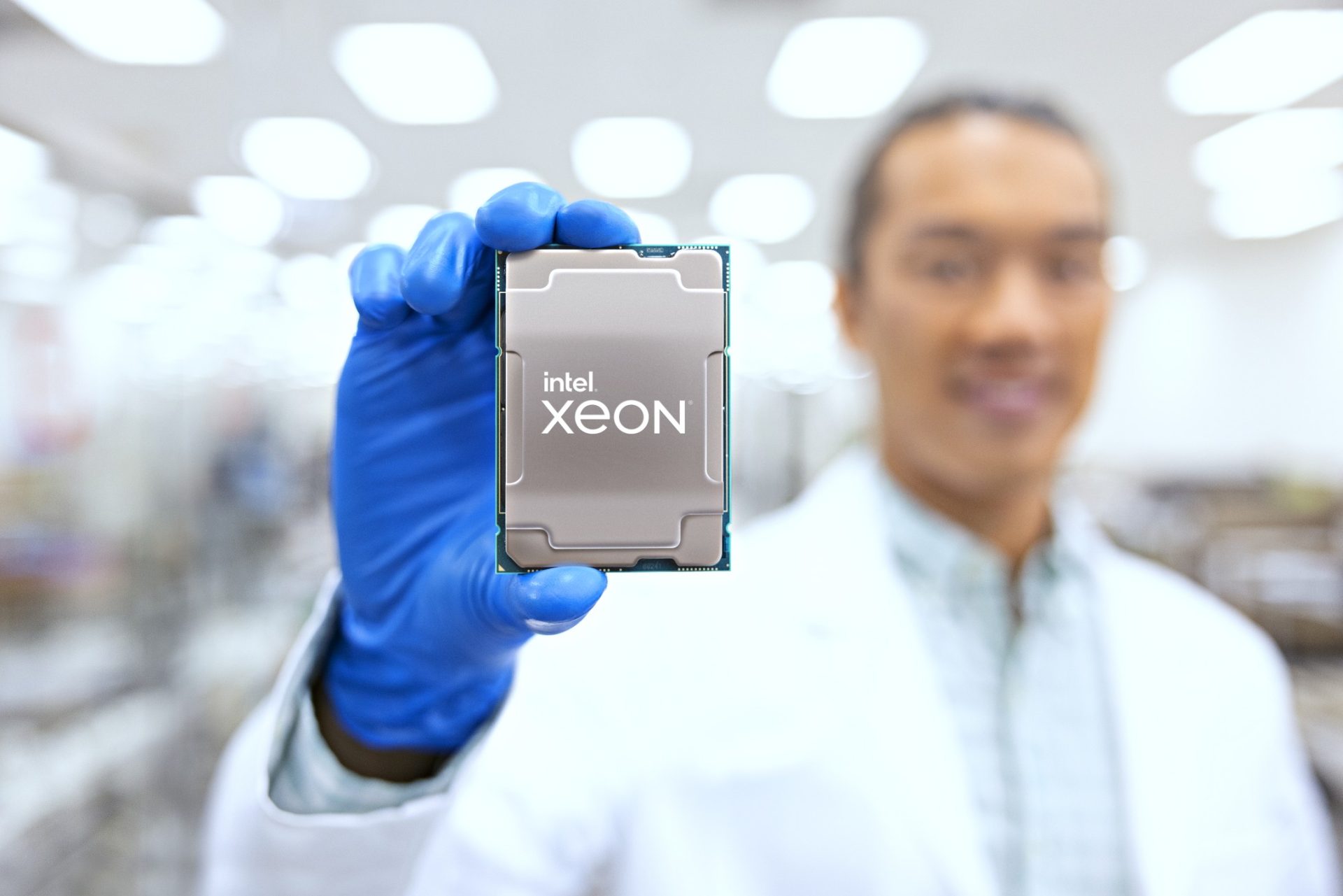
Steam rising from a server farm in Silicon Valley, where engineers huddle over blueprints predicting AI’s next insatiable hunger.
Co-processing isn’t some buzzword—it’s the quiet revolution making AI feasible on real hardware. Think of the CPU as the orchestra conductor, waving its baton frantically, but when the symphony swells to AI symphonies—massive models crunching reasoning loops, tool calls, memory dives—it calls in the violins, cellos, entire sections of brass. That’s co-processing: specialized units stepping up so the whole performance doesn’t collapse.
And here’s the thrill. We’ve seen this movie before. Back in 1979, Intel’s 8086 CPU got its math whiz buddy, the 8087 floating-point co-processor. No more slogging through clunky software math; suddenly, numbers flew. Fast-forward (sorry, can’t help it), cell phones birthed DSPs—digital signal processors—unzipping audio, modulating signals with multiply-accumulate magic that CPUs dreamed of.
GPUs? They exploded from CAD drafting tables and game pixels into AI’s beating heart, flipping rule-based bots into model-trained beasts. But no single chip rules them all. Why? Workloads morph quicker than Moore’s Law can sprint.
The Power-Performance Dance
“Three decades of SoC evolution show a consistent pattern — power–performance motivates new processor categories, but full programmability determines which ones succeed,” says Steve Roddy, chief marketing officer at Quadric. “If a workload can run within power and performance limits on a CPU, it will. Architects only introduce specialization when the CPU becomes inefficient.”
Spot on. CPUs are generalists—jack-of-all-trades, masters of none when AI demands peak efficiency. Enter NPUs, neural processing units, the latest co-processor rockstars. But they’re not just MAC-operation machines anymore. AI models like Llama or Claude throw curveballs: activation functions, non-standard operators, agentic loops that reason, fetch tools, chat back.
Fixed-function hardware? Cute for 2010 inference kernels. Today? It flops when the model updates. “NPUs are meant to run the AI models, but they were typically very specialized fixed-function hardware blocks,” notes Amol Borkar, product marketing director for AI IP and software at Cadence. “But now the AI models have become more complicated… anytime a new layer comes in — a new operator… you’re ending up facing the problem that this network might not run.”
So, designers pack in scalar processors, vector engines, custom math blocks—all under the NPU umbrella, orchestrated by the host CPU. It’s heterogeneous heaven inside one chip.
Why Can’t One Chip Rule AI Workloads?
Look, we’ve tried the monolith dream. Arm’s pushing boundaries (yeah, that cutoff in the briefs—different path, more programmable cores). But physics bites back. Data movement kills efficiency more than compute shortages. “The winning co-processor is usually the one that minimizes data movement, software friction, and verification risk at the same time,” argues Simon Davidmann, AI and EDA researcher at the University of Southampton. “In AI, the best co-processor is not the one with the highest peak TOPS. It is the one that wastes the least energy moving data.”
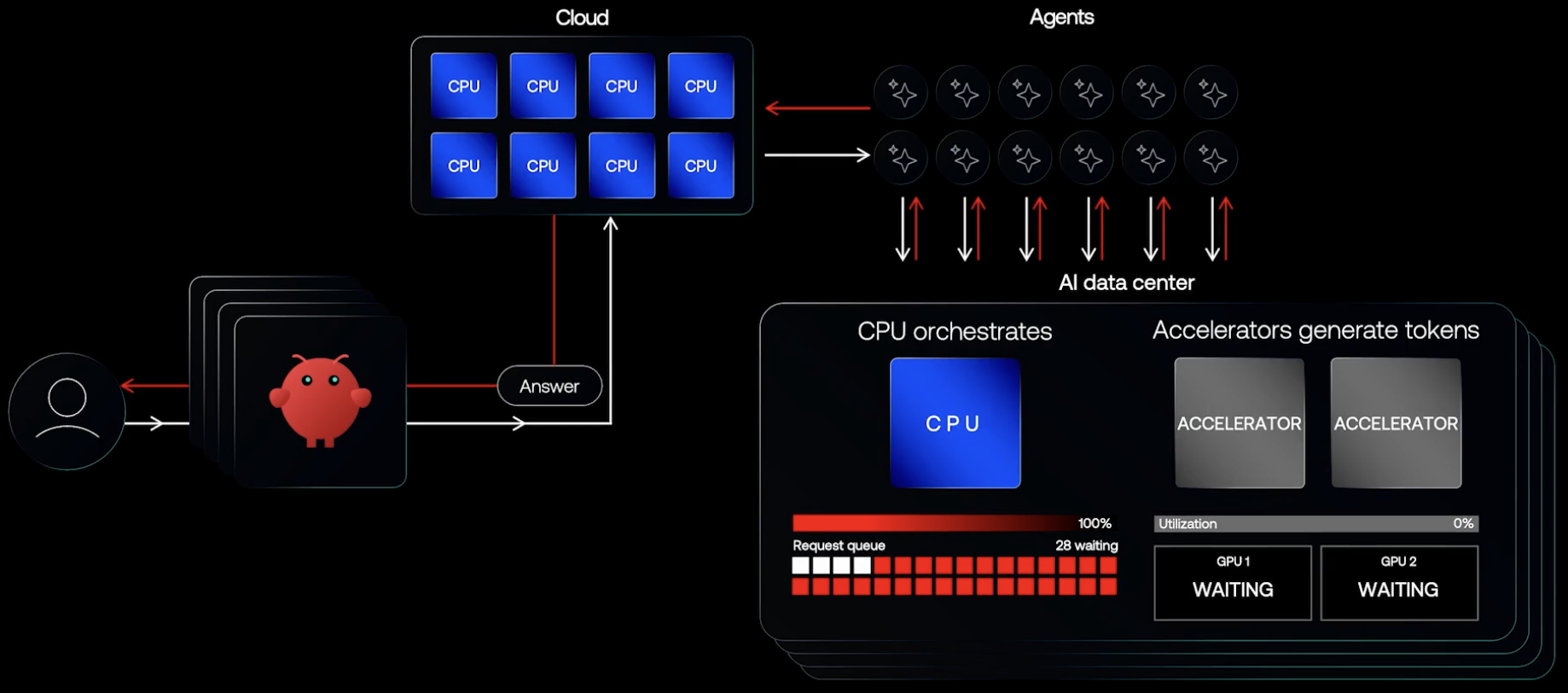
“The key question for co-processors is fundamentally about workload,” says William Wang, CEO of ChipAgents. “As AI systems evolve, workloads are shifting from short, kernel-style inference tasks to long-running agentic workloads that involve reasoning loops, tool use, memory access, and interaction across many software components.”
Agentic AI. That’s the shift. Not fire-and-forget queries, but persistent agents roaming digital realms, looping thoughts, grabbing data, deciding next moves. CPUs coordinate; NPUs/DSPs/GPUs execute. Balance general programmability with ASIC razor-efficiency—or die trying.
My bold call, absent from the chatter: this mirrors the 1990s internet boom. Back then, modems and NICs co-processed network floods so CPUs could think. Today? Co-processors will birth “AI brains”—modular lobes in silicon, swap-and-scale for edge devices to data centers. Predict it: by 2028, 90% of AI inference runs hybrid, with co-processors slashing energy 5x over CPU-only. Hype? Nah, physics demands it.
Short para: Energy wins wars.
Is the NPU the New GPU Killer?
Not quite killers—teammates. GPUs own training behemoths, but edge AI? NPUs sip power like fine wine. Synopsys’s Gordon Cooper nails it: “In every case, there is some high-level host, usually a CPU… Everything else can be considered a co-processor. We have a neural processing unit (NPU) IP, which is a full processor, but it does what the host tells it to.”
Vision-language models? Offload to NPU. LLMs? Same. Inside: scalar for control, vectors for parallelism, engines for sparsity tricks. Flexible enough for tomorrow’s ops, unlike rigid ASICs gathering dust.
But coordination? Hellish. Software stacks glue it—or fracture. Verification? Nightmares. Many “impressive on paper” flops litter chip graveyards. Winners minimize friction: easy data shuttles, simple APIs, proven silicon.
And the wonder—it’s accelerating. AI evolves weekly; chips tape out yearly. Co-processors bridge that warp-speed gap, letting architects bet on workloads like agentic swarms.
Picture your next smartphone: CPU dreaming strategies, NPU weaving neural webs, DSP decoding senses, GPU rendering worlds—all in symphony. That’s the platform shift. AI isn’t software atop hardware; it’s hardware reborn for intelligence.
Critique time (because Chip Beat cuts spin): Companies tout TOPS like bodybuilders flex—impressive, empty. Real metric? Joules per useful token. Chase that, and co-processing cashes in.
We’ve wandered hardware history, but the pace quickens. DSPs tamed signals; GPUs unlocked deep learning; NPUs? They orchestrate agency. Tomorrow’s co-processors might self-configure via ML—meta, right?
Energy. Always energy.
The future gleams: heterogeneous chips as digital ecosystems, buzzing with life. Get ready—co-processing isn’t era’s end; it’s the launchpad.
**
🧬 Related Insights
- Read more: H100 Humiliates GB200 NVL72: Benchmarks Expose Power Hog and Flop Factory
- Read more: NVIDIA’s Desk-Sized DGX Spark Makes Humanoid RL Training a Solo Act
Frequently Asked Questions**
What is AI co-processing?
It’s when specialized chips like NPUs team with CPUs to handle AI tasks efficiently, cutting power and boosting speed for stuff like model inference.
Will NPUs replace CPUs in devices?
No, CPUs stay bosses—coordinating the show—while NPUs handle the heavy AI lifting.
How do co-processors impact AI energy use?
Massively—they slash data movement waste, making agentic AI viable on batteries, not just clouds.