Have you ever stopped to think about what happens when a town, a region, starts to… fade? Not a dramatic collapse, but a slow, quiet erosion of jobs, of people, of that vibrant hum of activity? Because that’s the story playing out in places far from the glittering skylines, a narrative of demographic cliffs and shrinking tax bases. And here’s the thing: we’re talking about more than just a few empty storefronts. We’re talking about the very fabric of community fraying at the edges.
For too long, the go-to solution has been top-down government programs. They’re well-intentioned, absolutely, but often they lack the sheer engine of sustainable growth needed to truly turn the tide. What if the real answer isn’t just more bureaucracy, but a massive injection of private sector muscle, an economic tidal wave orchestrated by the titans of industry?
The economics of revitalizing struggling regions often boil down to a singular, undeniable force: investment. Not just any investment, but the kind that creates not just jobs, but entire ecosystems. Think of it like this: a government program might plant a single sapling. A major corporation, however, can bring in an entire forest, complete with its own water table and interconnected root systems.
The Toyota City Blueprint: A Symbiotic Symphony
When you look at Toyota City in Japan, you’re not just looking at a car manufacturer’s headquarters. You’re witnessing a masterclass in corporate-city integration, a town that became the company. Toyota didn’t just build factories; they wove themselves into the very DNA of the region. Their presence secured jobs for an staggering percentage of the population, built a strong tax base that funded top-tier public services, and fostered a culture of shared growth. It’s a model where the company’s success is inextricably linked to the community’s prosperity, a virtuous cycle that’s hard to break.
Amazon’s Arlington Gambit: A Wealth Multiplier
Then there’s the Amazon HQ2 story in Arlington, Virginia. This wasn’t just about a new office building; it was a seismic economic shockwave. Twenty-five thousand high-paying jobs, billions in payroll and construction investment – the numbers are staggering. But the real kicker? The state government saw a net fiscal benefit that outstripped the costs of supporting the influx. This is where the private sector’s might truly shines. It’s not just about creating jobs; it’s about generating a cascade of economic activity that benefits everyone, from the local plumber to the state treasury.
Germany’s Industrial Alchemy: From Ruins to Riches
Germany offers another fascinating chapter. Think Hamburg’s HafenCity, Dresden’s Silicon Saxony, or Essen’s Zollverein coal mine revival. These aren’t isolated projects; they’re transformations driven by public-private partnerships. Silicon Saxony, in particular, is a vibrant proof to how a focus on a specific industry—semiconductors, in this case—can revitalize a region once dependent on heavy industry. The close dance between corporations, universities, and local governments is the choreography that makes these transformations possible. It’s about identifying a core strength and amplifying it with focused, collaborative effort.
SK hynix in Cheongju: A Korean Semiconductor Renaissance
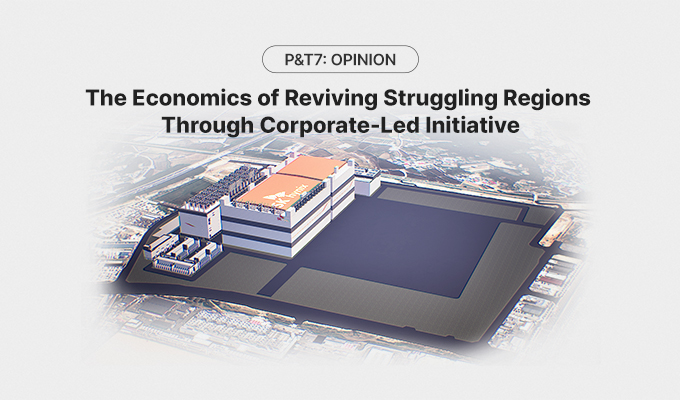
And now, we’re seeing echoes of this in Korea with SK hynix’s deep investment in Cheongju. This isn’t a one-off deal; it’s a sustained commitment. The recent groundbreaking for P&T7, a colossal semiconductor facility, signifies trillions of won pouring into the region. The projected job creation is immense, not just for construction but for the long-term operation of the plant. But it’s the ripple effect that’s truly exciting: the demand for infrastructure, the growth of supporting businesses, the potential for enhanced R&D. SK hynix is essentially planting a technological redwood forest, and the surrounding ecosystem will inevitably grow to support it. It’s a bet on the future, and the potential economic and social uplift is enormous.
The AI Inflection Point: Is This the Next Frontier?
This brings us back to AI. We’ve been discussing AI as a tool for automating tasks, for enhancing productivity. But what if its true potential lies in something far grander? What if AI becomes the orchestrator, the intelligence layer that allows corporations to identify regions with untapped potential, to model optimal development strategies, to streamline logistics and supply chains with unprecedented efficiency?
Imagine an AI that can predict the precise infrastructure needs for a new manufacturing hub, or an AI that can match local talent pools with emerging industry demands with pinpoint accuracy. This isn’t science fiction; it’s the logical next step in a world where data-driven decision-making is paramount. The SK hynix-Cheongju model, with its emphasis on infrastructure, partner companies, and shared growth programs, is the perfect canvas for AI-powered optimization.
The corporate-led initiative isn’t just a strategy; it’s becoming a fundamental platform shift in how we think about economic development. These aren’t just companies investing; they’re becoming the architects of regional futures. And in an age of rapidly advancing AI, their ability to design, build, and sustain these futures will be amplified beyond anything we’ve seen before. It’s a bold vision, certainly, but one that’s increasingly looking like our economic reality.
🧬 Related Insights
- Read more: SK hynix Pumps 321-Layer QLC NAND into Dell’s AI PCs — Hype or Hero?
- Read more: [60% Plausible] NVIDIA Eyes PC OEM Buyout to Reinvent Gaming
Frequently Asked Questions
What does corporate-led regional revitalization mean? It means major companies taking the initiative to invest heavily in struggling or underdeveloped regions, creating jobs, infrastructure, and economic activity that benefits the local community and government.
Will companies really invest in struggling regions? Yes, when the economic incentives are clear and the potential for creating a sustainable ecosystem is high. Companies like Toyota, Amazon, and SK hynix demonstrate this is a viable strategy for mutual benefit.
Can AI accelerate this trend? Potentially, yes. AI could provide advanced analytics for identifying opportunities, optimizing development plans, and matching talent, making these initiatives more efficient and effective.