Ever wonder if your local store’s ‘smart’ camera is secretly guzzling more power than it saves?
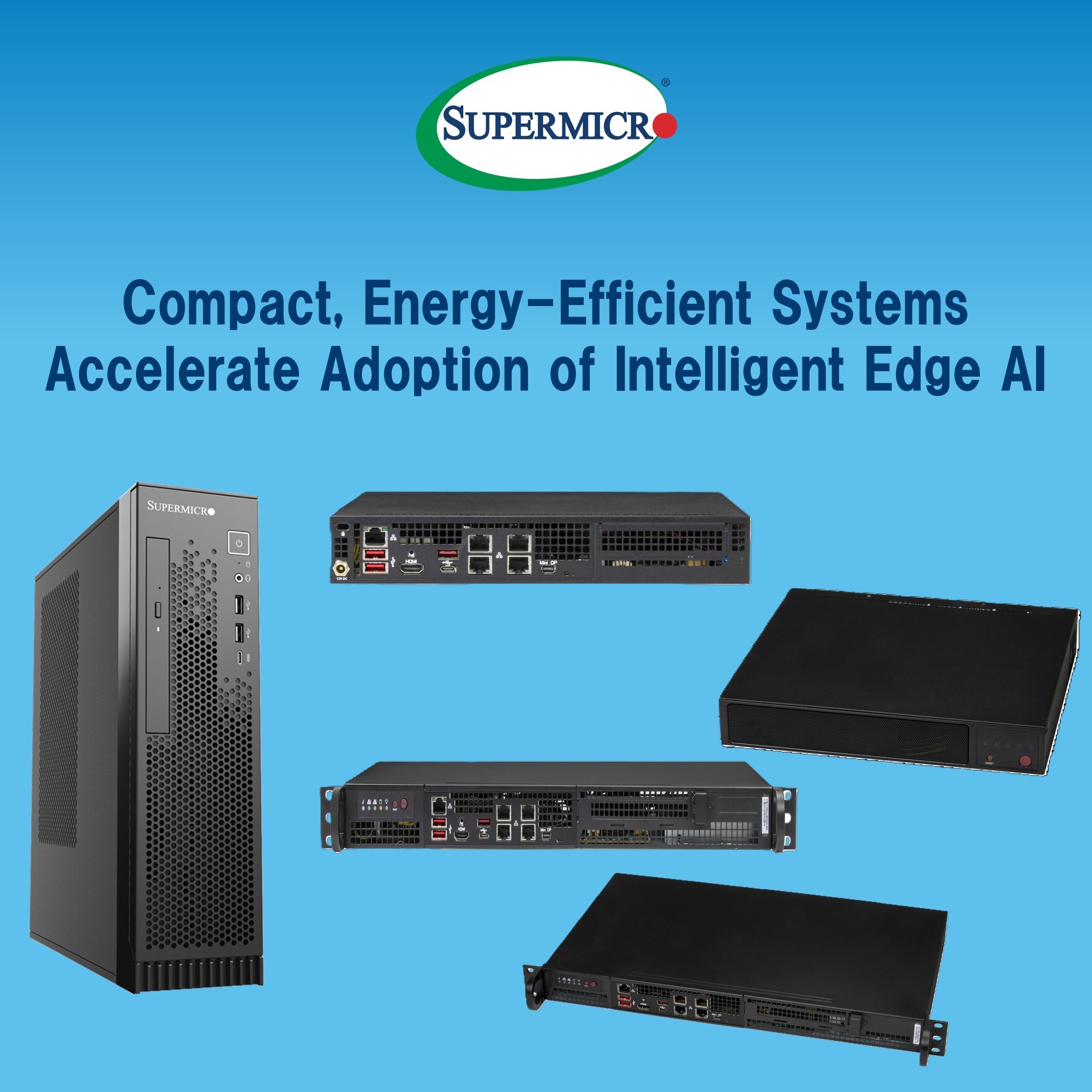
Supermicro just dropped a trio of compact edge AI systems powered by AMD’s EPYC 4005 processors, claiming they’ll turbocharge AI inferencing in power-starved spots like retail shelves or factory floors. It’s all very 2026—compact boxes, short-depth racks, slim towers, optimized for that ‘intelligent edge’ buzzword everyone loves to hate. But here’s the thing: after two decades chasing Silicon Valley’s shiny promises, I’m asking the real question—who’s actually making bank here?
Look, Supermicro’s no rookie. They’re the server whisperers, building gear that fits anywhere from hyperscalers to your grandma’s garage startup. These new birds—the AS-E300-14GR mini-box, AS-1116R-FN4 rackmount, and AS-3015TR-i4 tower—pack up to 16 Zen 5 cores, 192GB DDR5, and even room for a NVIDIA RTX PRO 2000 GPU in that tiny 9L chassis. Low TDP at 65W? Sure. PCIe Gen 5? Check. Security goodies like AMD SEV and TPM 2.0? Thrown in for good measure.
“Supermicro continues to deliver highly efficient, compact systems that bring powerful compute closer to where data is generated and processed,” said Mory Lin, Vice President, IoT/Embedded & Edge Computing, Supermicro. “With our new AMD EPYC 4005 processor-based platforms… customers can deploy AI accelerator cards and dedicated workloads at the edge with improved performance, enhanced security, and reduced power consumption, while lowering total cost of ownership (TCO).”
That’s the quote straight from the press release—polished, right? It screams ‘buy our stuff for your frictionless checkout dreams.’ But let’s cut the spin. This isn’t revolutionary; it’s iterative. Remember 2015? Everyone was hawking ‘edge’ with Intel’s Atom chips for IoT. Hype exploded, deployments fizzled because latency wasn’t the killer app—bandwidth was cheap, clouds were king.
Why Supermicro’s Edge AI Push Feels Like Déjà Vu
And yet, here we are again. Supermicro’s playing the same game, but smarter this time. AMD’s EPYC 4005 isn’t their behemoth 9000 series—it’s the ‘budget Zen 5’ for folks who don’t need 192 cores. Perfect for branch offices crunching POS data or hospitals running real-time analytics without phoning home to AWS. The AS-E300-14GR? A 2.5L wonder with HDMI for kiosks, 4x GbE for cameras—plug it into your retail setup, add an AI card, and boom: loss prevention without the cloud bill.
Short-depth 1U for racks that fit awkward closets. Tower for quiet spots where fans would wake the dead. All with IPMI remote management, so your IT drone—sorry, engineer—can babysit from afar. They’re shouting ‘lower TCO,’ and on paper, yeah: less power, no data egress fees. But reality? Edge AI’s a pig for most workloads. Training? Forget it. Inferencing small models? Maybe. The rest beams to the cloud anyway.
My unique scoop: this reeks of NVIDIA’s Blackwell hangover. With RTX PRO 2000 support, Supermicro’s angling for that GPU gold rush at the edge. Remember Cisco’s edge compute flop in 2018? They burned cash on Intersight, got outmaneuvered by pure-plays. Supermicro’s vertically integrated (US, Taiwan, Netherlands fabs), so margins could fatten if retailers bite. Prediction: by 2027, we’ll see these in 20% more Walmarts, but only if AMD undercuts Intel’s next gen.
Is Supermicro’s Compact Edge AI Actually Worth the Hype?
But—big but—who profits? Not you, the enterprise drone deploying these. Supermicro (SMCI stock’s been volatile post-AI boom), AMD gets the processor royalties, NVIDIA the GPU slice. Retailers? They save pennies on power, spend dollars on ‘AI consultants’ to make it hum. Manufacturing? Same story—cameras spotting defects locally sounds sexy, but integration’s a nightmare.
Take the specs circus: 3D V-Cache on select models for data hogs. PCIe 5 for future-proofing that one GPU slot. GbE ports galore for tying into legacy junk. It’s flexible, sure—like Lego for servers. Yet, in my career, I’ve torn apart dozens of these ‘edge-optimized’ rigs collecting dust because central clouds won on cost.
Supermicro’s green angle? ‘Reducing environmental impact’ via efficient builds. Noble. But servers are 2% of datacenter power; edge sprawl could balloon that if every store gets a box. They’re manufacturing in-house for scale—smart move amid geopolitics—but don’t drink the Green Computing Kool-Aid without the receipts.
Healthcare’s a wildcard. Quiet towers for patient monitoring? Intriguing. No cloud latency for emergencies. Still, regs like HIPAA mean SEV’s a must-have, not nice-to-have. If these land in clinics, Supermicro scores big.
No.
That’s how cynical I am. Not yet.
Who Wins in the Edge AI Money Grab?
Strip the PR: these systems fix real pains—space, power, security—in distributed setups. Branch offices consolidating back-ends? Gold. But the ‘accelerate adoption of intelligent edge AI’ line? Overreach. Most ‘AI’ here is basic CV or analytics, not GPT-level smarts.
Historically, edge compute mirrors the PC revolution—power to the people (or edge). IBM PCs democratized computing; these could do it for AI inference. Bold call: if tariffs hit cloud giants, edge like this booms. China’s already mandating local compute; US might follow.
Supermicro’s portfolio? Massive. From cloud behemoths to this mini-edge. They’re not just riding AI; they’re building the rails. Stock’s up 300% in two years—investors smell it.
Yet skepticism reigns. Will these outsell Raspberry Pi clusters for hobbyists or mid-tier edge? Doubtful. Enterprise loves rack standards, not bespoke boxes.
Detailed specs? Hit their site. Me? I’m watching deployments, not announcements.
🧬 Related Insights
- Read more: NVIDIA’s Zero-Trust Gamble: Securing AI Factories or Just Another GPU Lock-In?
- Read more: Nvidia’s Software Flexes Hard in MLPerf Inference Blowout
Frequently Asked Questions
What are Supermicro’s new edge AI systems? Compact platforms like the AS-E300-14GR (2.5L box), AS-1116R-FN4 (1U rack), and AS-3015TR-i4 (9L tower) powered by AMD EPYC 4005 for AI inferencing in retail, manufacturing, etc.
Do Supermicro edge systems support GPUs? Yes, the tower fits a dual-slot NVIDIA RTX PRO 2000 Blackwell GPU; others via PCIe Gen 5 expansion.
Are these cheaper than cloud for edge AI? Potentially lower TCO with 65W TDP and no data fees, but depends on scale—test for your workload.