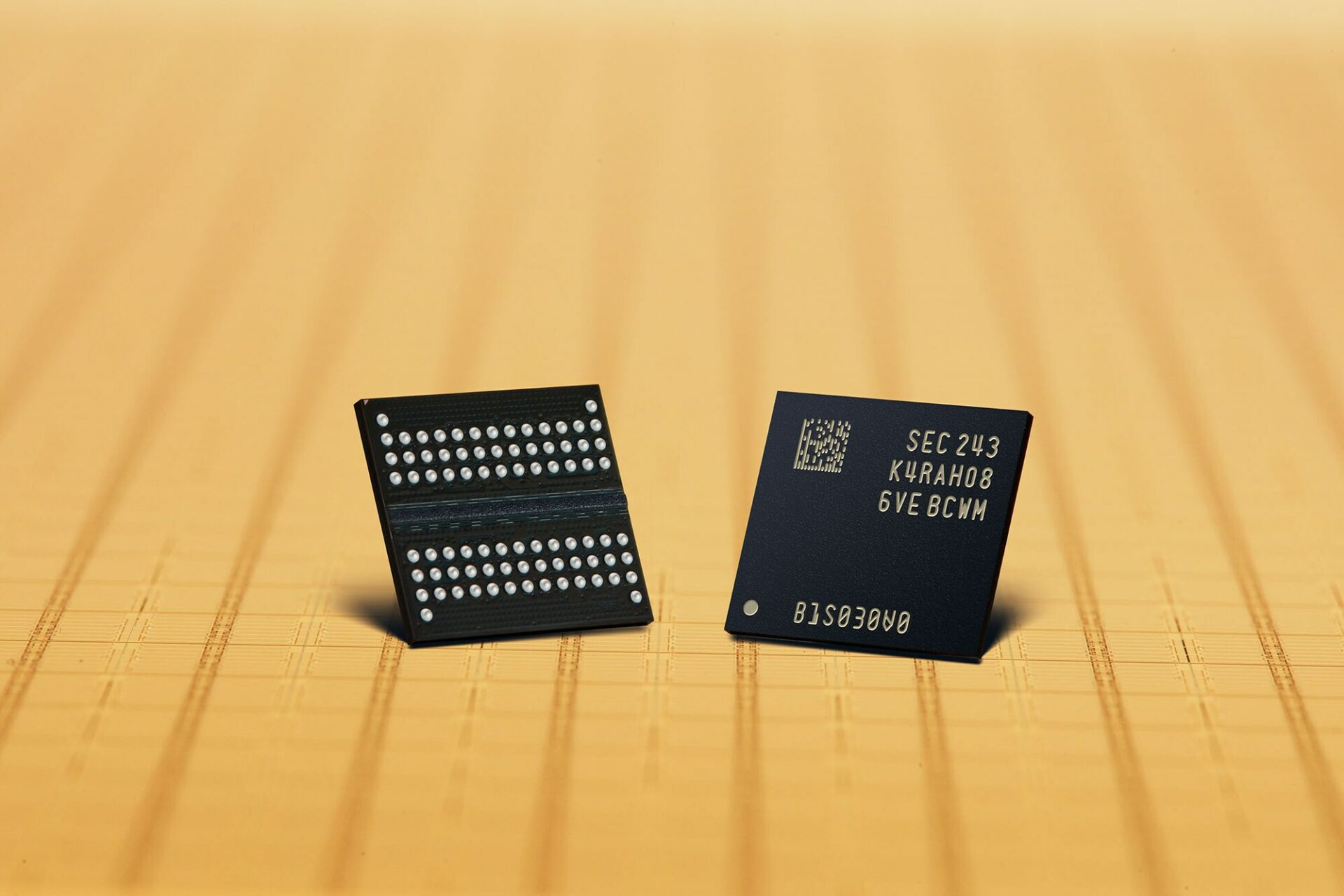
Picture this: you’re bingeing on AI-curated shows, your phone’s camera spits out perfect edits, and every ChatGPT query zips back instantly. That’s not magic—it’s DRAM, the unsung muscle behind it all, and Samsung’s churning out so much of it that their memory biz alone just lapped Amazon, Meta, and Microsoft in Q1 profits.
Samsung’s memory business. There, I said it first—it’s the quiet juggernaut in this AI race, posting $37 billion from DRAM alone in Q1 2026. Hyperscalers like Google and AWS are scrambling for more, driving shortages that jack up prices sky-high.
Why Is Everyone Suddenly Obsessed with DRAM?
But here’s the kicker—it’s not just volume. AI architectures, those massive transformer models gobbling gigabytes like candy, demand high-bandwidth memory (HBM) layered on top of standard DRAM. Samsung’s HBM3E and upcoming HBM4? They’re fueling NVIDIA’s Vera Rubin GPUs and AMD’s Instinct MI355X beasts. Without this, your frontier AI stalls.
A single sentence: Demand’s exploding.
Counterpoint Research nailed it in their report:
Samsung Electronics ranked first in memory revenue for the first quarter of 2026 with $50.4 billion. With $37 billion in DRAM and $13.4 billion in NAND, both sectors recorded all-time high revenues. Compared to the previous cycle, this represents a 167% increase from the peak of $18.9 billion in the third quarter of 2018.
That’s 167% up from 2018’s peak. Wild. And Samsung’s not stopping— they’ve locked in 5-year long-term agreements (LTAs) with hyperscalers, betting big on sustained hunger.
Look, real people feel this tomorrow. Higher memory costs? They trickle into your smartphone price—expect that Galaxy S27 to cost a bit more. But flip it: cheaper AI inference means better free tools, from smarter search to personalized medicine apps running local on your laptop.
How Did Samsung Pull This Off Without Fanfare?
Samsung’s got the fabs. World’s largest production lines, pumping out LPDDR for mobiles, DDR for servers, and now HBM for the AI elite. While TSMC fabs logic chips, Samsung owns the memory stack—vertically integrated, from silicon wafers to stacked dies. (SK Hynix and Micron are nipping at heels, but Samsung’s scale? Unmatched.)
And the why: AI shifted architectures. Gone are lean CNNs; enter memory-bound LLMs where bandwidth trumps flops. Training GPT-5 equivalents? You need terabytes of HBM per rack. Samsung saw it coming—ramped HBM capacity while others chased GPUs.
Short para. Profits pour in.
My unique take—and this isn’t in Counterpoint’s report: This echoes the 2010 NAND flash supercycle, but turbocharged. Back then, smartphones birthed SSDs; now AI births memory as the new oil. Prediction? By 2028, Samsung’s memory arm rivals Intel’s entire valuation, forcing Big Tech to subsidize Korean fabs or risk AI blackouts.
Corporate spin check: Samsung’s quiet about it—no flashy pressers like NVIDIA’s GTC. Smart. Lets numbers speak while competitors whine about shortages.
Will Samsung’s Memory Supercycle Last Through 2027?
Concerns linger—overcapacity crashes cycles fast. Remember 2022’s glut? Prices tanked 50%. But AI’s different. Hyperscalers plan exascale clusters; demand’s structural, not cyclical. Samsung’s LTAs seal it—guaranteed volume for years.
Yet. Watch China. Geopolitical squeezes on equipment could crimp expansion. Or breakthroughs in CXL memory pooling, reducing per-server DRAM needs. (Unlikely soon—current GPUs still starve.)
Dense dive: Production ramps. Samsung’s Pyeongtaek mega-fab, EUV lithography for denser bits, 1-gamma nm nodes shrinking cells without losing speed. HBM4 at 16-Hi stacks? That’s 24GB per chip, cooling nightmares solved by Samsung’s thermal tech. Pair with CoWoS packaging from TSMC, and you’ve got the AI accelerator holy grail. Revenue? Q2 could hit $40B DRAM if bit growth hits 20% QoQ, as analysts whisper.
One punch: It’s real money.
For developers: More HBM means wider AI access. Indie teams build on cheaper L40s instead of H100s. Enterprises? Scale inference without CapEx Armageddon.
Skepticism time. Is this sustainable? Samsung’s NAND at $13.4B helps diversify, but DRAM’s 70% of memory revenue—eggs in one basket. If OpenAI cracks on-device agents needing less cloud DRAM, oof.
But right now? Samsung’s laughing to the bank. Bigger winner than hyped GPU kings.
🧬 Related Insights
- Read more: NVIDIA’s GTC Gambit: Local AI Agents on RTX PCs and DGX Spark Cut the Cloud Cord
- Read more: Intel’s Tweet Heralds Risky Musk Fabs Alliance
Frequently Asked Questions
What was Samsung’s Q1 2026 DRAM revenue?
$37 billion—smashing records, up 167% from 2018 peak.
Is Samsung’s memory business really more profitable than Amazon?
Yes, Q1 operating profits from memory topped Amazon, Meta, Microsoft combined, per Counterpoint.
Will memory shortages continue driving Samsung’s growth?
Likely through 2027, thanks to AI demand and long-term hyperscaler contracts.