Platform Shift Activated.
Look, we talk about platform shifts a lot in tech. Cloud was one. Mobile, another. And now? Now we’re in the thick of an AI-driven, GPU-accelerated platform shift, and nowhere is this more beautifully illustrated than in the resurrection of the venerable ZSNES emulator as Super ZSNES.
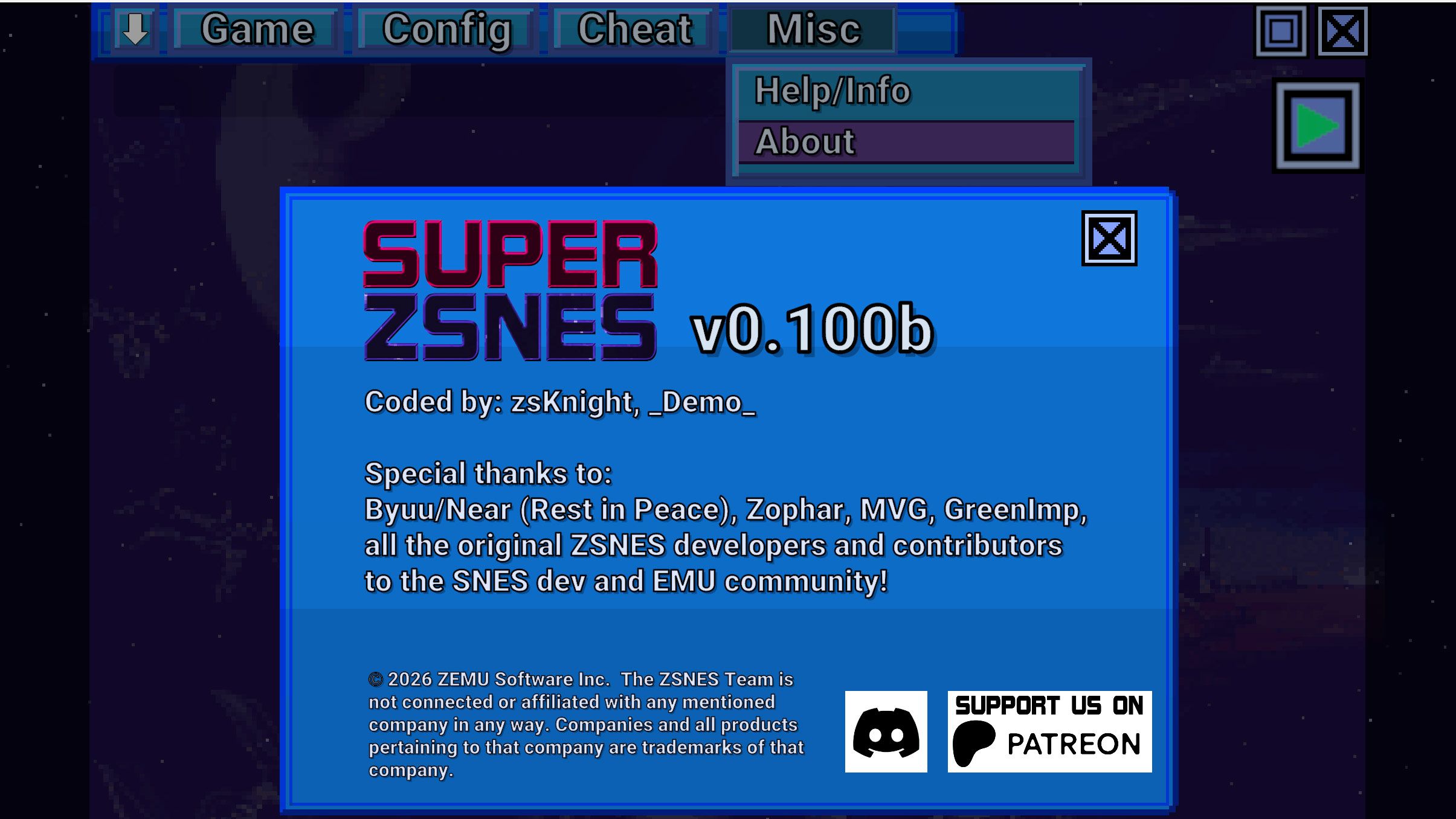
This isn’t some cosmetic facelift; this is a ground-up rebuild by the original dream team, zsKnight and Demo. They’ve taken a beloved piece of gaming history, painstakingly crafted in assembly code and hand-tuned for DOS machines way back when, and injected it with the raw power of modern GPUs. The result? An emulator boasting “far more accurate CPU and audio cores than the original ZSNES,” alongside a GPU-powered PPU core that’s frankly mind-blowing.
The GPU as the New Soul
Before this project even launched, zsKnight was wrestling with a fundamental question: how to make something new, something better, without just rehashing the old. And here’s where the brilliance truly shines. He didn’t just optimize the existing engine; he rewrote the engine’s heart. He started by crafting a GPU renderer that essentially offloads a massive chunk of the SNES’s Picture Processing Unit (PPU) emulation. Instead of the CPU crunching every single pixel calculation, the GPU, with its parallel processing prowess, takes the reins through shaders. It’s like taking a hand-cranked printing press and replacing it with a high-speed digital printer – the core function remains, but the speed, detail, and sheer potential skyrocket.
The original SNES architecture was built for CRTs, those beautiful, flickering screens of yore. GPUs, on the other hand, are built for geometric precision and rapid rendering. Bridging this gap wasn’t just a technical hurdle; it was an artistic challenge. zsKnight clearly relished it, because in this initial release, virtually every complex visual task – from palette lookups and tile rendering to transparencies, the iconic Mode 7, color math, and even how the main and subscreen elements interact – is handled by these powerful GPU shaders. This is what unlocks the ‘Super’ enhancements, and whispers of future marvels like high-resolution texture packs are no longer pipe dreams; they’re tangible possibilities.
“I had to brainstorm a bit, thinking what I could do differently. So, I started out by writing a GPU renderer that replaces a large chunk of the SNES PPU emulation with rendering done mostly on the GPU through shaders.”
Beyond Just Pretty Pictures: The Enhancement Engine
But it’s not just about making the visuals pop. The new Super Enhancement Engine is where the GPU architecture truly flexes its muscles. We’re talking about features that go far beyond simple upscaling. Imagine manually drawing higher resolution details into your favorite SNES games so they look crisp and refined, not just blurry enlarged pixels. That’s the High Resolution feature. Then there’s Texture/Normal Mapping, which can add depth and detail to backgrounds, giving them a richer, more modern feel. Games notorious for slowdown can now get an overclocking boost. Widescreen support is enabled when the game natively supports it. And perhaps most musically exciting, you can swap out the original, heavily compressed audio samples for curated, uncompressed versions. Even 3D is making a comeback, initially for perspective-style Mode 7, transforming flat tiles into height-mapped 3D data.
The ‘No Vibe Coding’ Guarantee
Now, a quick note on the development itself. Super ZSNES is built on Unity, which sometimes gets a bad rap for certain development philosophies. However, the developers are adamant: “no vibe coding” here. Everything under the hood was done in a “classic development style.” This is music to the ears of purists who value deep, foundational engineering over quick-and-dirty solutions. It signals a commitment to longevity and genuine technical achievement.
Of course, this is version 0.100. There are bugs, and the developers openly admit that special chips like DSP1 and SuperFX are still on the roadmap, and optimization is ongoing. Performance might be a bit rough around the edges for some titles right now. But the foundation they’ve laid is astonishingly solid, promising a future of incredible fidelity and features for retro enthusiasts.
A Call to Arms (and Patrons)
The developers are clearly passionate, balancing this immense undertaking with life. The initial reception has been overwhelmingly positive, but as zsKnight and Demo pour their hearts into this, direct support through platforms like Patreon could really help accelerate development and ensure this incredible project continues to thrive. They’re back in the saddle, and the ride is exhilarating.
And the best part? Super ZSNES is available now for Windows, Mac, Linux, and Android, with an iOS release on the horizon. This isn’t just an emulator update; it’s a statement. It’s proof positive that when you combine expert engineering with the raw power of modern hardware, you can not only preserve the past but elevate it into something entirely new.
Why Does This Matter for Developers?
For developers, especially those working in game development or emulation, Super ZSNES is a living case study in how to approach complex systems emulation with modern tooling. It demonstrates the immense power of GPU-centric rendering and computation, moving tasks traditionally handled by the CPU to more specialized, parallel processing units. This shift allows for significantly higher fidelity, more advanced graphical effects, and better overall performance, especially when dealing with computationally intensive tasks. The decision to rewrite cores from scratch, rather than just patching existing code, highlights the benefit of understanding the underlying architecture deeply and then re-implementing it with the best available technologies. It’s a masterclass in leveraging new platforms – in this case, the GPU – to achieve previously impossible levels of accuracy and capability, even for vintage hardware.
Will This Replace Traditional Emulators?
Not entirely, and that’s a good thing. Traditional, CPU-bound emulators will always have their place, especially for less powerful hardware or for developers who need to debug at a very low level. However, Super ZSNES, by leveraging GPU acceleration, sets a new benchmark for fidelity and visual enhancement. It represents the next evolutionary step for emulators, pushing the boundaries of what’s possible. Think of it like comparing a high-performance sports car to a reliable everyday sedan. Both have their uses, but the sports car offers an entirely different, and in many ways superior, experience. For those seeking the most accurate and visually enhanced retro gaming experience, Super ZSNES is quickly becoming the new king.
🧬 Related Insights
- Read more: RX 9070 XT at $720: AMD’s Price Slash Exposes NVIDIA’s Greed
- Read more: CERN Burns AI Straight into Silicon to Crush LHC Data Tsunami
Frequently Asked Questions
What does Super ZSNES do differently? Super ZSNES is rewritten from the ground up, utilizing GPU acceleration for its PPU core to achieve far greater CPU and audio accuracy than the original ZSNES. It also introduces enhanced features like high-resolution rendering and texture mapping.
Is Super ZSNES better than the original ZSNES? Yes, in terms of accuracy and potential for enhancements, Super ZSNES is significantly superior due to its modern architecture and GPU-powered core. It aims for a level of fidelity the original couldn’t achieve.
Where can I download Super ZSNES? Super ZSNES is currently available for Windows, Mac, Linux, and Android, with an iOS version planned for release soon.