The hum of fabrication plants usually signals the future. Not so at Mikron, Russia’s largest chipmaker. This week, the company is pushing something far more decorative: picture-framed silicon wafers.
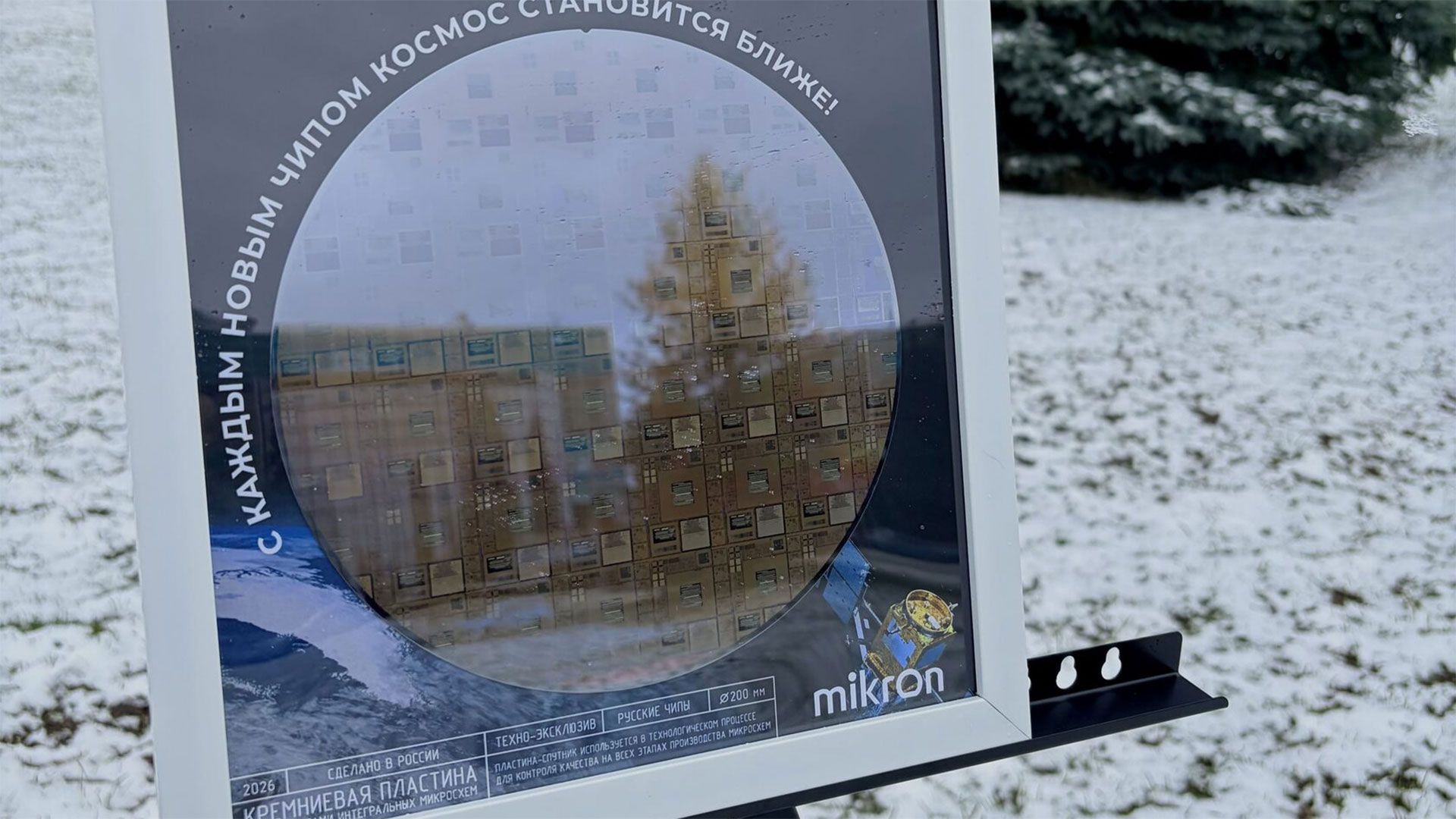
Yes, you read that right. For around $170 (12,500 rubles), you can snag a piece of what Mikron calls “Techno exclusive – Russian chips.” They’re peddling 12 different designs, each featuring a 200mm wafer, some allegedly crammed with anywhere from 30 to a jaw-dropping 120,000 processors. Imagine that – a wall hanging with more transistors than your first desktop PC. The variety ranges from simple black or white frames to lace and even an outer space theme. Apparently, the actual wafer you receive is a bit of a lottery. Who’s going to complain? It’s a souvenir, not a server farm.
They’re even tossing in a “new” item: a small vial of air from their NWP cleanroom for about $2. Cleanroom air. Because who wouldn’t want a tiny whiff of a sterile environment that smells… well, sterile? It’s the kind of marketing fluff that makes you wonder if the product itself is secondary to the novelty. It’s certainly a far cry from the usual product launches we see from the big players, but then again, Mikron isn’t exactly competing with TSMC for the latest foundry nodes.
One of the standout designs features the AMUR MIK32 RISC-V chip, a product Mikron has been churning out since 2022. They’re also teasing a “MIK32-2” on the horizon. This is where it gets interesting. While the souvenir aspect is undoubtedly… peculiar, it also serves as a tangible display of their manufacturing capabilities. The information panels on these framed wafers state they are “Made in Russia” and used for “quality control at all stages of microcircuit production.” So, they’re not just pretty pictures; they’re testaments to the process.
Who’s Actually Buying Framed Chip Wafers?
This whole endeavor screams “desperate for a revenue stream.” Let’s be honest, the global semiconductor market is in a… complicated state. Geopolitical pressures, supply chain headaches, and the sheer cost of innovation mean that established players are laser-focused on survival and advancement. Mikron, operating under different circumstances, appears to be looking for any way to monetize its existing output and perhaps, just perhaps, generate a little buzz. It’s a unique marketing play, sure, but does it signal anything deeper about their actual chip production or market strategy? That’s where the skepticism kicks in.
Consider this: we’re talking about test wafers, often discarded or repurposed once their QA function is complete. Turning them into framed art is a clever repurposing, no doubt. But who is the target audience here? Tech enthusiasts who want a physical memento of Russian ingenuity? Or perhaps government entities looking for patriotic trinkets? It’s hard to say, but the limited supply claims suggest they’re not exactly flooding the market.
A Nod to RISC-V in a Tough Market
It’s worth noting the emphasis on RISC-V chips. As the open-source instruction set architecture gains traction globally, Mikron is clearly aligning itself with this trend. The fact that they’re producing these chips, even if it’s for niche applications or domestic use, is noteworthy. But slapping them onto a souvenir frame? That’s a bold stylistic choice. You’d think a company trying to prove its technological prowess would be showcasing its advanced designs or partnerships, not selling them as wall art.
This isn’t unlike the early days of PC hardware, where enthusiasts would proudly display components. But we’ve moved past that. Now, it’s about integrated systems, AI accelerators, and miniaturization. Selling a framed wafer with 120,000 processors feels like a step back, a nostalgic nod rather than a forward-looking strategy. It’s a conversation starter, for sure, but the conversation is likely to be about the novelty, not the innovation.
What is Mikron getting out of this, really? A bit of cash, certainly. Some brand visibility, perhaps? And maybe, just maybe, a way to keep their fabs humming and their engineers employed by finding creative ways to sell the byproducts of their core business. It’s a calculated risk, and one that certainly makes for an interesting story in an industry often bogged down by PR-speak and predictable product cycles. You have to hand it to them for originality, even if the rationale behind it remains a bit fuzzy.
🧬 Related Insights
- Read more: Intel’s Arc Pro GPUs Claw Back Ground in MLPerf v6.0 — Still Nvidia’s Shadow?
- Read more: Quantum Chips Hit a Snag: New Compiler Tries to Fix It
Frequently Asked Questions
What are Mikron’s framed wafers? Framed silicon wafers featuring Mikron-produced chips, sold as decorative souvenirs. Some can contain up to 120,000 processors.
How much do these souvenirs cost? The framed wafers are priced at around $170 each (12,500 rubles).
Is Mikron a significant chip manufacturer? Mikron is described as Russia’s largest chipmaker, producing various semiconductor devices.