What does it mean for the chip you’re holding, or the server humming in a data center, when researchers start talking about terahertz waves, piezoelectric resonators, and silicon Ising machines? It means your devices are about to get smarter, more efficient, and, critically, easier to debug without resorting to brute-force methods that often damage the very thing they’re trying to understand. These aren’t abstract academic exercises; they’re architectural shifts with tangible implications for how we build, test, and utilize the silicon brains of our digital world.
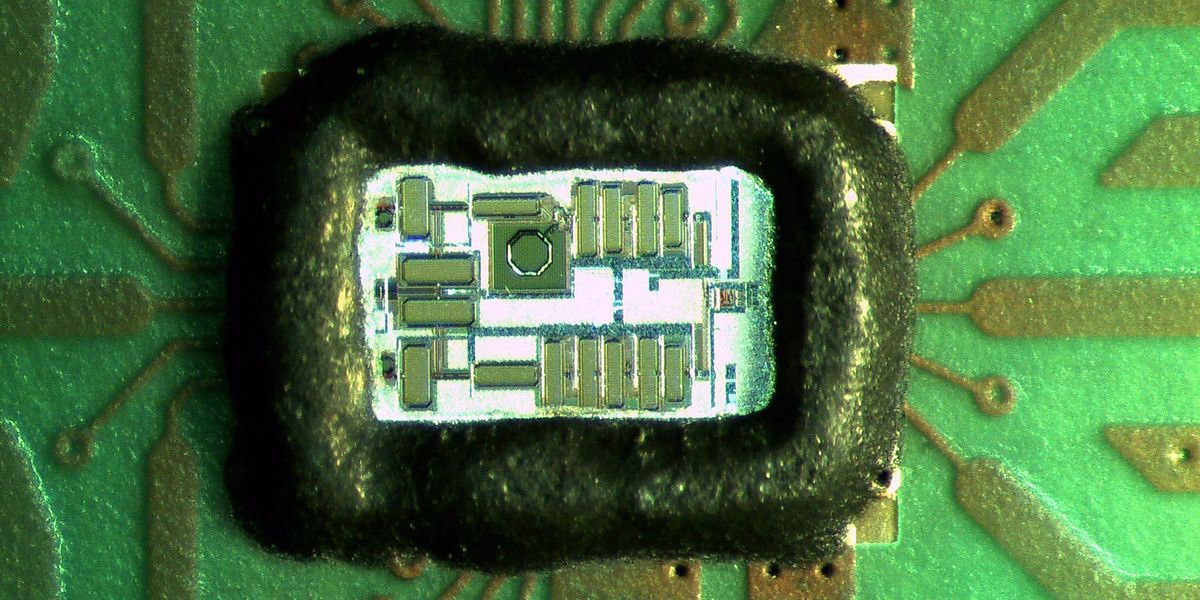
Let’s start with the most visually arresting development: peering inside a functioning chip using terahertz waves. Researchers have figured out how to use these non-ionizing frequencies to get a real-time look at electrical activity within fully packaged semiconductor devices. Think about the sheer elegance of this. No more delayering, no more invasive probing that risks destroying the evidence. This is like having a microscopic, non-destructive X-ray that can track the flow of electrons as they happen.
“This approach allows the system to cancel out background noise and isolate the faint signal produced by electrical activity inside the device. The result is a real-time view of electronics at work, even when the active region is buried deep inside sealed packaging.”
This is a big deal. For engineers diagnosing complex failures, especially in high-power or safety-critical applications where taking a device offline for extensive analysis is simply not an option, this is revolutionary. The key is a super-sensitive homodyne quadrature receiver that can distinguish tiny terahertz signal variations from the background din. It’s the difference between hearing a whisper in a hurricane and isolating that whisper. The ability to detect activity at a scale smaller than the terahertz wavelength itself is where the real magic happens, allowing them to pinpoint the source of problems with unprecedented precision. The fact that it works on common semiconductor components suggests a relatively smooth path to integration into existing manufacturing and diagnostic workflows. Forget invasive physical probes; this is like watching the game live on a crystal-clear broadcast.
The Power Play: Squeezing More Watts from Less
Meanwhile, over in the world of power conversion – the unsung hero that keeps all our silicon humming – UC San Diego researchers are pushing the envelope with piezoelectric-based DC-DC step-down converters. Traditional inductive converters, those bulky coils we’ve relied on for decades, are bumping up against fundamental physical limitations. They’re getting less efficient and harder to shrink further. Enter piezoelectrics, materials that generate an electric charge in response to applied mechanical stress, and vice-versa.
This new hybrid design, combining a piezoelectric resonator with standard capacitors, creates multiple, efficient pathways for power. It’s less strain on the core resonator, less wasted energy. We’re talking 96.2% peak efficiency in tests, taking a hefty 48 volts down to a more manageable 4.8 volts, a common requirement in data centers. The potential here is for converters that are not just more efficient, but also smaller, denser, and easier to mass-produce. While Patrick Mercier from UC San Diego tempers expectations by noting that these aren’t quite ready to displace current tech, he emphasizes the “trajectory for improvement.” This feels like a critical fork in the road for power delivery – moving beyond the limitations of electromagnetic induction towards something more elegant and potentially more performant.
Solving Problems with Silicon Rhythm
And then there’s the intriguing application of the Ising model, a mathematical framework for studying magnetism, but now being repurposed for complex computational tasks. Researchers at KAIST have implemented an oscillatory Ising machine using standard silicon CMOS processes. This isn’t your typical CPU; it’s designed to tackle combinatorial optimization problems – those gnarly challenges where you have a vast number of possible solutions and need to find the absolute best one.
Imagine optimizing semiconductor design itself, or untangling complex communication networks, or figuring out the most efficient way to allocate limited resources. These are problems that can choke even the most powerful conventional computers. The KAIST approach uses a network of synchronized oscillators. As these oscillators exchange signals and lock into a rhythmic harmony, the system naturally settles into its most stable, and thus optimal, state. The trick has always been precise control over the frequency and connectivity of these oscillators. By implementing both the oscillators and the ‘couplers’ (which manage signal exchange) with silicon devices, they’ve achieved both scalability and precision, reducing frequency deviations and enabling more sophisticated ‘multi-level coupling’ to accurately represent problem weights. This could unlock new levels of efficiency in fields struggling with overwhelming complexity. It’s computation by collective rhythm, a fascinating departure from serial processing.
My unique insight? This trifecta of advancements – non-invasive terahertz inspection, advanced piezoelectric power conversion, and silicon-based Ising machines – signals a profound, albeit distributed, shift in how we approach chip design, testing, and operation. We’re moving from reactive, often destructive, debugging towards proactive, elegant observation. We’re pushing the boundaries of power efficiency beyond material limits. And we’re developing specialized hardware that tackles problems that were previously intractable. It’s a proof to how incremental, yet fundamental, research can collectively reshape an entire industry, making future silicon not just faster, but fundamentally more understandable, efficient, and capable.
🧬 Related Insights
- Read more: Quantum Chips Hit a Snag: New Compiler Tries to Fix It
- Read more: What If Chip Fabs Never Needed Humans Again? Intel 18A and the Digital Twin Revolution
Frequently Asked Questions
What can terahertz inspection do that X-rays can’t? Terahertz radiation is non-ionizing and safer for delicate electronics. It also offers a unique way to detect electrical activity, distinguishing it from just looking at physical structure. This allows real-time observation of operational nuances that X-rays might miss.
Will piezoelectric converters replace current power supplies soon? Not immediately. While they show great promise for higher efficiency and density, researchers state more work is needed on materials, circuits, and packaging to make them fully ready for widespread commercial adoption, especially in demanding data center applications.
Are Ising machines for everyone? Ising machines are specialized processors designed for combinatorial optimization problems. They’re not intended to replace general-purpose CPUs for everyday tasks like word processing or web browsing, but excel at specific, complex decision-making and resource allocation challenges.