AI orbiting Earth? Spare me.
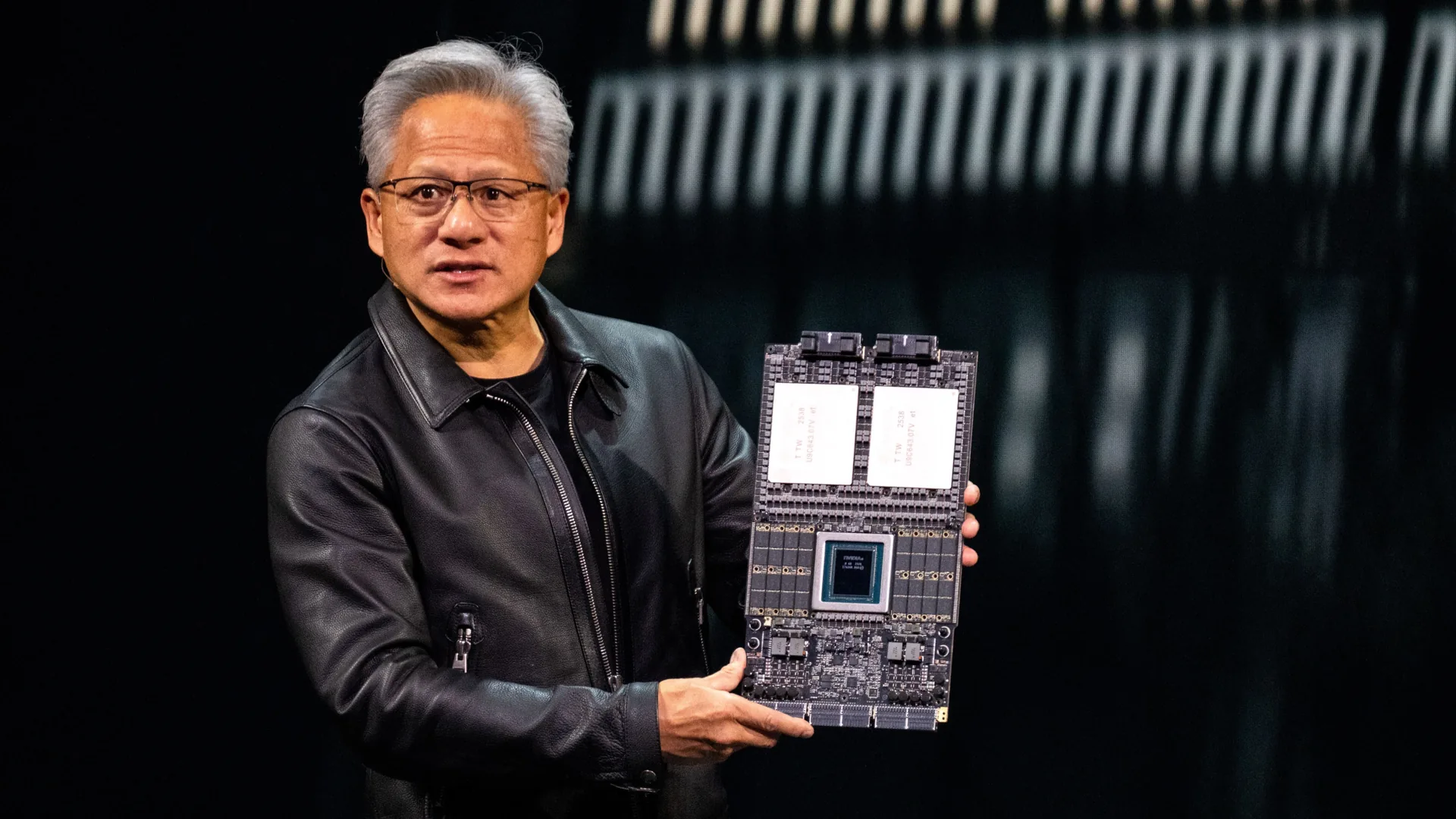
Jensen Huang kicked off GTC 2026 with a crowd foaming at the mouth in the SAP Center, video intros gushing about tokens as AI’s holy grail—building blocks for science, virtual worlds, robot overlords. Twenty years of CUDA as the sacred “flywheel.” GeForce birthed it all, now DLSS 5 renders photoreal 4K on your gaming rig like magic. Cute history lesson. But here’s the kicker: NVIDIA’s chasing $1 trillion in revenue from 2025-2027. Demand up a millionfold. Yeah, right.
“I believe computing demand has increased by 1 million times over the last few years.”
Huang’s words, not mine. Pack the house with fanboys, drop that bomb, watch stock twitch. Classic.
Vera Rubin: Codesign Savior or Chip Soup?
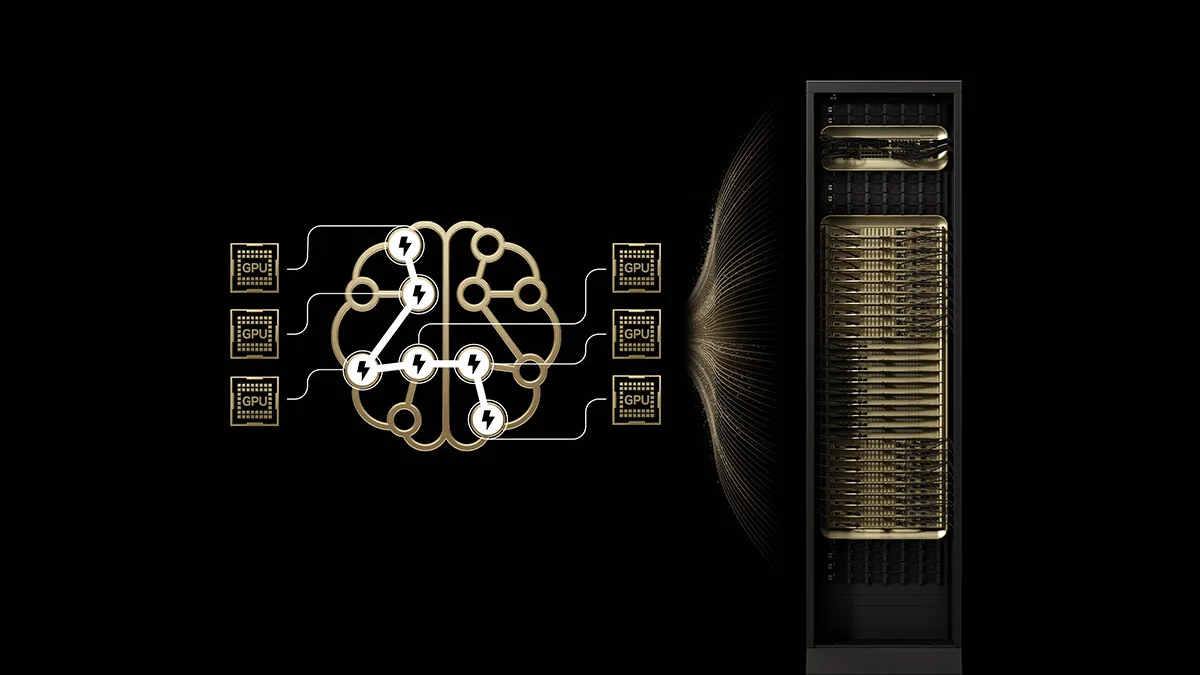
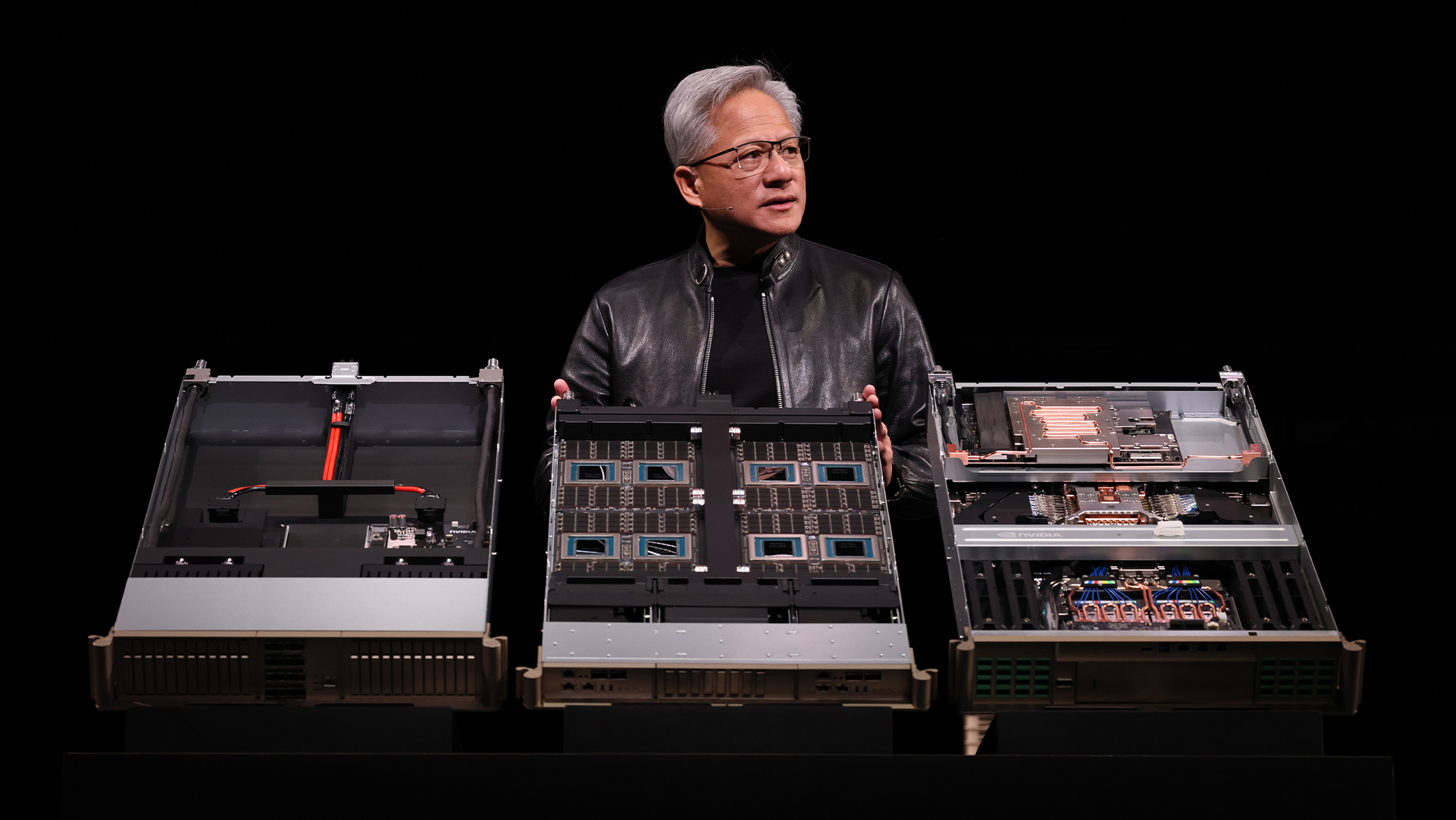
Vera Rubin—named for the dark matter astronomer—hits as NVIDIA’s full-stack fever dream. Seven chips, five racks, one supercomputer for “agentic AI.” Vera CPU, BlueField-4 storage. Extreme codesign, they crow, making NVIDIA the “inference king.” Analyst love-fest. But wait—it’s all vertically integrated software-silicon bliss, optimized end-to-end. Sounds swell. Until you remember promises like this birthed Itanium. Remember that? Intel’s RISC flop, billions down the drain.
Huang demoed the guts, partners like IBM, Dell, AWS nodding along. Data processing turbocharged. Ecosystem parade: autos, finance, healthcare, robots. CUDA-X libraries as “crown jewels.” Every AI vector, NVIDIA platforms. Yawn. It’s the same script—boast breadth, bury the bottlenecks.
Short version: Vera’s real. Ships soon, they say. But trillion-dollar math? That’s where skepticism bites.
And AI natives—OpenAI, Anthropic, startups guzzling $150B VC cash. Skyrocketed last year. GPUs off the charts. Fine. But efficiency’s coming. Models shrinking, inference optimizing. Demand won’t explode forever. My bet: by Feynman launch, Huang’s eating crow on that million-x claim. Unique angle—it’s 1995 internet redux. Bandwidth booms led to fiber glut, prices crashed. AI factories? Same trap, overbuild now, regret later.
$1 Trillion Revenue: Hype or Hubble Telescope Wish?
Picture this: Huang surveying his empire, partners everywhere, 1,000 sessions, 2,000 speakers. Five-layer AI cake, every crumb covered.
“This conference is going to cover every single layer of the five-layer cake of artificial intelligence,” Huang said.
Cake metaphors. Adorable. But revenue fantasy? $1T over three years means $333B annually. NVIDIA’s FY24 was $60B. Tripling yearly? In a market where hyperscalers squeeze margins, China tensions loom. PR spin screams desperation—mask softening demand with sci-fi dazzle.
Look. Partners solid: Google Cloud, Azure, CoreWeave. But Vera Rubin DSX blueprints simulate factories first—smart, admits physical builds lag. Omniverse for digital twins. Practical. Yet orbital data centers? NVIDIA Space-1 Vera Rubin. Dark matter nod again. AI in space to beat Earth limits. Power, cooling woes solved by vacuum? Huang’s lost the plot. Satellites for compute? Launch costs eat profits. SpaceX dreams don’t pay Nvidia bills.
One sentence verdict: Vaporware with a view.
Feynman and Rosa: DNA for Data Centers?
Beyond Rubin: Feynman architecture. Rosa CPU—shoutout Rosalind Franklin, DNA structure queen. Moves data, tools, tokens across agentic stacks. LP40 LPU, BlueField-5, CX10, Kyber optics, Spectrum scale-out. Every pillar: compute, memory, storage, net, security. Ambitious.
Huang ties it to history—GeForce to AI god. OpenClaw? Pete Steinberger’s open-source agentic OS, “most popular ever.” Hyperbole alert. NemoClaw builds on it. Fine, collaboration good. But agentic AI? Still toddler tech—hallucinating agents won’t fill racks overnight.
Will NVIDIA’s Orbital AI Factories Ever Launch?
Space stuff reeks of keynote filler. Vera Rubin NVL576 successor, they claim token-cost champ. Inference edge holds—for now. Competitors: AMD MI400, Intel Gaudi3, custom ASICs from hyperscalers. NVIDIA’s moat? CUDA lock-in. But open standards creep—OpenClaw chips away.
Bold call: Feynman flops if power walls hit. Rosa’s data mover? Great, until quantum or optical compute disrupts. Historical parallel— Cray supercomputers ruled 80s, then clusters commoditized them. NVIDIA’s next.
Huang’s charm offensive works. Applause thunders. But strip the gloss: Incremental chips, ecosystem flex, revenue hallucination. GTC 2026 proves NVIDIA’s peak hype. Reality’s cooling fast.
Stretch it out—partners integrate, DLSS 5 wows gamers bridging to AI. Automotive robotics boom real. Quantum tease intriguing. But trillion? Nah. Efficiency eats demand. Models like Grok-3 need fewer FLOPs. Inference localizes. Capex peaks 2026, then cuts.
Why Does GTC 2026 Feel Like Bubble Trouble?
Crowd eats it. 450 sponsors. But whispers: Supply chain strains, TSMC bottlenecks. Geopolitics—US chips banned abroad. $1T ignores that.
Huang’s narrative: Token era, AI everywhere. True-ish. But overpromise kills trust. Remember Blackwell delays? Rubin risks same.
Final jab: Great showman, shaky math. Buy dips, not dreams.
**
🧬 Related Insights
- Read more: Brookhaven Lab Weaponizes Uncertainty for Smarter AI Molecules
- Read more: Edge Inference Emerges as AI’s Real Money Maker Post-GITEX
Frequently Asked Questions**
What is NVIDIA Vera Rubin?
Full-stack platform with seven chips for agentic AI—CPU, storage, racks optimized together. Inference-focused, codesigned for low token cost.
NVIDIA Feynman architecture release date?
No firm date; follows Vera Rubin. Includes Rosa CPU, LP40 LPU, advanced networking for AI factories.
Are NVIDIA AI data centers going to space?
Huang announced Space-1 Vera Rubin designs—concept for orbital compute. Pure hype, years away if ever.