Seventy-seven percent of the new SPEC CPU 2026 benchmark suite’s code base is new. Let that sink in. After nearly a decade of quiet incubation, the Standard Performance Evaluation Corporation (SPEC) has finally dropped SPEC CPU 2026, and it’s not just an update; it’s a fundamental reimagining of how we measure the raw computational muscle of modern processors.
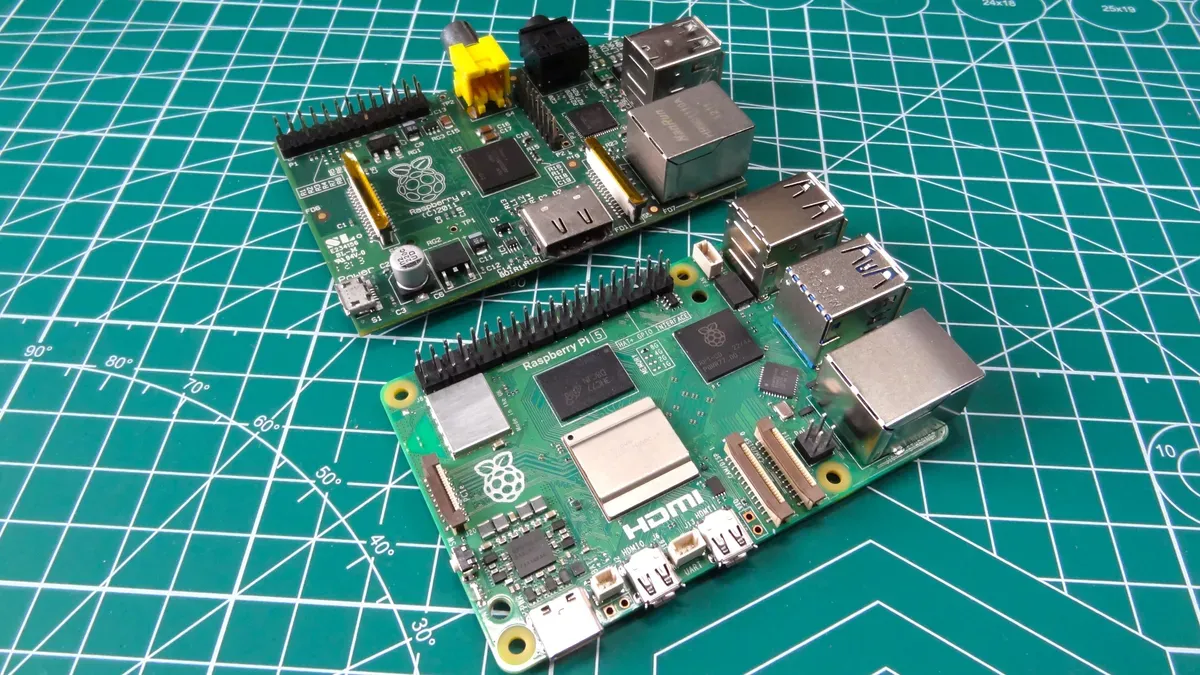
This isn’t your grandpa’s benchmark suite. SPEC CPU 2026 doubles the codebase of its predecessor, packing in 52 tests – nine more than SPEC CPU 2017. It’s like going from a well-worn toolbox to a high-tech engineering lab, bursting with specialized instruments. But the real magic, the thing that’s got my futurist heart singing, is its sheer, astonishing portability. We’re talking about a benchmark that can happily chug along on a humble Raspberry Pi 5, a Windows-on-ARM laptop, all the way up to the colossal server farms that power our digital lives. This isn’t just about speed anymore; it’s about agility and universality.
For years, the computing world has been splitting into these parallel universes. You had the high-performance servers churning through complex enterprise workloads, and then you had the enthusiast rigs, optimized for gaming and creative tasks. Trying to compare them with the same yardstick felt like trying to judge a marathon runner by their ability to win a sprint. SPEC CPU 2026 is here to bridge that chasm. It’s designed to stress the CPU, yes, but its broader appeal is undeniable.
What SPEC has done here is akin to building a universal translator for processor language. They’ve meticulously scrubbed the code, ensuring deterministic results. Think of it like this: if you’re trying to understand how a chef cooks, you don’t want them randomly switching out ingredients or oven temperatures mid-recipe, right? SPEC’s technical paper spills the beans, talking about replacing standard C++ sort functions with stable versions to eliminate those pesky, unpredictable variations. The goal? Identical user-space work, identical results, every single time, within a tight tolerance. That’s precision engineering at its finest.
Why This Isn’t Just About Benchmarking
The ramifications here go far beyond bragging rights on a tech forum. When you can reliably benchmark everything from a tiny ARM board to a supercomputer with the same set of tools, you unlock incredible insights. This is the kind of data that fuels innovation, that lets developers truly understand performance bottlenecks across an entire ecosystem. It’s like suddenly having a shared map for uncharted territory.
But here’s where the plot thickens, and where my skepticism, usually a loyal companion, twitches a bit. SPEC’s commitment to determinism and portability is admirable, but it led to some interesting exclusions. Modern AI workloads like llama.cpp and whisper.cpp, while fascinating and undoubtedly powerful in their real-world applications, didn’t make the cut. SPEC’s reasoning? Restricting them to portable C++ paths caused a “fundamental divergence from their real-world behavior.” This is a crucial point. While we want reliable benchmarks, we also need them to reflect how these chips are actually being used. Are we inadvertently creating a benchmark that favors older, more predictable workloads over the bleeding edge? It’s a delicate balancing act, and I’ll be watching closely to see how this plays out.
The SPEC committee, a veritable who’s who of silicon giants (Intel, AMD, Arm, Nvidia, Dell, HPE, Ampere, and more), also steered clear of AV1 and Opus codecs. Smart move, given the potential for accusations of bias. They’ve built a system designed for fairness, and that means avoiding anything that could even smell like a political football.
“The fundamental goal is to ensure that the benchmark executes an identical amount of user-space work across any compliant system, and produces an identical result on every run within a given tolerance. To achieve this level of rigor, each candidate benchmark undergoes a series of modifications.”
This quote from the technical paper perfectly encapsulates the rigor SPEC is aiming for. It’s the kind of detail that separates a quick-and-dirty test from a serious scientific instrument. This level of focus on determinism, on stripping away OS interference (aiming for 95% user-space execution), is what will make SPEC CPU 2026 a bedrock for performance analysis for years to come.
The Fork in the Road: SPECspeed vs. SPECrate
Understanding the output of SPEC CPU 2026 hinges on grasping the distinction between SPECspeed and SPECrate. SPECspeed is your familiar single-core, single-application sprint. It’s all about how fast one job gets done when the chip is fully dedicated. Think of it as a champion sprinter running their heart out on an empty track. SPECrate, however, is the marathon. It’s designed for servers, measuring total throughput when you’ve got multiple instances of the same application chugging along simultaneously. This is where you see how a server truly scales under load, how efficiently it can juggle multiple tasks.
Each suite has its own battery of tests, with some applications — like the ubiquitous GCC and LLVM compilation benchmarks — appearing in both. SPEC’s classification of applications, particularly the “gray zone” where floating-point instructions are between 1% and 10%, is a proof to their detailed approach, categorizing based on primary computational purpose. It’s not just about raw numbers; it’s about understanding the nature of the computation.
The new SPEC CPU 2026 benchmark suite is more than just an upgrade; it’s a statement. It declares that performance measurement needs to be universal, reliable, and adaptable. It’s the foundation upon which the next wave of computational innovation will be built, and honestly, it’s exhilarating to watch it unfold. The future of computing isn’t just about raw power; it’s about how that power can be reliably measured and unleashed across every conceivable device.
🧬 Related Insights
- Read more: ASUS Zenbook A16’s Snapdragon Cooling Masterclass: Apple’s M5 Wake-Up Call
- Read more: Newbie Torches $5K RTX 5090 Practicing Soldering — On the Tightest Spot Possible
Frequently Asked Questions
What does SPEC CPU 2026 measure?
SPEC CPU 2026 measures processor performance across four key metrics: integer speed, integer throughput, floating-point speed, and floating-point throughput. These are combined into SPECspeed (for single-task performance) and SPECrate (for multi-task throughput) scores.
Can SPEC CPU 2026 run on my laptop?
Yes, the SPEC CPU 2026 suite was specifically designed for portability and can run on a wide range of systems, including laptops, not just servers. It’s also capable of running on devices like the Raspberry Pi 5.
Why were AI workloads excluded from SPEC CPU 2026?