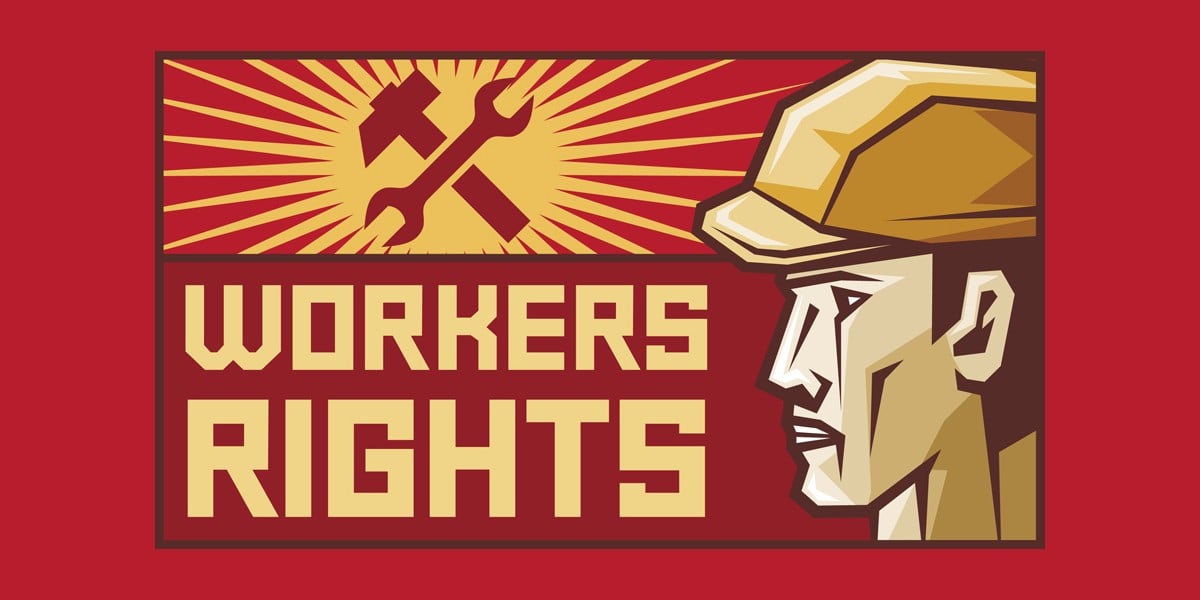
AI can’t fire you.
Look, for 20 years I’ve watched Silicon Valley churn out the next big thing, usually wrapped in a healthy dose of PR fluff. This latest bit from China, though? It’s actually… interesting. A Chinese court has declared it illegal to simply replace human workers with AI. No automated termination letters here, folks.
China’s State Council, which is basically their highest executive body, decided to trumpet a ruling from the Hangzhou Intermediate People’s Court. The case involved a worker, surname Zhou, who was tasked with helping AI models – you know, sifting through their output, flagging nonsense, making sure they didn’t spew out something illegal or privacy-invading. Standard stuff for keeping the AI honest. When the employer decided to use AI for some of that work, they offered Zhou a demotion and a pay cut. Zhou pushed back, and… won. The court said that bringing in AI to do your job doesn’t automatically give the company grounds to ditch you.
This comes out the day before Labour Day, by the way. Subtle timing, or perhaps just a coincidence in a country that actually celebrates workers’ rights with a public holiday. The principle here, though, is that AI adoption can’t be a free pass for layoffs. Who’s actually making money here? Well, beyond the legal fees for Mr. Zhou, that’s the million-dollar question.
Samsung’s Memory Gold Rush
Meanwhile, across the Pacific, Samsung is having a field day. Their Q1 2025 numbers are bonkers: $90.9 billion in revenue, $39.9 billion in profit. All-time quarterly records for their memory business, they say, thanks to “technological leadership” and, get this, “addressing high-value-added AI demand despite limited supply availability.” Translation: everyone’s scrambling for AI chips, memory is scarce, and Samsung’s prices have gone through the roof. They’re also blaming their new Galaxy S phones and are dipping their toes into business laptops, which, frankly, feels like trying to sell ice to an Eskimo in that market. Still, good to see them cashing in.
Indonesia’s Superapp Sees Sunlight
And then there’s GoTo, the Indonesian behemoth that’s like Uber, Amazon, and probably your local grocery delivery service all rolled into one. After years of bleeding cash, they’ve finally posted their first-ever profit. A measly $311,000, sure, but a profit is a profit. CEO Hans Patuwo is understandably chuffed, talking about how their business model is working and they’re “well-positioned to navigate the current global environment.” The kicker? GoTo relies heavily on Chinese cloud giants like Alibaba and Tencent. So, while they’re finally showing some green, they’re also a vital customer for China’s expanding cloud empire.
China’s Clouds Keep Growing
Speaking of Chinese clouds, they’re not slowing down. Omdia reports that China’s cloud infrastructure market grew 26 percent in late 2025. It’s not just AI models themselves, but the broader enterprise AI rollout, private deployments, and just plain old compute and storage needs driving this. Alibaba Cloud is still king there, with Huawei and Tencent trailing behind. So, while China is telling its companies not to fire people over AI, its cloud infrastructure business is booming, fueled by that very AI.
Space Sake, Really?
And just to round things out, a bottle of sake fermented on the International Space Station sold for a cool $690,000. Because, why not? Apparently, sending rice and yeast into orbit and letting it ferment before bringing it back to Earth is the height of luxury. Japanese company Dassai did it, and now there’s a single 100ml bottle of this cosmic brew fetching a price that could probably buy you a small island. It’s a bizarre proof to human (and corporate) desire for the novel, no matter how absurd.
What this all tells me is that the AI narrative is getting complicated. On one hand, you have governments stepping in to protect workers from the immediate, obvious fallout. On the other, the infrastructure powering this AI revolution – the memory chips, the cloud services – is creating massive profits for the companies building it. And somewhere in the middle, you’ve got space sake.
My unique insight here? This ruling in China isn’t just about protecting workers; it’s a strategic move. By mandating that AI can’t be an automatic firing offense, China is subtly encouraging its companies to integrate AI more deeply into their workflows without the massive social disruption of widespread layoffs. It’s about controlling the narrative and the transition, ensuring that the benefits of AI accrue to the state and its dominant tech players, rather than sparking the kind of worker unrest that has historically plagued rapid industrialization. It’s less about empathy and more about long-term economic and social stability – a calculated gamble for their tech ambitions.
According to the report shared by the State Council, the case established the legal principle that using AI to perform a worker’s job does not automatically justify terminating a contract.
Why Does China’s AI Ruling Matter?
This isn’t just a footnote for the Chinese labor market. It signals a growing global tension: how do we harness the immense power of AI without shattering economies and societies? While the US and Europe are still debating the finer points of regulation, China is making bold, albeit potentially self-serving, pronouncements. This could set a precedent, or at least a talking point, for other nations grappling with the same questions. It forces a conversation about the pace and method of AI adoption, shifting focus from merely ‘can we do it?’ to ‘how should we do it responsibly?’, even if ‘responsibly’ is defined through a very specific geopolitical lens.
Will AI Take My Job Because of This Ruling?
No, not directly because of this ruling. China’s decision explicitly states that AI cannot be used as the sole justification for firing someone. This is about protecting existing jobs from immediate AI displacement. However, AI’s overall impact on the job market is a much broader, ongoing discussion. Some jobs will undoubtedly be transformed or eliminated over time, while new ones will be created. This ruling, however, suggests a more managed, government-influenced transition within China. For those outside China, it’s a signal that the global conversation about AI and employment is far from settled.
🧬 Related Insights
- Read more: Intel’s Xeon 6 Gambit with SambaNova Targets Agentic AI’s GPU Chokehold
- Read more: Google Bets Big on Intel’s IPUs Amid Custom Chip Frenzy
Frequently Asked Questions
What does this Chinese court ruling actually mean for workers? It means that simply implementing AI to do tasks previously done by humans isn’t enough grounds for an employer to fire an employee in China. The worker has grounds to challenge termination if AI is the sole reason.
Is Samsung’s profit due to AI itself or memory prices? Samsung attributes its record memory profit to a combination of technological leadership, addressing high-value AI demand, and increased memory prices due to limited supply. So, it’s a mix, with price hikes playing a significant role.
Did space sake really sell for $690,000? Yes, according to the report, a single 100ml bottle of sake fermented on the International Space Station sold for $690,000.