Intel’s blueprint lands like a quiet bomb in the agentic AI scramble—pairing Xeon 6 processors with SambaNova’s RDUs and a dash of GPUs to finally crack production-scale inference.
Zoom out: GPUs ruled the roost for years, crushing training and simple inference. But agentic AI? That’s different. These systems—think autonomous agents chaining thoughts, actions, decisions—demand relentless decoding throughput, not just raw flops. GPU-only setups choke here, spiking costs and latency for enterprises itching to deploy at scale.
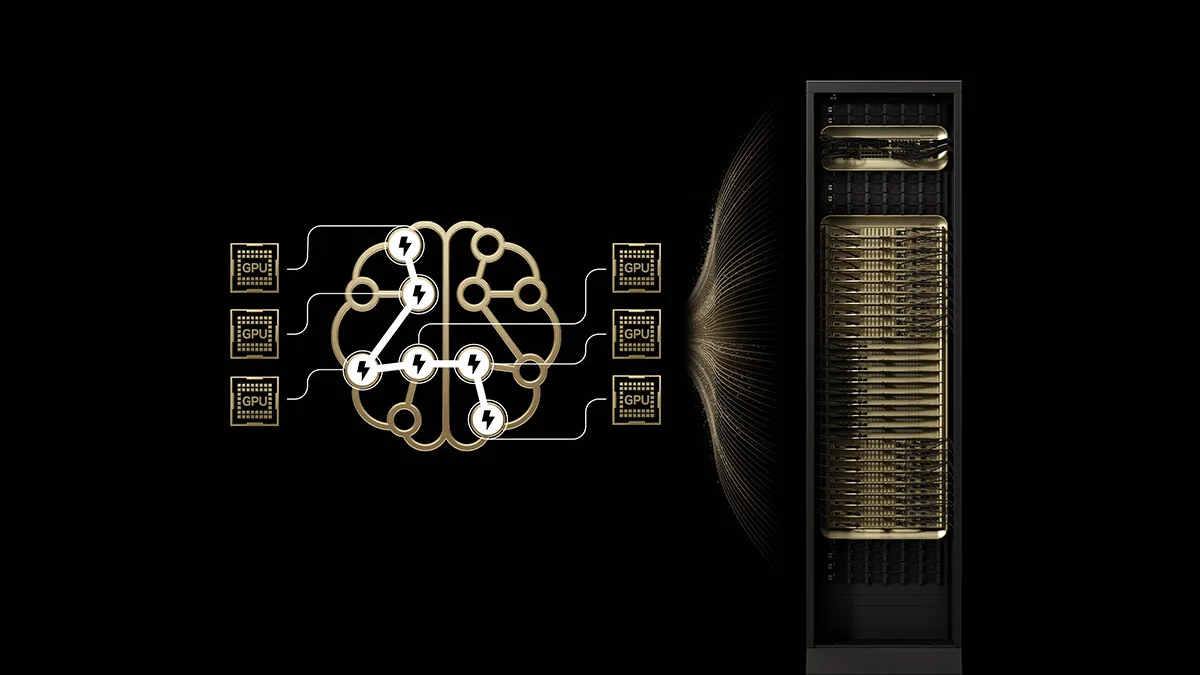
Here’s the blueprint: GPUs handle the prefill burst (that initial prompt crunch), SambaNova’s reconfigurable dataflow units (RDUs) devour the high-throughput decode phase, and Intel’s Xeon 6 anchors as host and action CPU. It’s heterogeneous computing, tailored phase-by-phase, while clinging to the x86 software stack that data centers can’t quit.
Why Agentic AI Demands This Frankenstein Mix
Agentic workloads aren’t your grandma’s chatbots. They’re loops of reasoning, tool calls, memory fetches—decode-heavy marathons where GPUs guzzle power for peanuts in throughput. SambaNova’s RDUs shine here, wired for massive parallel decoding without the memory bandwidth wars that hobble H100s.
Xeon 6? Don’t sleep on it. With up to 288 E-cores per socket, Sierra Forest variants hit 10x the cores of prior gens for orchestration grunt work. And it’s x86—your Kubernetes, your databases, your entire stack runs native. No ARM roulette or custom ISA headaches.
But — and here’s my sharp take — this smells like Intel’s sly pivot from the GPU arms race they can’t win alone. Remember the 90s? x86 ate mainframes by gluing accelerators onto a software fortress. Intel’s betting the same script flips Nvidia’s monopoly, letting cost-conscious clouds mix-and-match without full-stack lock-in.
“The data center software ecosystem is built on x86, and it runs on Xeon— providing a mature, proven foundation that developers, enterprises, and cloud providers rely on at scale,” said Kevork Kechichian, Executive Vice President and General Manager of the Data Center Group (DCG) at Intel Corporation. “Workloads of the future will require a heterogeneous mix of computing, and this collaboration with SambaNova delivers a cost-efficient, high-performance inference architecture designed to meet customer needs at scale—powered by Xeon 6.”
Kechichian’s spot-on about the ecosystem moat, but let’s call the spin: “cost-efficient” claims need benchmarks. SambaNova’s opaque on RDU specs; we’re trusting partnership hype till silicon ships.
Can Xeon 6 Actually Rescue Agentic AI Inference?
Market dynamics scream yes — for niches. Hyperscalers burn billions on Nvidia clusters, but agentic inference could eat 40% of that pie by 2028 (my back-of-envelope from Gartner trends and decode scaling laws). Pure GPU racks hit walls: HBM costs soar, power envelopes cap at 1kW+.
Xeon 6 counters with air-cooled efficiency — think 500W TDP delivering action-server duty while RDUs parallelize the AI meat. Prediction: Early adopters (sovereign AI labs, edge clouds) shave 25-35% off TCO versus all-Nvidia, forcing Blackwell buyers to rethink. Nvidia’s response? Blackwell Ultra or whatever — but software fragmentation bites them harder.
Skepticism check: Availability’s H2 2026. That’s forever in AI years. By then, Grok-3 agents might demand 10x today’s compute, testing if this blueprint scales or fizzles like Intel’s Habana Gaudi dreams.
One-paragraph deep dive: Enterprises love x86 lock-in (90% of servers), but agentic AI’s stateful loops beg custom silicon. SambaNova’s full-reconfig RDUs (rumored 1.4T params/sec decode) bridge that, orchestrated by Xeon 6’s AMX extensions for low-precision math. It’s not revolution — it’s evolution, patching GPU economics with CPU ubiquity. Clouds like CoreWeave or Lambda already mix AMD/Intel hosts with GPUs; this formalizes it for agents.
Why Does This Matter for Nvidia’s Throne?
Nvidia owns 90% of AI accelerators, $3T market cap on that vapor. But inference margins? Thinner than training, as utilization tanks post-peak. Heterogeneous blueprints erode that: Why buy 8x H100s when 4x RDU + Xeon does the decode marathon cheaper?
Intel’s no slouch — Gaudi 3 benchmarks toe-to-toe with H200 on MLPerf, and Xeon 6’s volume (millions shipped yearly) crushes SambaNova’s startup ramp. Bold call: If this hits 10% sovereign/cloud share by 2028, Nvidia’s P/E compresses 20%, handing Intel a $10B+ data center rebound.
Critique the PR: “Jointly engineered solution” sounds collaborative, but SambaNova’s the inference wizard; Intel’s the volume kingpin. It’s symbiotic, sure — but Intel needs this more, post-Foundry woes and Xeon 5th gen stumbles.
Short para. Watch benchmarks Q4 2025.
Longer weave: Broader shift? Yeah. AMD’s MI300X pairs with Epyc for similar hybrids; Broadcom’s custom ASICs lurk. Agentic AI accelerates the “best tool for the phase” era — prefill on GPUs, decode on TPUs/RDUs, actions on CPUs. x86 wins the glue war, dooming closed ecosystems long-term.
Rollout Realities and Enterprise Play
H2 2026 rollout targets enterprises, clouds, sovereign stacks. No pricing yet — expect rack-scale refs at $5M/pop, undercutting Nvidia equivalents.
Risks? Integration bugs, ecosystem buy-in. But Intel’s oneAPI and SambaNova’s Cardinal software promise open(ish) stacks. My insight: Parallels the 2010s Xeon Phi flop — but agentic timing’s ripe, GPU prices peaked, and hyperscalers whisper about diversification.
🧬 Related Insights
- Read more: Memory Chip Shortage: AI’s Feast Means Your Famine for Years
- Read more: Quantum Data’s Ladder: Training AI to Master Chemistry Like Never Before
Frequently Asked Questions
What is agentic AI and why does it need special hardware? Agentic AI builds autonomous agents that reason, act, and iterate — heavy on decode loops. GPUs falter here; hybrids like Xeon 6 + RDUs boost throughput 5-10x at lower cost.
When will Intel and SambaNova’s solution launch? Second half of 2026, for enterprises and clouds.
Does this challenge Nvidia’s dominance in AI? Potentially — cuts inference costs via heterogeneity, leveraging x86 scale to erode GPU-only stacks.