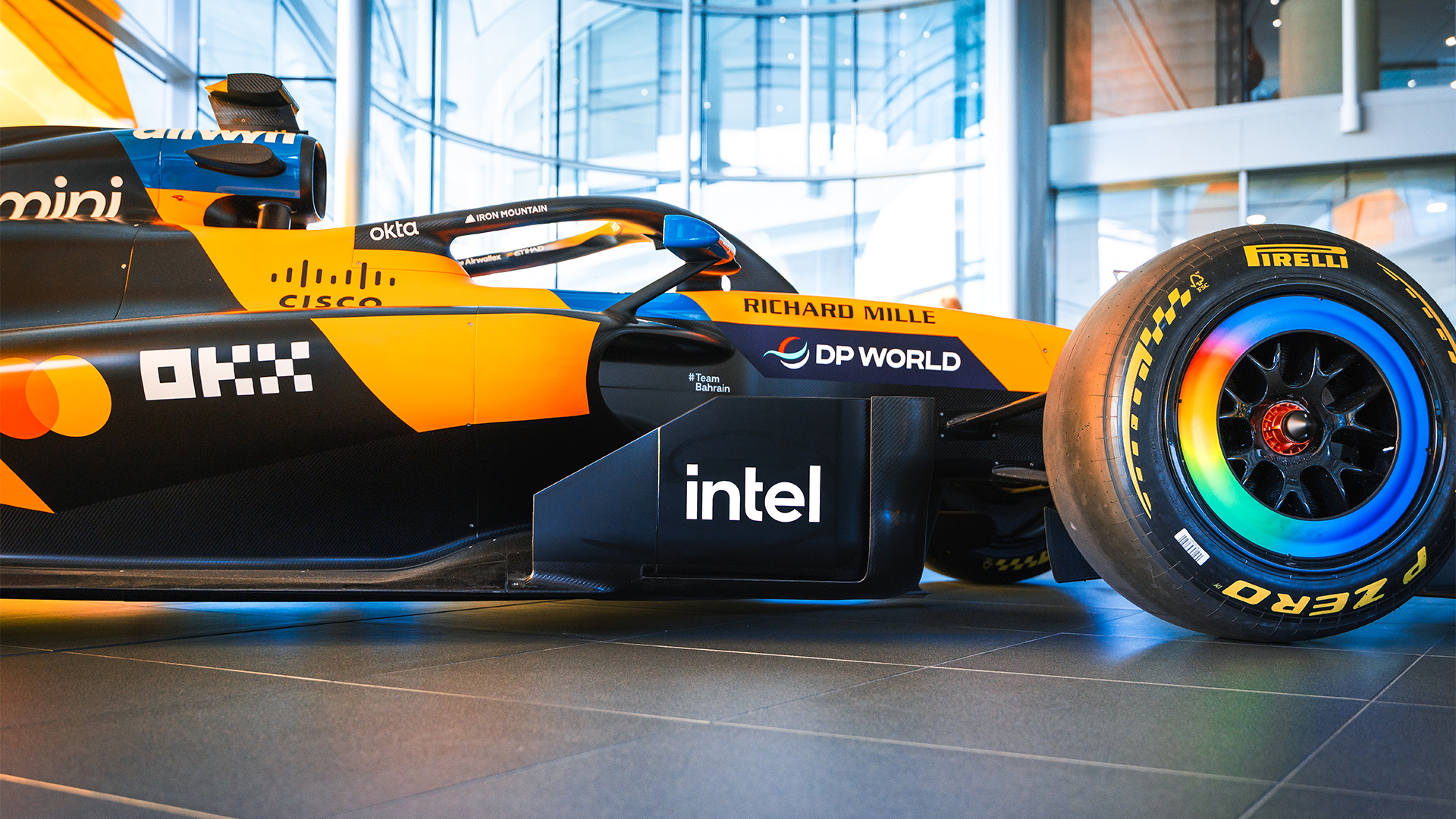
The tarmac is hot, the data streams are flooding in, and McLaren Racing just announced its new strategic partner: Intel. Forget the tire suppliers and fuel companies for a moment; this is about the raw computational horsepower driving everything from aerodynamic simulations to real-time race strategy. We’re talking Intel Xeon and Core Ultra processors now powering one of the most technologically demanding sports on the planet.
This isn’t just some sticker-on-the-car deal. The multi-year agreement names Intel the Official Compute Partner for McLaren’s Formula 1, IndyCar, and even its burgeoning F1 Sim Racing teams. The sheer volume of data generated by F1 and IndyCar is staggering—telemetry, simulation results, predictive analytics—and in a sport where milliseconds dictate victory, turning that deluge into actionable insight is paramount. Intel’s play here is clear: position its chips as the essential backbone for peak performance.
Why Does This Matter for Motorsport Innovation?
The numbers are the narrative. Formula 1 and IndyCar generate and rely on massive volumes of data—from telemetry and simulation to real-time race strategy—where a difference in milliseconds can determine outcomes. Intel aims to be the silent engine behind those critical nanosecond decisions, providing the secure, scalable compute foundation. We’re not just talking about crunching numbers; it’s about low-latency edge computing at the track, advanced AI platforms to accelerate design cycles, and digital twins that mirror the physical car with uncanny accuracy. This is the future of motorsport engineering, and Intel wants to be recognized as the architect.
“Formula 1 racing and IndyCar are some of the ultimate proving grounds for high-performance computing. Intel is proud to be McLaren Racing’s compute partner, and to be part of a team that thrives on precision, speed, and innovation,” said Lip-Bu Tan, Intel CEO.
That’s a bold statement from Tan. But does it hold water beyond the PR spin? The industry trend is undeniable: deep technology partnerships are becoming the competitive differentiator in F1. Teams are moving beyond traditional sponsors to integrate infrastructure from the factory floor to the pit lane. Intel’s previous involvement with McLaren, as alluded to by Zak Brown, CEO of McLaren Racing, suggests this isn’t a completely new relationship, but rather a formalization and expansion. Brown highlights that Intel’s computing leadership will be critical in how they design, build, and race. It’s a symbiotic push for innovation.
Intel technologies will be deployed across McLaren’s operations: trackside edge computing for real-time analytics, advanced computing for simulations and digital twins, and AI platforms for faster design and predictive modeling. The companies even pledge to co-engineer solutions for improved efficiency and sustainability. Given the increasing scrutiny on motorsport’s environmental impact, this sustainability angle could prove more significant than simply chasing lap times.
Is Intel’s Bet on Motorsport Worth It?
From a data-driven perspective, this partnership is a calculated move by Intel. Formula 1 and IndyCar are not just sports; they are extreme testbeds for high-performance computing, AI, and edge solutions. If Intel’s processors can demonstrably enhance McLaren’s performance — leading to more wins, faster car development, or more efficient operations — it provides invaluable validation. This isn’t just about brand visibility; it’s about proving the mettle of their silicon in an arena where failure is public and immediate. The branding will be prominent, appearing on F1 cars starting in Montreal and on IndyCar machinery, including the iconic Indy 500 in 2027. But the real win for Intel will be the performance metrics that emerge from this collaboration.
This deeper entanglement of silicon vendors with elite racing teams mirrors an earlier era where automakers directly engaged with tire and fuel manufacturers. Now, it’s the compute power that’s in focus. Intel is betting that by embedding its technology at the core of McLaren’s operations, it can refine its offerings for other high-performance computing applications, from scientific research to enterprise AI. It’s a strategy that trades immediate financial returns for long-term technological leadership and market validation.
What Does This Partnership Mean for Developers?
For software developers and engineers working within the motorsport ecosystem, or those looking to apply similar techniques elsewhere, this partnership means access to potentially cutting-edge compute platforms and optimized development environments. Intel’s commitment to co-engineering solutions implies a drive towards creating more integrated hardware-software stacks. This could translate into new APIs, specialized libraries, and performance tuning tools tailored for racing workloads. Developers might see more opportunities to work with AI-driven simulations, real-time data analytics, and advanced visualization tools, all underpinned by Intel’s silicon. The trend of high-performance computing bleeding into mainstream applications means insights gained here could trickle down to other industries sooner rather than later.
🧬 Related Insights
- Read more: NVIDIA Mission Control 3.0: Rewiring AI Factories for Token-Maxing Efficiency
- Read more: M5 Pro MacBook Pro Shatters Discount Records [Analysis]
Frequently Asked Questions
What specific Intel processors will be used by McLaren? Intel Xeon and Intel Core Ultra processors will be deployed for performance-critical workloads.
Will this partnership impact McLaren’s performance on the track? The stated goal of the partnership is to enhance McLaren’s performance through advanced computing and AI, impacting areas like simulation, aerodynamics, and race strategy.
Is this a new trend in motorsport sponsorship? Yes, there’s a broader trend in Formula 1 and other racing series for deeper technology partnerships that integrate infrastructure and data analysis for competitive advantage, moving beyond traditional sponsorship models.