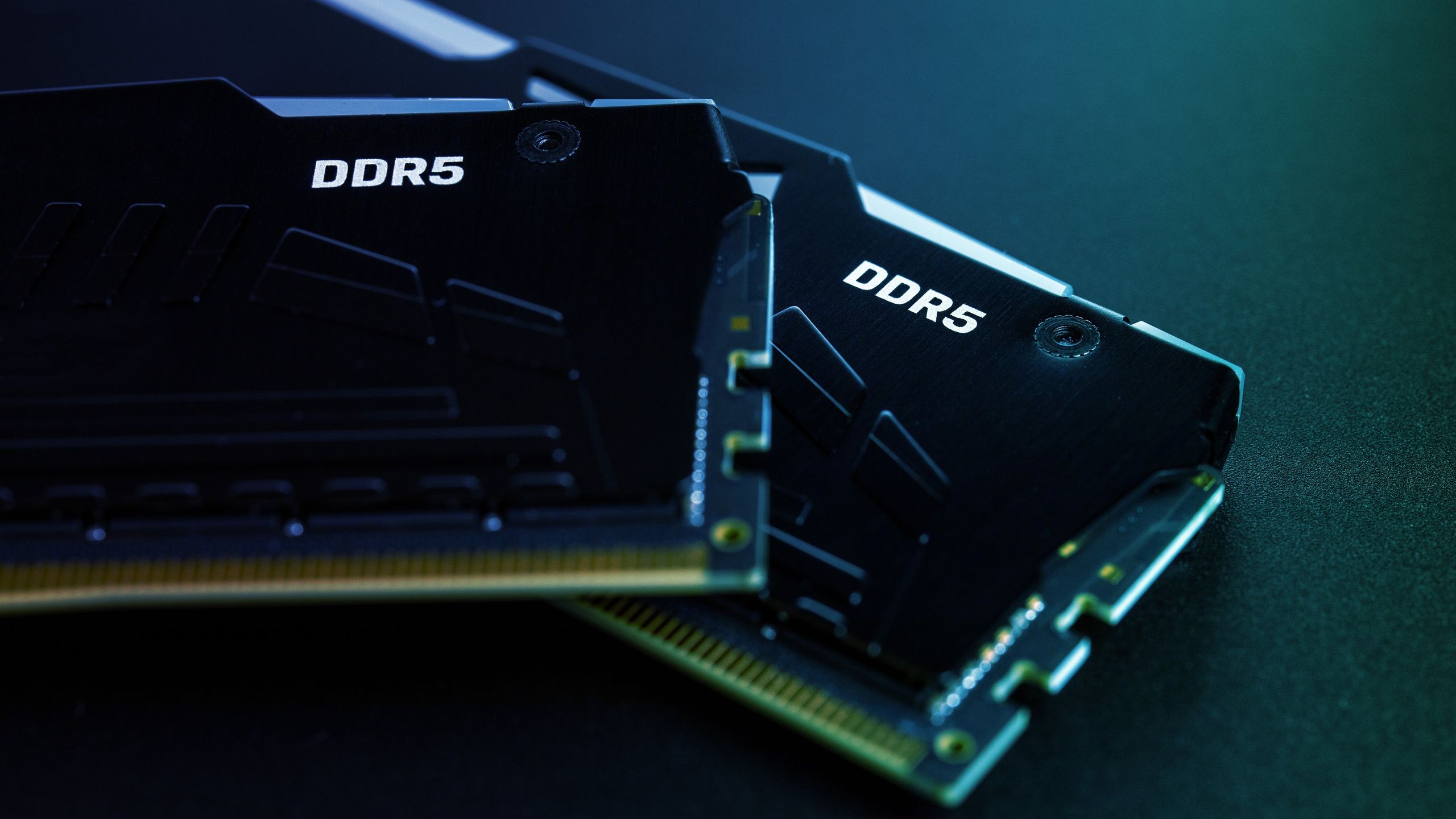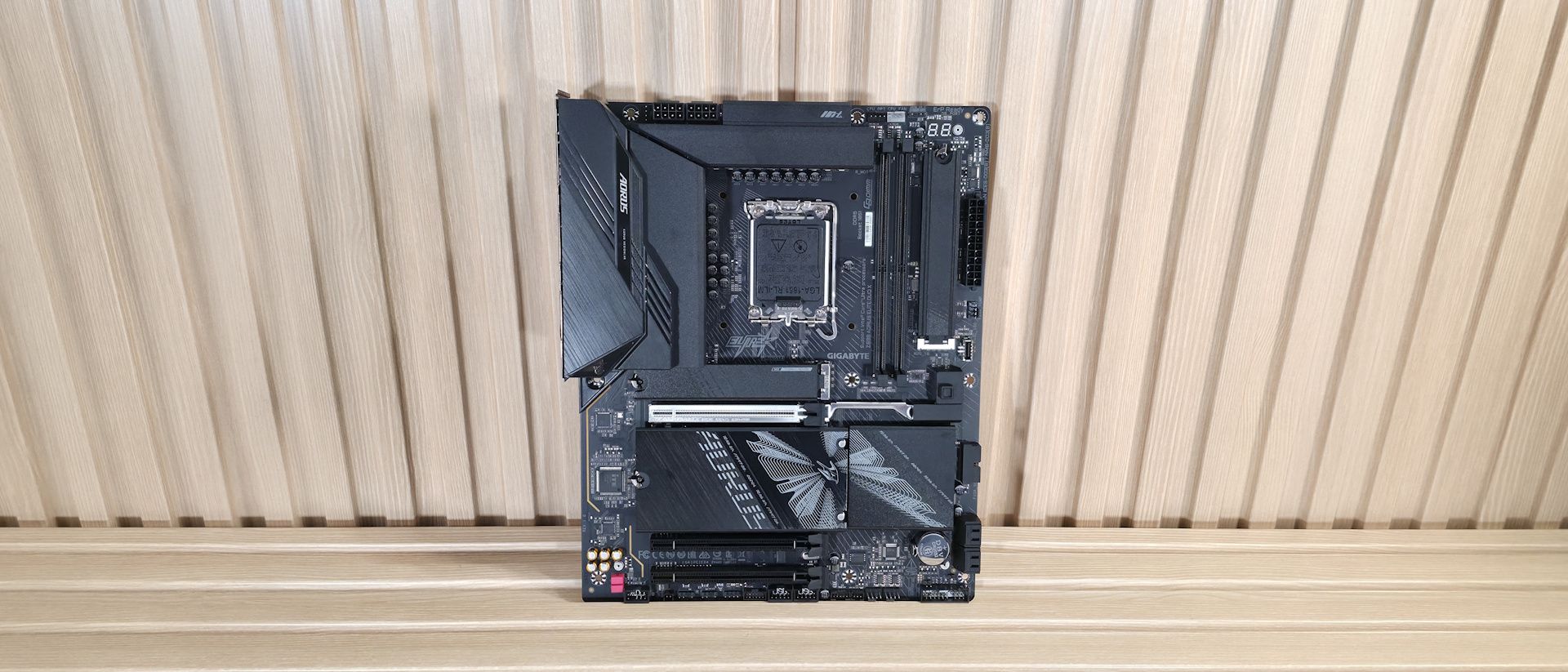
Did you ever stop to think about how much RAM you might actually need? For most of us, it’s a question that lingers in the background, a spec sheet item we check off without much deep consideration. But what if the answer is less about ‘enough’ and more about ‘insane’? Gigabyte’s new Z890 Aorus Elite Duo X motherboard, landed on my desk not with a bang but a curious whisper, is serving up a hefty portion of that very question.
This isn’t just another motherboard launch. It’s a flag planted firmly in the sand, a signal that the bleeding edge of memory density is about to get a whole lot more interesting. The Z890 chipset, designed to support Intel’s upcoming Arrow Lake refresh processors, is showing up early, and Gigabyte is betting big on a specific type of RAM: CQDIMMs. Clocked Quad-rank Unbuffered Dual In-line Memory Modules. Fancy words for modules designed to cram more memory into fewer slots, at higher speeds. We’re talking 256GB configurations with just two sticks, hitting speeds of 8000 MT/s right out of the gate. That’s more RAM than most workstations even bother to list.
So, what’s the story here?
Gigabyte’s Aorus Elite Duo X, clocking in at a surprisingly palatable $279.99, is touting CQDIMM compatibility as a headline feature. Now, it’s crucial to note that Gigabyte isn’t officially certifying these modules in the traditional sense, but rather enabling their operation with compatible Core Ultra CPUs. This is a bit of a tightrope walk, a ‘you can do it, but don’t blame us if it gets wobbly’ kind of deal, but it opens the door for enthusiasts and professionals who have, until now, been staring at the ceiling of what’s possible with DDR5.
Beyond the RAM shenanigans, the board packs a punch for its price point. We’re looking at five M.2 sockets – one of which is a PCIe 5.0 affair, ready for the fastest NVMe drives – alongside four SATA ports for older, but still relevant, storage. Networking is also covered with Wi-Fi 7 and a 5 GbE LAN port, ensuring your data moves at the speed of light. The audio, however, is a bit of a throwback: a last-gen flagship codec. Not a deal-breaker for everyone, but for audiophiles, it might sting a little. And that solitary USB-C port on the rear I/O? A bit stingy, frankly, in an era where we’re drowning in USB-C peripherals.
Gigabyte’s marketing also highlights an “Ultra Turbo Mode,” promising performance boosts of up to 40% in specific scenarios with their K-SKU CPUs. This is the kind of claim that raises an eyebrow. While a single click to extract maximum performance sounds appealing, my experience with these “turbo” modes is often a mixed bag. Sometimes it’s a solid overclock, other times it’s a recipe for instability. The review mentions testing these modes, and indeed, they found some gains with ‘Level 2,’ but ‘Level 3, Extreme’ proved too much for their test CPU, leading to crashes in demanding multithreaded applications. This isn’t entirely surprising; pushing hardware to its absolute limits often requires more than a one-click solution.
The Gigabyte Z890 Aorus Elite Duo X is a well-rounded mid-range board with strong connectivity and CQDIMM support for those few who need the increased density and speed it provides – and it’s a solid value under $280.
This quote, buried in the verdict, encapsulates the board’s current identity. It’s a value proposition, yes, but the CQDIMM support feels like a feature for a specific, albeit growing, niche. Think AI researchers crunching massive datasets, professional video editors working with uncompressed 8K footage, or developers running numerous virtual machines simultaneously. For the average gamer or office worker, 256GB of RAM is still firmly in the realm of science fiction. But therein lies the true intrigue: these boards often precede broader adoption. What starts as a niche offering can, with time and falling costs, trickle down.
Why CQDIMM? A Glimpse into Memory’s Future
The real architectural shift here isn’t just the Z890 chipset or the Arrow Lake refresh. It’s the increasing pressure on memory controllers. As CPUs get more cores and performance demands skyrocket, the need for raw memory bandwidth and capacity becomes paramount. Traditional DIMMs, even with their increasing speeds, are hitting physical limitations in terms of density and the stress they place on the CPU’s integrated memory controller. CQDIMMs, with their quad-rank design and specific signaling, are engineered to overcome some of these hurdles. They essentially allow for more memory chips to be addressed and utilized more efficiently within a smaller footprint, and crucially, with less signaling overhead per rank compared to stacking multiple traditional DIMMs. This is a fundamental architectural change in how memory is accessed and managed at a very low level, aiming to bypass bottlenecks that would otherwise cripple systems packed with extreme RAM capacities.
The inclusion of these early CQDIMM-compatible boards, even in the mid-range, suggests that the technology is maturing faster than anticipated. It’s a bold move for Gigabyte to be one of the first out of the gate, especially on a board that’s not a four-figure enthusiast flagship. It signals a belief that the demand for high-density RAM is about to outstrip the capabilities of current DIMM configurations.
Is This Board For You?
For the vast majority of users, the answer is likely no. The real-world benefit of 256GB of RAM is negligible for gaming, general productivity, or even most professional creative workflows. The edge cases, however, are precisely why this board exists. If you’re pushing the absolute limits of what your current system can handle in terms of memory-intensive tasks, and if you’ve found yourself constrained by the 128GB (or less) capacity of typical high-end DDR5 builds, then the Z890 Aorus Elite Duo X is worth a serious look. It’s a platform for experimentation, for those who need to see what’s possible when you throw obscene amounts of RAM at a problem. It’s less about what the board offers today, and more about what it enables for tomorrow.
**
🧬 Related Insights
- Read more: NVIDIA GeForce NOW Adds 16 Games, Boosts Cloud Power
- Read more: India’s Chip Ambitions: Design Firms Lead the Charge
Frequently Asked Questions**
What is CQDIMM support? CQDIMM stands for Clocked Quad-rank Unbuffered Dual In-line Memory Module. It’s a type of RAM designed to offer higher memory density and potentially higher speeds than traditional DIMMs, by using a quad-rank design which allows for more memory chips to be addressed. This enables configurations like 256GB using only two modules.
Will this motherboard be compatible with my current CPU? This Gigabyte Z890 Aorus Elite Duo X motherboard is designed for Intel’s upcoming Arrow Lake refresh processors (Core Ultra 270K Plus, 250K Plus) and original Core Ultra chips. It uses the LGA 1851 socket and is not backward compatible with older Intel CPU generations.
Is 256GB of RAM necessary for gaming? For virtually all current gaming scenarios, 256GB of RAM is far beyond what is needed. Most games perform optimally with 16GB or 32GB of RAM. High-density RAM like that enabled by CQDIMMs is typically beneficial for highly specialized professional workloads such as large-scale data analysis, complex simulations, or professional content creation with massive files. The Aorus Elite Duo X is a board for niche, memory-hungry applications, not mainstream gaming.