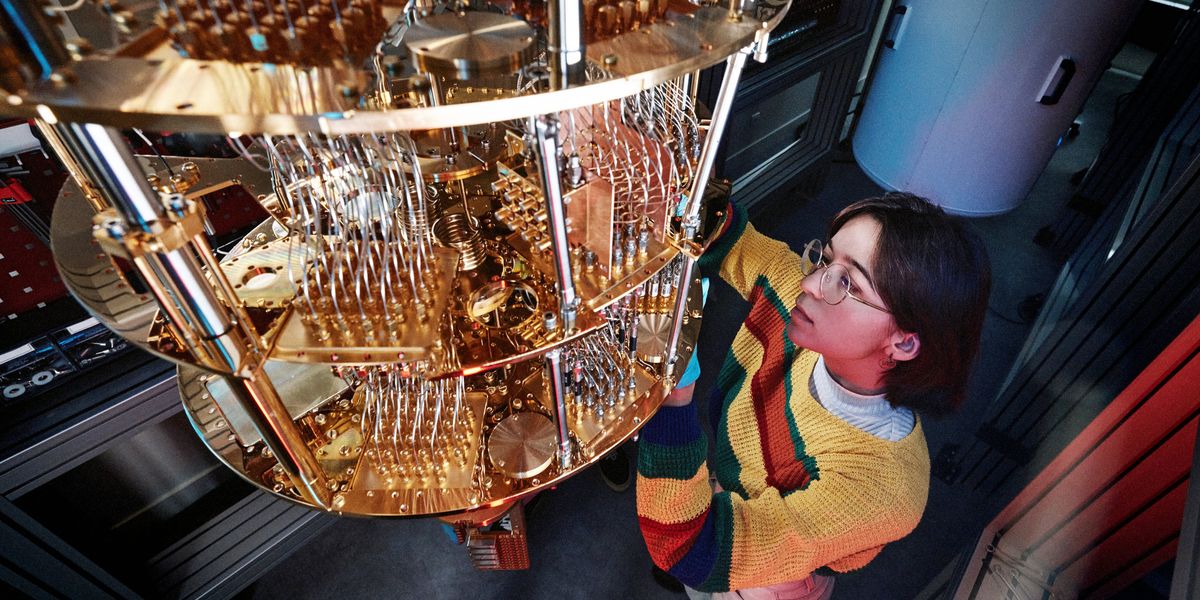
This isn’t just another press release about dollars changing hands. For real people, it means the slow, grinding work toward a quantum future — the kind that could eventually crack drug discovery, optimize global logistics, or even rewrite financial modeling — just got a bit more momentum. D-Wave Quantum’s ongoing project, focused on fabricating superconducting qubits with materials and methods that can actually be scaled up, has secured a second year of funding from NORDTECH.
And it’s not pocket change. We’re talking about part of a larger $25 million infusion into four Department of Defense-backed programs. D-Wave’s specific grant is aimed at shoring up the foundational materials and manufacturing processes for quantum computers that use superconducting circuits — the current workhorse for much of the industry. This move by NORDTECH, a part of the sprawling U.S. Microelectronics Commons (MEC) initiative, underscores a deep-seated belief that domestic control over quantum technology development is a national security imperative.
The real headline here, beyond the funding announcement, is the underlying architectural shift NORDTECH is trying to engineer. They’re not just funding research; they’re funding the entire pipeline from lab bench to actual manufacturing. The SQFab project, as it’s known, is explicitly designed to push superconducting qubit fabrication and system scalability forward, bridging that notoriously difficult gap between early-stage innovation and industrial production.
Why Does This Matter for National Security?
Dr. Alan Baratz, D-Wave’s CEO, is pretty clear: quantum computing is going to play a significant role in U.S. microelectronics innovation. That’s a polite way of saying that if China or Russia beats us to reliable, scalable quantum computers, the implications for defense, intelligence, and critical infrastructure could be… profound. This funding is a bet on American capability, ensuring that the foundational work isn’t outsourced or left behind.
What’s particularly interesting is the focus on the foundational packaging and testing protocols needed for gate-model superconducting quantum systems. This isn’t about slapping a few more qubits onto a chip. It’s about the often-unseen engineering — the materials science, the error correction schemes, the control electronics — that will ultimately determine if quantum computers move beyond the realm of academic curiosity and into practical, everyday use for complex problems. It’s about moving “best-in-class nanofabrication processes from lab-to-fab,” as Dr. Rob Schoelkopf, chief scientist at D-Wave, puts it.
This initiative is a direct response to the vulnerabilities exposed in global semiconductor supply chains. By fostering domestic R&D and manufacturing capabilities, the MEC program, and by extension projects like SQFab, aims to create a more resilient and self-sufficient U.S. technological base. It’s a multi-pronged attack on potential choke points, from raw materials to advanced chip fabrication, all aimed at ensuring the U.S. remains at the forefront of critical technologies.
“We believe that this work is critical to advancing the foundational packaging and testing protocols needed for gate-model superconducting quantum systems, enabling the transfer of best-in-class nanofabrication processes from lab-to-fab and supporting broader adoption and scalability.”
The Road to Error Correction
D-Wave’s role here, and the specific mission of SQFab, is to co-develop the technologies necessary for scalable quantum error correction. This is the holy grail for many quantum computing architectures, especially those aiming for the powerful, universal gate-model approach. Without strong error correction, qubits are too prone to errors, rendering complex computations unreliable. The project’s goal is to use new materials, novel quantum circuits, and advanced control schemes to lay the groundwork for systems that can overcome these inherent instabilities.
It’s a long game, of course. Quantum computing, despite the breathless pronouncements, is still in its infancy. D-Wave itself offers both annealing and gate-model systems, a dual-platform approach that acknowledges the different strengths of each. But this continued support from NORDTECH is a clear signal that the U.S. defense establishment sees superconducting qubits as a critical piece of the future technological puzzle, and they’re willing to invest heavily in making them strong and scalable.
This isn’t just about D-Wave; it’s a microcosm of a larger national strategy. The emphasis on bridging the gap between research and manufacturing, the focus on supply chain resilience, and the drive to maintain technological leadership all point to a future where advanced computing capabilities are as vital to national security as traditional military might. The real impact won’t be felt tomorrow, but the architectural underpinnings for that future are being laid, one NORDTECH-funded qubit at a time.
What’s the unique insight here? The true story isn’t the funding itself, but the strategic alignment. NORDTECH isn’t just writing a check; it’s directing D-Wave’s engineering focus toward specific, national-security-relevant objectives in quantum hardware. They’re not just investing in quantum computing, they’re investing in quantum-secured microelectronics fabrication. It’s a subtle but critical distinction, turning a commercial R&D project into a component of a broader defense industrial strategy.
🧬 Related Insights
- Read more: Nvidia’s China Gamble: Xi-Trump Summit Sparks H200 Hope
- Read more: Arm’s $1T TAM Gambit: A Swiss Identity Crisis?
Frequently Asked Questions