Forget the whiz-bang announcements about the next-gen chip. What matters to the people actually making these things is whether they’ll work, and more importantly, whether they can actually get them out the door without costing a fortune in costly respins. That’s where Siemens’ latest pitch for its HyperLynx DRC tool comes in. It’s about taming the beast of complex Printed Circuit Board (PCB) design, a process that’s become a spaghetti of high-speed signals and impossible demands.
This isn’t about your grandma’s hobby circuit board. We’re talking USB 3.0, PCIe 5.0, DDR5, HDMI 2.1 – the arteries of modern computing. These aren’t just wires anymore; they’re superhighways demanding immaculate infrastructure. Mess them up, and you’ve got signal integrity gremlins, power delivery hiccups, and electromagnetic interference (EMI) chaos. Historically, this meant armies of highly specialized engineers hunched over schematics, eyeballs glued to monitors, performing checks so tedious they’d make a DMV clerk weep. It was slow. It was error-prone. And it was, frankly, archaic.
The Bottleneck of Brilliance
For two decades, PCBs have packed more punch into smaller spaces. This density, while impressive on paper, creates a human bottleneck. Need a dozen different experts who speak the arcane language of signal protocols and obscure verification methods? Good luck finding them. And if you do, they’re probably swamped. The setup for electrical verification itself—modeling datasheets, S-parameters, even 3D structures—is a time sink. Add to that the complexity of the design tools themselves, and you’re looking at a productivity black hole.
The old guard relied on manual inspection, a meticulous, layer-by-layer, net-by-net visual slog. Only the most critical bits got the full simulation treatment, leaving plenty of room for nasty surprises to lurk in the corners. It’s like checking your car for rattles by just listening to the engine noise—you might catch the obvious, but that loose bolt under the chassis? It’s a gamble.
Siemens’ answer is automation, packaged in HyperLynx DRC. They claim it shifts verification earlier in the design cycle. This is the golden ticket everyone’s chasing: catch the bug before it becomes a costly mistake. Automation, they argue, not only speeds things up but also drastically cuts down on those pesky human errors.
Rules, Not Rote
The magic, according to Siemens, lies in how you set up these automated checks. Targeting specific PCB areas with object lists and parameters is key. You’re not just saying ‘check everything’; you’re telling the tool what to check and how. This includes system-generated lists that snag components automatically, and user-defined lists that home in on specific signals or protocols. Get this setup right, and you minimize the noise—the false positives that plague any automated system.
And for those who think they need to reinvent the wheel every time, the tool offers reusable rule setups. Rules are organized into groups, saved in project files (.hldset, .hldproj), and can even be shared across different projects or teams. This hierarchical organization means consistency, which, in the world of high-stakes engineering, is practically a superpower.
Siemens has a methodology that uses automated rule-based electrical verification with an EDA tool, HyperLynx DRC. The old method of manual verification is just too slow and inadequate to ensure no respins.
Speed Over Substance?
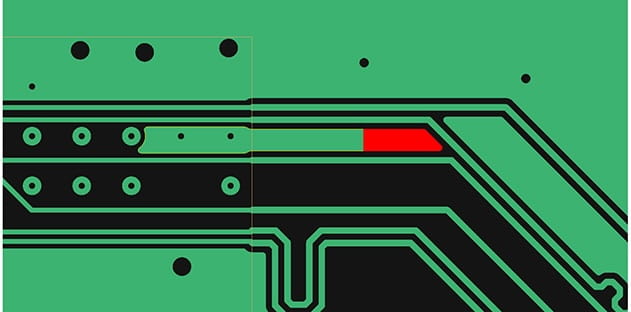
Consider the mundane task of detecting a ‘metal island’—a stray piece of metal that can cause all sorts of EMI/EMC grief. A human might spend 30 minutes to an hour poring over it. HyperLynx DRC? Seconds. It’s not just about speed; it’s about spotting issues like return path breaks during layer changes, or EMI problems that can be fixed in under a minute. This is the kind of rapid feedback loop that can genuinely change the pace of design.
Signal integrity issues like impedance discontinuities? Automated rules flag them. Nets crossing gaps? Checked for reflection risks automatically. Power delivery gets its own set of rules, ensuring decoupling capacitors are where they need to be, preventing AC analysis failures and validating component placement. It’s a systematic approach, moving from the critical to the less so, streamlining the fixes.
But here’s the rub. The white paper mentions scripting in VBScript or Python for custom rules, and over 100 pre-defined rules covering SI, PI, EMI/EMC, and high voltage safety. Siemens even offers workshops. This hints at a not-insignificant learning curve. You can automate, but you still need to know what you’re doing. And that’s where the human element, the very thing automation is supposed to replace, remains stubbornly relevant.
Is this a silver bullet for PCB signoff? Probably not. But it’s a significant step away from the manual slog. The real question is whether the speed and apparent thoroughness of HyperLynx DRC truly eliminate risk, or just accelerate the process so engineers can get to the next set of potential disasters faster. The complexity hasn’t disappeared; it’s just been handed over to a very sophisticated, very expensive algorithm. Let’s hope it’s up to the task, because the cost of failure is still astronomical.
Why Does This Matter for Engineers?
This shift towards automated electrical verification is crucial for engineers because it directly addresses the primary pain point of modern PCB design: time and error. Manual verification, as described, is slow, prone to human error, and simply inadequate for the complexity of today’s high-speed designs. Tools like HyperLynx DRC promise to accelerate the design cycle, reduce costly respins, and allow engineers to focus more on innovative design rather than tedious checking. The ability to integrate verification earlier and more continuously throughout the design process means potential issues are caught when they are cheaper and easier to fix, saving both time and money.
Is Automation Truly the Answer?
Automation in PCB design is not a new concept, but the level of detail and complexity that tools like HyperLynx DRC are now tackling is unprecedented. While automation offers significant benefits in terms of speed and error reduction, it’s not a panacea. The effectiveness of any automated system hinges on its proper configuration and the underlying intelligence of its rule sets. Engineers still need a deep understanding of signal integrity, power integrity, and EMI/EMC principles to set up these tools correctly and interpret their results. The challenge lies in finding the right balance between human expertise and automated efficiency. Over-reliance on automation without a solid theoretical foundation can lead to a false sense of security, where critical, nuanced issues might be overlooked if the automated rules aren’t comprehensive or precisely tuned for a specific design.
🧬 Related Insights
- Read more: cuTile BASIC: NVIDIA Makes GPUs Speak 1970s Code – And It Runs Lightning Fast
- Read more: Raspberry Pi 5 Hits $305: Memory Crunch Bites, Intel Bets on Musk’s Terafab
Frequently Asked Questions
What does HyperLynx DRC do? HyperLynx DRC is an EDA tool from Siemens that performs automated, rule-based electrical verification of complex PCB designs. It checks for signal integrity, power integrity, and EMI/EMC issues to help prevent design errors and costly respins.
Will this eliminate the need for PCB design engineers? No, this tool aims to augment the work of PCB design engineers by automating tedious verification tasks. Human expertise is still essential for setting up the tool correctly, interpreting results, and making design decisions.
How much faster is automated verification compared to manual checks? Siemens claims that tasks like detecting metal islands can be done in seconds with HyperLynx DRC, compared to 30 minutes to an hour for manual inspection. Other EMI issue detection is reported to be under a minute.